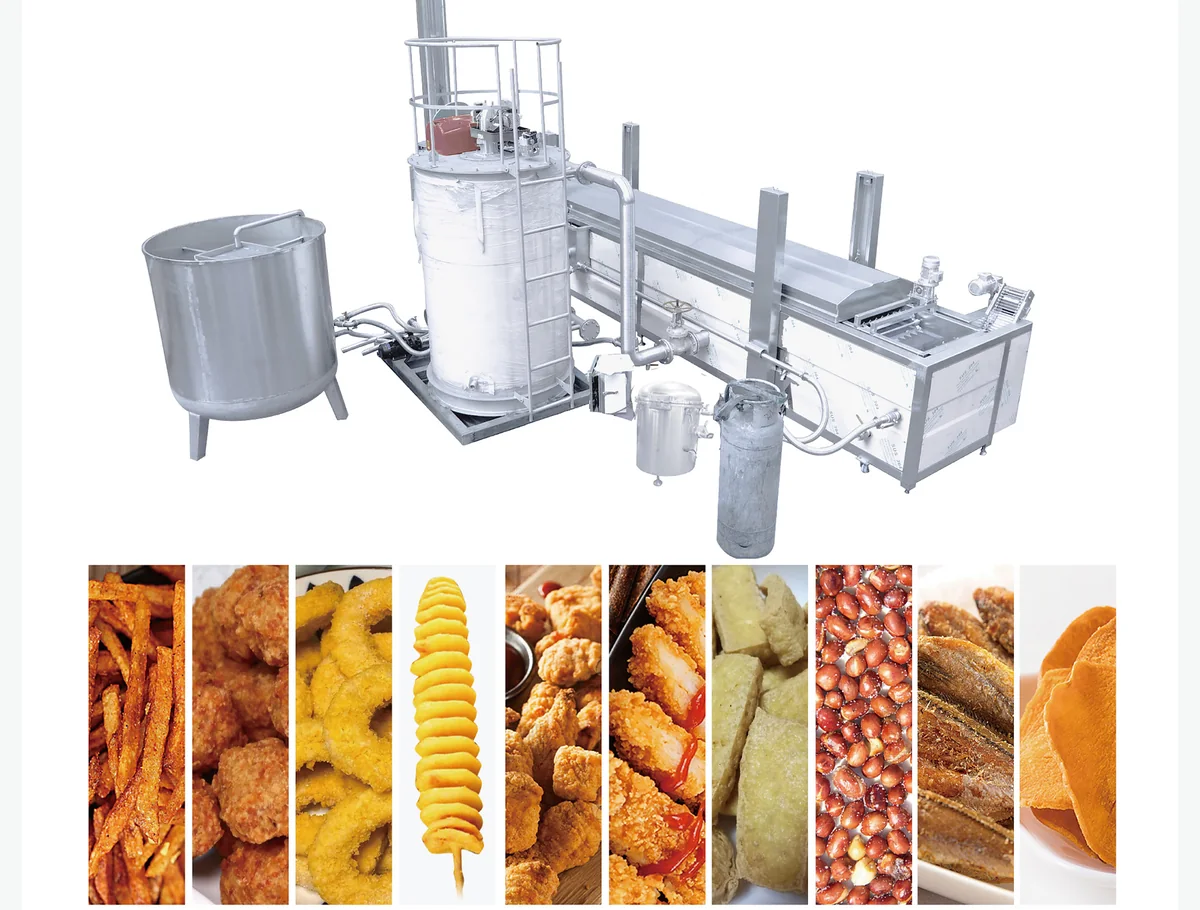
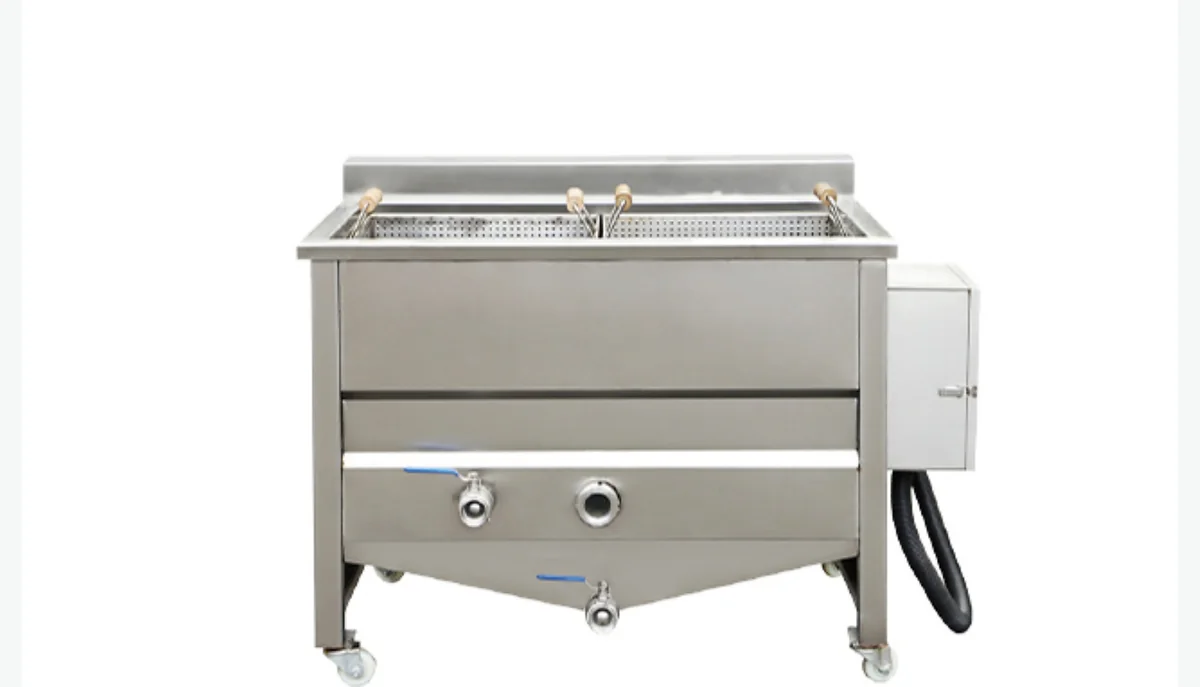
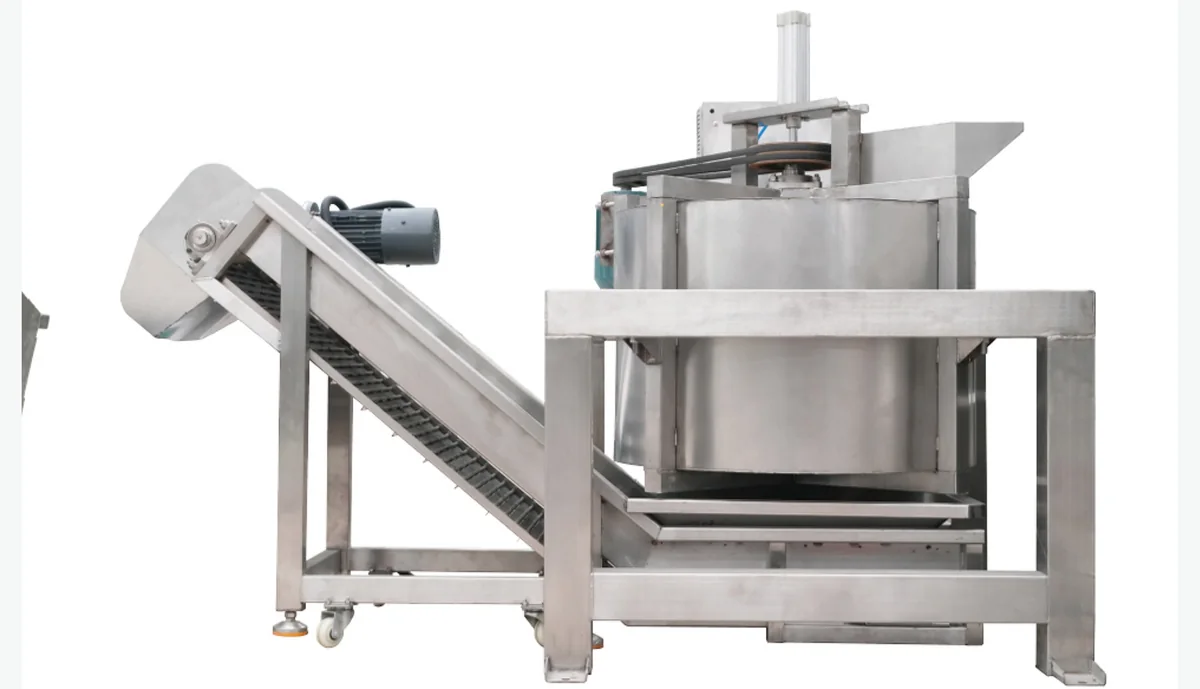
Choosing the right continuous fryer is one of the most important equipment decisions for snack food and fried food manufacturers. The wrong choice does not just waste money — it drags down production efficiency, product quality and energy costs for years.
This guide walks through the seven factors that matter most when comparing continuous fryers, and explains how each one affects your bottom line.
1. Throughput: Match the Fryer to Your Real Demand
Throughput is the starting point. A continuous fryer is rated in kilograms of product per hour, and your target output determines the machine size you need.
Work backwards from your sales plan: forecast weekly demand, account for peak seasons and shift hours, then add a 15-20% safety margin. An oversized fryer wastes energy and oil; an undersized one becomes a bottleneck the moment orders grow.
2. Heating System: Direct vs Indirect
Fryers use either direct gas/oil heating or indirect thermal-oil heating.
Direct heating heats the oil faster and costs less to install, but temperature control is less uniform. Indirect heating (thermal oil) delivers stable, even temperature across the frying zone — important for consistent color and moisture, especially for potato chips and French fries.
If your products require a tight oil-temperature window, indirect systems are usually worth the higher upfront cost.
3. Oil Management: Filtration and Turnover Rate
Oil is your biggest recurring cost after raw materials. A good continuous fryer should include:
Continuous oil filtration (removes crumbs and sediment while running), a high oil turnover rate (the number of times the full oil volume is replaced per hour), and automatic oil level and temperature compensation.
Better oil management means lower oil consumption per kilogram of product and longer oil life — directly visible in your monthly cost sheet.
4. Product Handling: Conveyor Design
The conveyor system determines how gently and uniformly products move through the oil.
Belt-type conveyors suit chips, crisps and flat items. Basket or paddle systems suit irregular shapes like battered foods or coated items.
Ask about adjustable conveying speed and oil-flow direction. For floating products such as French fries, oil-flow assisted conveying prevents clumping and ensures even cooking.
5. Sanitation and Cleanability
Food safety compliance is non-negotiable in export markets. Look for:
Food-grade stainless steel (304/316) on all product-contact surfaces, easy access panels for daily cleaning, and a CIP (clean-in-place) option if your line runs multiple products.
Machines that are hard to clean create hidden hygiene risks and eat up labor hours between shifts.
6. Automation and Controls
Modern continuous fryers offer PID temperature control, automatic oil feeding, and integration with upstream seasoning and downstream cooling lines.
For export-oriented producers, consistent process data matters as much as the frying itself. Choose a control system with logging capability so you can document quality for buyers and audits.
7. After-Sales Support and Spare Parts
A fryer runs thousands of hours a year. What happens when a component fails?
Confirm the supplier's response time, spare-parts availability, and whether technicians can be arranged for installation and training. A slightly more expensive machine from a supplier who answers the phone is cheaper than a bargain that leaves you down for a week.
Final Checklist Before You Buy
- Throughput matches your forecast with 15-20% margin
- Heating type matches your oil-temperature requirements
- Oil filtration and turnover rate confirmed in writing
- Conveyor design suitable for your product shapes
- 304/316 stainless steel on food-contact parts
- Control system with temperature logging
- Spare parts and technical support agreement in place
Frequently asked questions
What is the difference between a batch fryer and a continuous fryer?
A batch fryer cooks in fixed loads, which suits small-batch and diversified production. A continuous fryer processes product in a steady stream at high capacity with more consistent quality. Choose continuous for high-volume, standardized products like potato chips or French fries.
What is the oil turnover rate of a continuous fryer?
Oil turnover rate measures how many times the full oil volume is replaced per hour. Higher turnover means fresher oil and lower oil consumption per kilogram — a key metric when comparing fryers.
Can a continuous fryer handle multiple products?
Yes, with adjustable temperature and speed most continuous fryers can run different products, though changeover time and cleaning between runs should be planned. A CIP option makes multi-product operation much easier.
How much does a commercial continuous fryer cost?
Pricing depends on throughput, heating system, and automation level. Rather than comparing price alone, compare cost per kilogram of output over five years — including oil, energy, and maintenance.