Frying
Continuous Belt Fryer for Snack Food Lines
Continuous belt fryer for snack foods and prepared products, reviewed by product shape, frying curve, heating source, oil management and line connection.
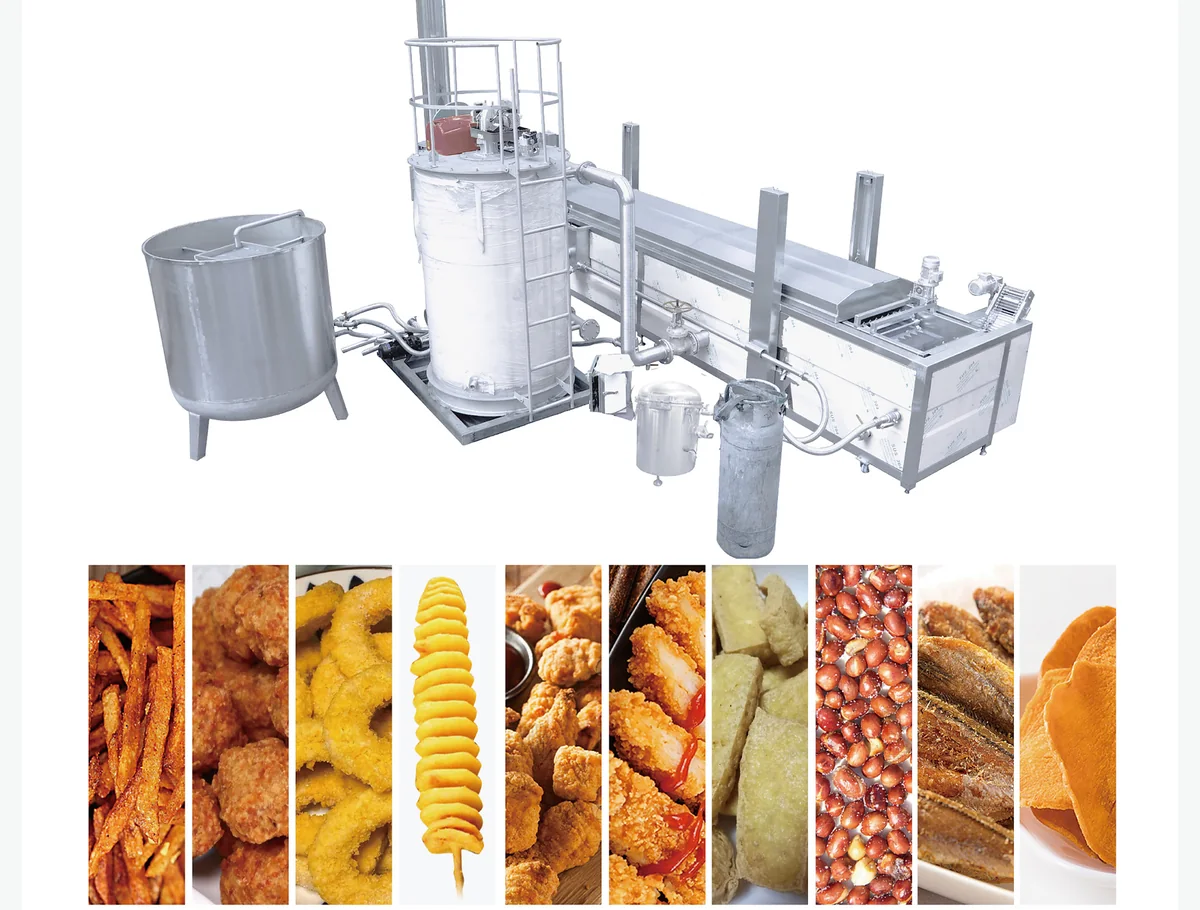
Equipment overview
Continuous Belt Fryer
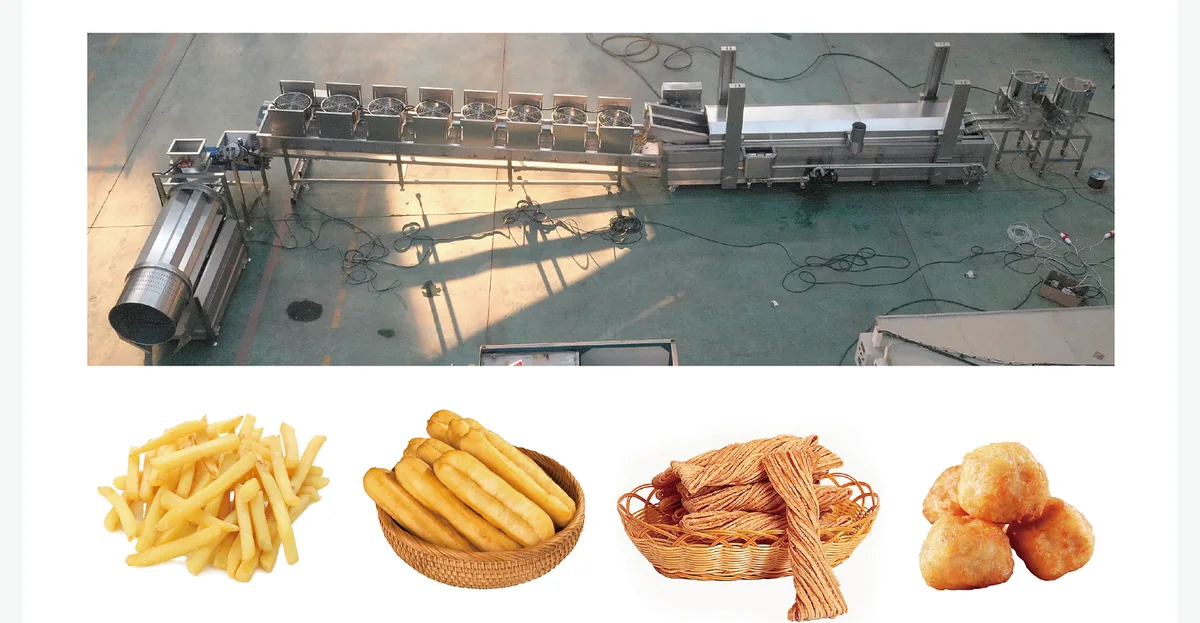
A continuous belt fryer keeps product moving through a controlled oil bath on a mesh belt. It is normally selected for repeated snack-food production where the buyer needs stable frying time, temperature, loading and discharge into de-oiling, cooling, seasoning or packing preparation.
Ideal applicationsPotato chips, banana chips, nuts, flour snacks, meat, poultry, seafood, vegetables and other validated fried foods
Typical process
Where this machine fits
- Metered continuous feeding
- Controlled belt frying
- Oil filtration and residue handling
- Discharge to deoiling, cooling or seasoning
Product highlights
Configuration points that matter
- Indicative temperature-control range: 0-220 deg C; confirm it for the selected model.
- Mesh-belt speed can be configured for the required frying time.
- Oil filtration, oil storage and lifting arrangements are optional modules that require configuration confirmation.
Confirm before quotation
Product dimensions, frying curve, oil temperature, heat source, capacity, belt width, filtration, ventilation and downstream handling
Model reference
Indicative model options
| Model | Electric heating power | Indicative capacity | Indicative dimensions | Mesh-belt width |
|---|---|---|---|---|
| LY4000 | 120 kW | 100-200 kg/h | 4000 x 1200 x 2400 mm | 600-1000 mm |
| LY5000 | 140 kW | 150-300 kg/h | 5000 x 1200 x 2400 mm | 600-1000 mm |
| LY6000 | 180 kW | 200-500 kg/h | 6000 x 1200 x 2400 mm | 600-1000 mm |
| LY8000 | 200 kW | 300-800 kg/h | 8000 x 1200 x 2400 mm | 600-1000 mm |
Model figures are reference information. Final model selection requires review of actual material, process target, utilities and layout.
Buyer review points
Information that helps confirm the right model.
Material condition
Share the raw material size range, moisture or surface condition, temperature, impurity level and whether the product has already been washed, peeled, cut or cooked before this machine.
Output basis
State whether the required capacity is raw material input, finished product output, hourly output or daily production. Capacity is reviewed together with feeding method, operating hours and downstream speed.
Factory connection
Confirm voltage, phase, frequency, available power, water, drainage, compressed air, heating source, floor space, doorway size and the height or direction of upstream and downstream transfer.
Acceptance method
Before order confirmation, define the sample material, test condition, finished product standard, inspection point and service boundary so that model selection and quotation are based on the same project facts.
Oil management
Filtration and residue control should be planned with the fryer.
For continuous frying, oil quality is not only a maintenance issue. Product crumbs, starch, seasoning dust, flour coating, sugar and small broken pieces can change oil colour, flavour, smoke and equipment cleaning workload. If the filtration route is not planned early, the fryer may run well during a short test but become unstable during a longer shift.
Residue source
Confirm whether the product releases starch, crumbs, coating or broken pieces during frying. This affects residue collection, oil circulation and cleaning frequency.
Filtration scope
Review whether the project needs basic residue removal, circulating filtration, external oil tank, pump set, sediment box or a more advanced oil-management module.
Oil turnover
Estimate production hours, product loading and oil replacement rhythm. The supplier cannot judge oil route only from the fryer length.
Cleaning access
Check cover lifting, belt lifting, tank access, drain point and operator space so daily cleaning can be done safely.
For a deeper planning article, see Continuous Fryer Oil Filtration Guide.
RFQ preparation
Information to send before a continuous fryer quotation
| Information | Why it matters | Example |
|---|---|---|
| Product and dimensions | Sets belt width, product layer, frying time and discharge method | Potato slice thickness, banana slice diameter, flour snack size |
| Moisture and pretreatment | Changes oil load, bubble behaviour and frying curve | Washed only, blanched, coated, dewatered or pre-cooked |
| Target output basis | Prevents confusion between raw input and finished output | kg/h raw product, kg/h fried product or shift output |
| Heating source and utilities | Decides power, burner, control and installation scope | Electric, gas, voltage, phase, frequency and available load |
| Downstream equipment | Determines discharge height and line speed coordination | De-oiler, cooling conveyor, seasoning drum, packing line |
| Acceptance method | Aligns test material, colour, texture, oil content and output review | Sample material and agreed production condition |
Frequently asked questions
Questions to settle before selection
Which heating method should I choose?
The decision depends on local electricity and gas conditions, production rhythm, temperature-control requirement and operating-cost assessment.
Does the listed output apply to every food?
No. Product thickness, moisture, loading and frying time can change actual throughput. Confirm output with the agreed product and test conditions.
Can oil filtration and cooling be included?
Yes. Oil filtration, storage, circulation, deoiling and cooling can be reviewed as connected project modules.
What information is needed before quotation?
Send product photos, slice or piece dimensions, moisture condition, target output, frying temperature and time, heating source, voltage, factory layout and downstream process.
Project boundary: Final model, output, dimensions, utilities, food-contact material scope, price, delivery and service boundary require technical and commercial confirmation before quotation.
Line connection
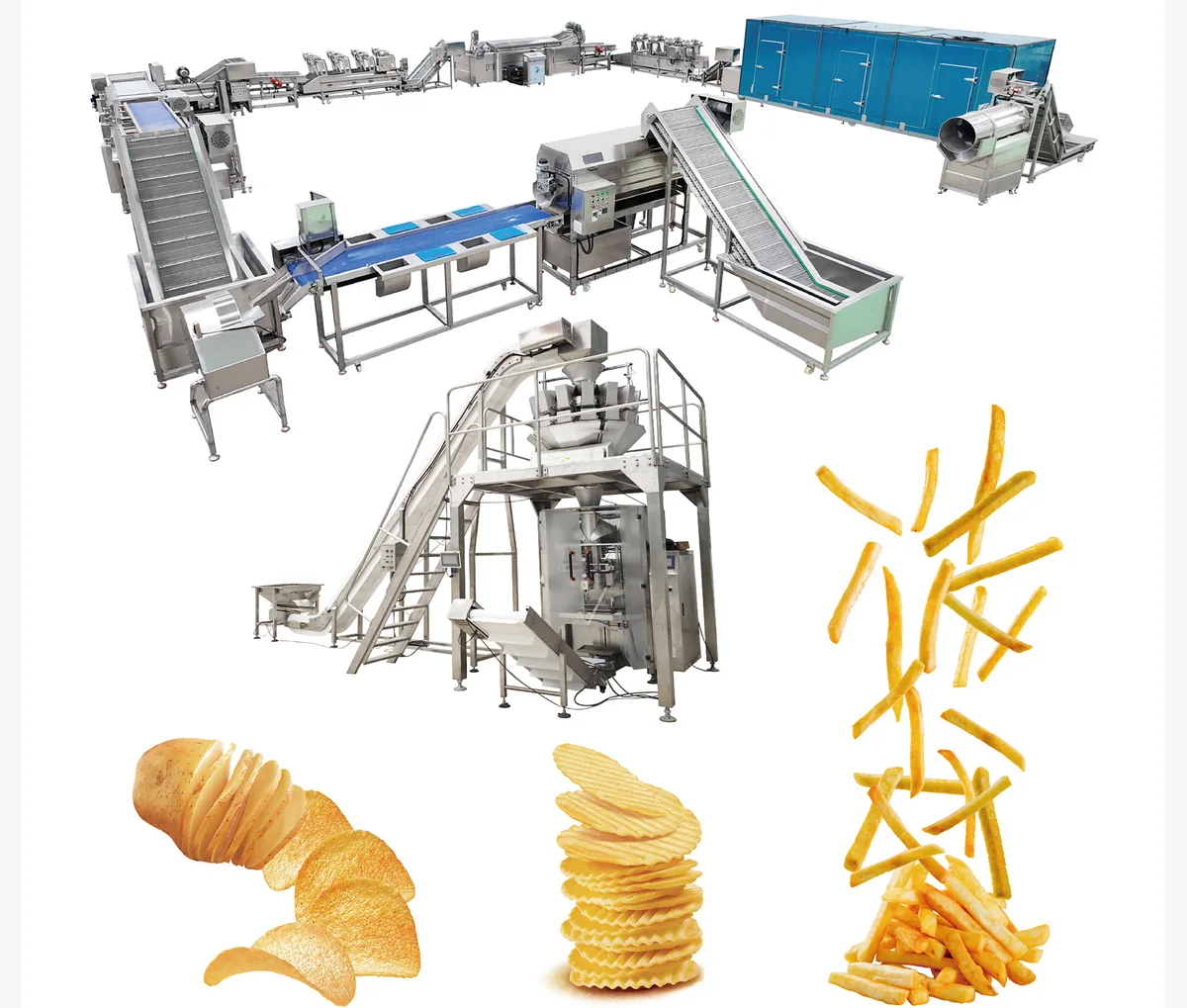
Related production line pages
Use these links to move from a single machine to the full process requirement before quotation.
Configuration request