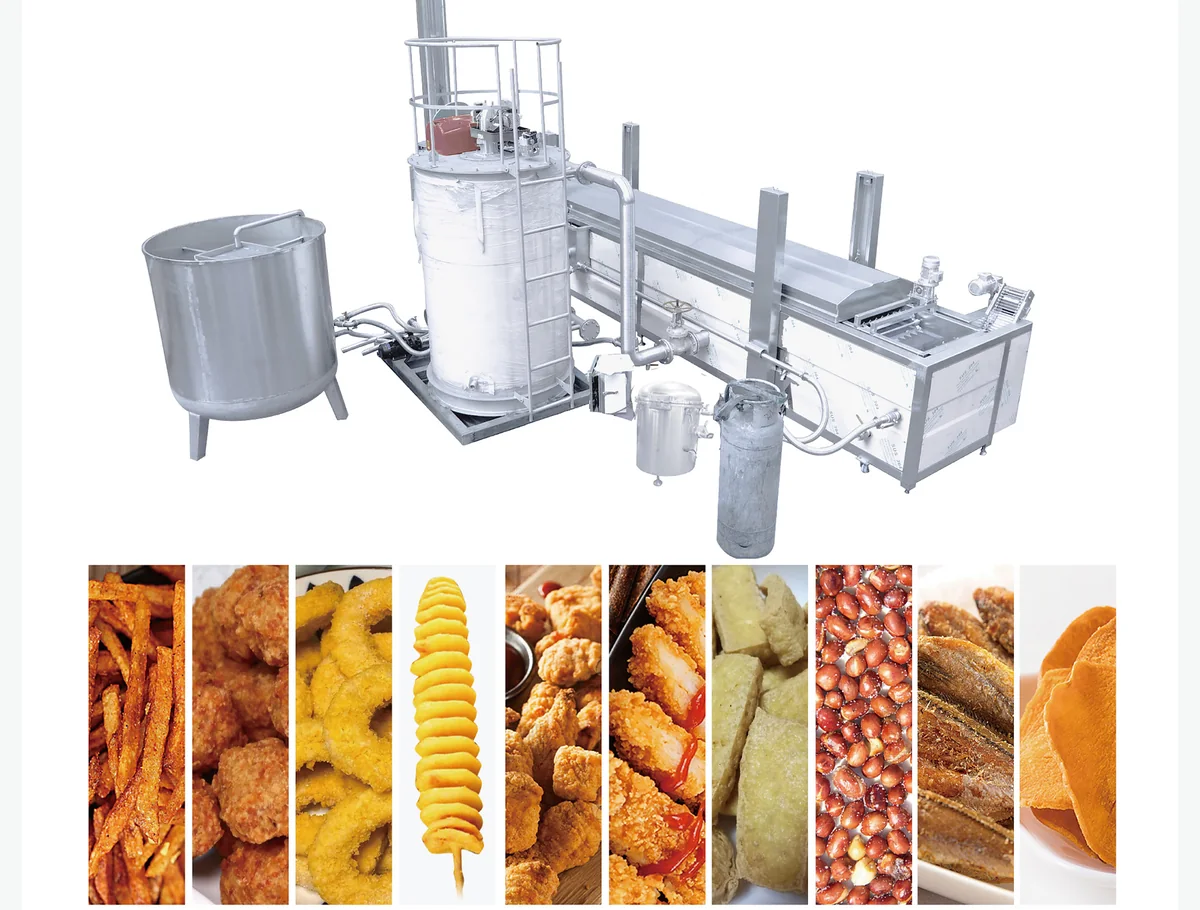
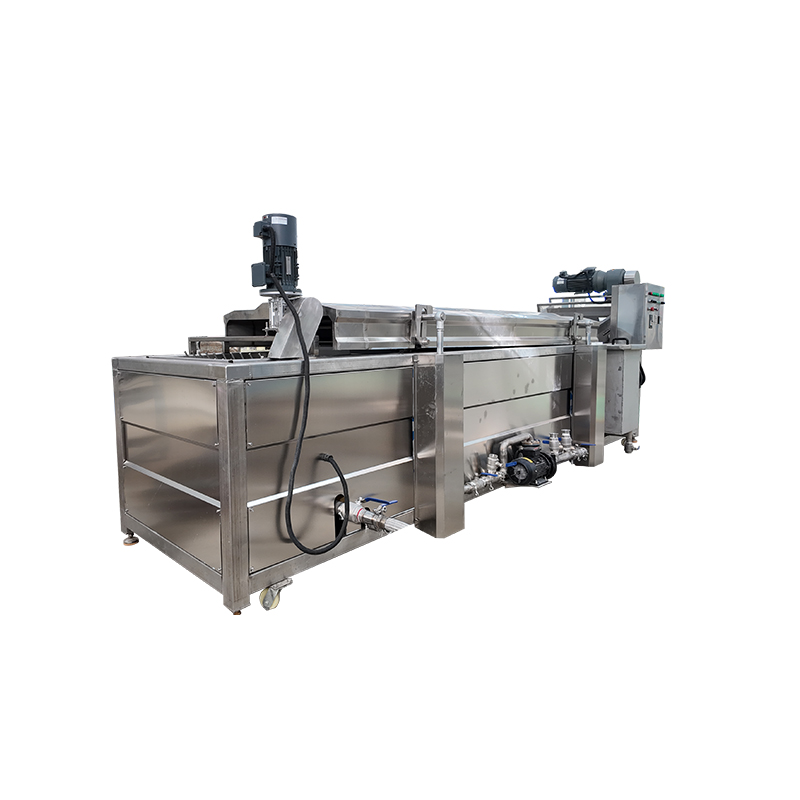
A continuous fryer is often selected because it can keep product moving through a steady frying process. But stable frying is not only a question of belt speed and oil temperature. Oil filtration, residue handling, oil circulation and cleaning access decide whether the fryer can run consistently during a real production shift.
This guide is for buyers comparing an industrial continuous belt fryer, a snack food frying line or a connected continuous fried food line. It explains what to confirm before the fryer model, oil-management scope and line layout are fixed.
1. Why oil filtration affects fryer selection
During continuous frying, small product pieces, starch, crumbs, flour coating, sugar and seasoning dust can enter the oil. If these residues remain in the tank, they may darken the oil, burn at high temperature, affect product appearance and increase cleaning work. A short demonstration run may not reveal this problem, while a long production shift can.
For this reason, oil filtration should be discussed together with product type and production rhythm. The supplier needs to know whether the fryer will process potato chips, banana chips, coated products, nuts, meat, seafood, flour snacks or mixed products. Each product creates a different residue load.
- Potato products can release starch and small broken pieces.
- Coated products may create flour or batter residue.
- Fruit and vegetable chips can have sugar and moisture-related oil load.
- Mixed-product production may need stronger cleaning and changeover planning.
2. Common filtration and oil-management levels
Not every project needs the same oil-management scope. A small line may only require basic residue collection and good cleaning access. A higher-output line or longer shift may need circulating filtration, an external oil tank, pump set, sediment collection and a more controlled cleaning route.
| Level | Typical scope | When to review it |
|---|---|---|
| Basic residue handling | Tank drain, residue basket or sediment collection point | Shorter production runs and lower residue load |
| Circulating filtration | Oil circulation pump and filtration route | Longer shift, repeated product and visible crumbs |
| External oil tank | Oil storage, transfer and easier tank cleaning | When cleaning speed and oil handling matter |
| Integrated oil-management module | Filtration, circulation, residue handling and oil transfer reviewed as one system | Higher-output lines or buyers with strict quality control |
The right level depends on product and operation. Adding a large oil system to a small line can be unnecessary; undersizing filtration for a high-residue product can create operational problems.
3. Product data needed before filtration can be reviewed
A supplier cannot select the oil route from the machine name alone. The product size, moisture, coating, frying time and target surface condition decide the oil load. If these details are missing, quotations may look similar but include different filtration assumptions.
Send product photos or samples where possible. If production already exists, provide the current frying temperature, frying time, oil replacement rhythm and the cleaning problems operators face. If the project is new, describe the target finished product and expected production hours.
- Raw material and finished product photos
- Slice, strip or piece dimensions
- Moisture condition before frying
- Whether the product is coated, blanched, dried or pre-cooked
- Target frying temperature and frying time
- Planned output per hour and working hours per day
- Expected oil replacement or filtration requirement
4. Cleaning access should be designed into the line
Oil filtration is only useful if operators can clean the fryer, remove residue and maintain pumps safely. The line layout should reserve access around covers, lifting points, filters, oil tank, valves and discharge areas. A compact layout can look attractive on paper but become difficult to operate if the cleaning path is blocked.
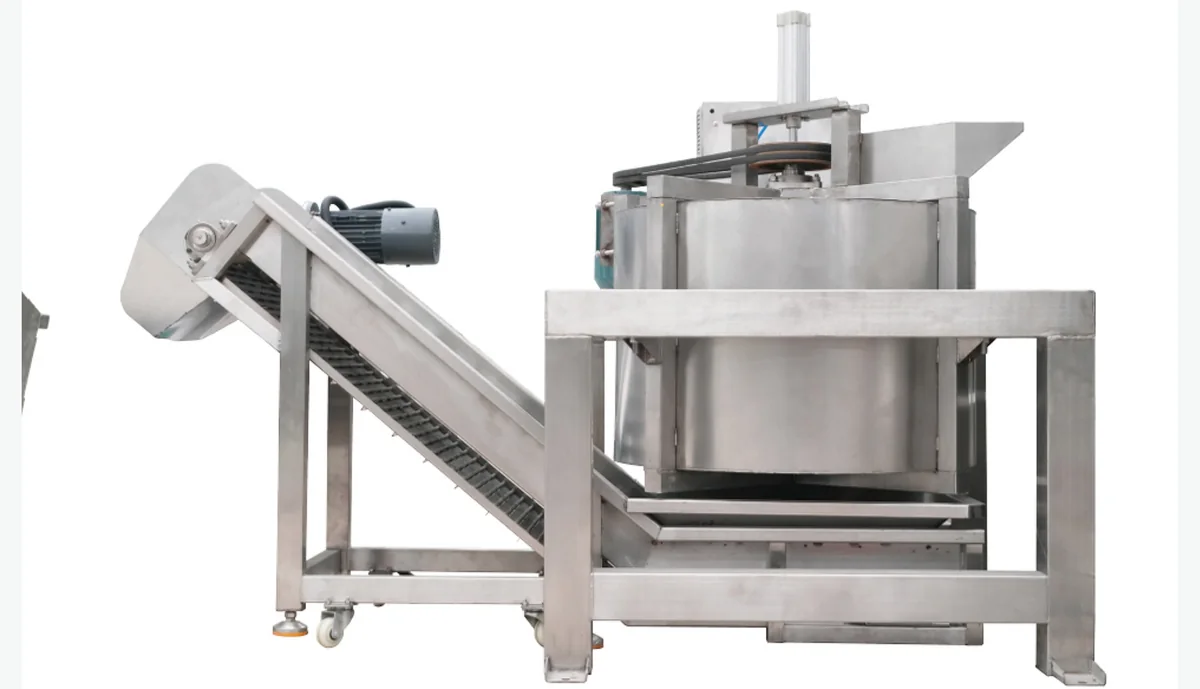
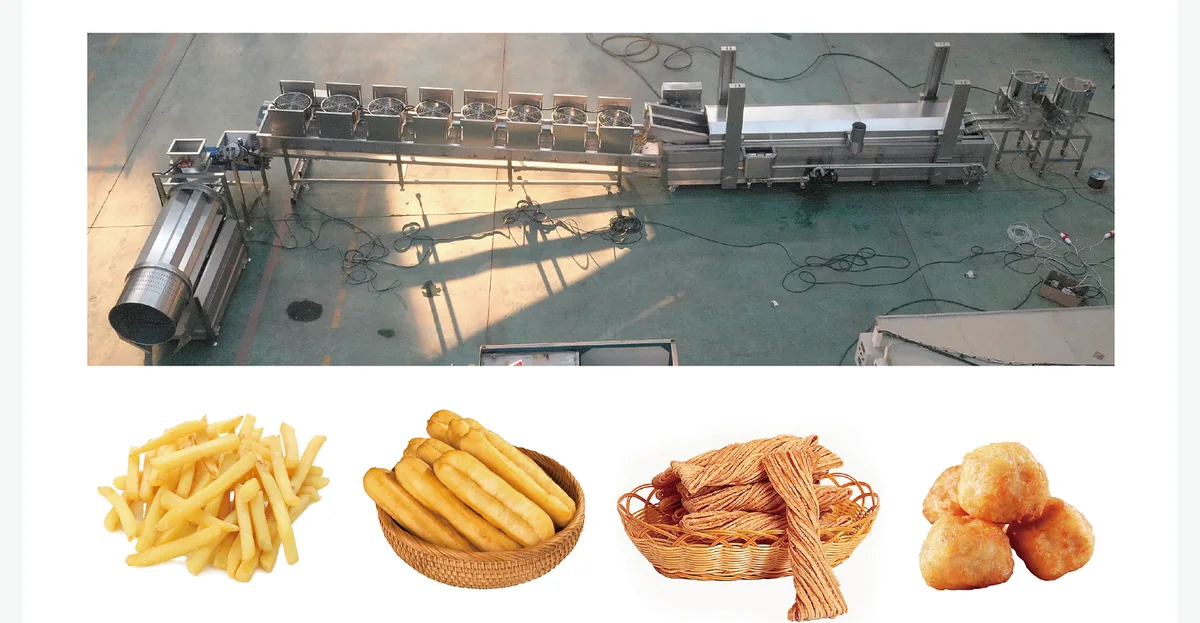
For many snack-food lines, oil management is connected to upstream and downstream equipment. Dewatering before frying reduces oil load. De-oiling after frying affects final surface oil. Cooling and seasoning depend on stable discharge. These connections should be reviewed before the layout is frozen.
5. How to compare quotations fairly
Two continuous fryer quotations can have different prices because they include different oil-management assumptions. One may include only the fryer body and belt; another may include filtration, oil circulation, lifting covers, external oil tank, de-oiling, cooling conveyor and electrical controls. Before comparing prices, put the scope into the same table.
| Quotation item | Question to ask |
|---|---|
| Heating system | Electric, gas or electromagnetic? What is included in controls and installation boundary? |
| Oil filtration | Is filtration included? What residue level is assumed? |
| Oil tank and pump | Are oil transfer, circulation and storage included or optional? |
| De-oiling and cooling | Are downstream modules included in the same quotation? |
| Cleaning access | Are lifting, drainage and maintenance access considered? |
| Acceptance test | Which product, temperature, time and output condition will be used? |
Continuous fryer RFQ checklist
- Product type, photos and size range
- Moisture condition and pretreatment before frying
- Target output basis: raw input or finished output
- Frying temperature, frying time and product colour target
- Heating source, voltage, phase, frequency and available power
- Residue level, filtration expectation and cleaning frequency
- Downstream de-oiling, cooling, seasoning or packing connection
- Factory layout, exhaust condition and maintenance access
Frequently asked questions
Does every continuous fryer need the same oil filtration system?
No. Filtration depends on product crumbs, starch, coating, frying time, shift length, oil volume, residue load and cleaning method. The scope should be reviewed with the actual product and production rhythm.
Can oil filtration be added later?
Some modules may be added later, but space, pump connection, oil tank position, pipe route and cleaning access are easier to reserve during the first layout review.
What should be sent before requesting a continuous fryer quotation?
Send product photos, piece size, moisture condition, target output, frying temperature and time, heating source, voltage, production hours, residue level and downstream equipment.