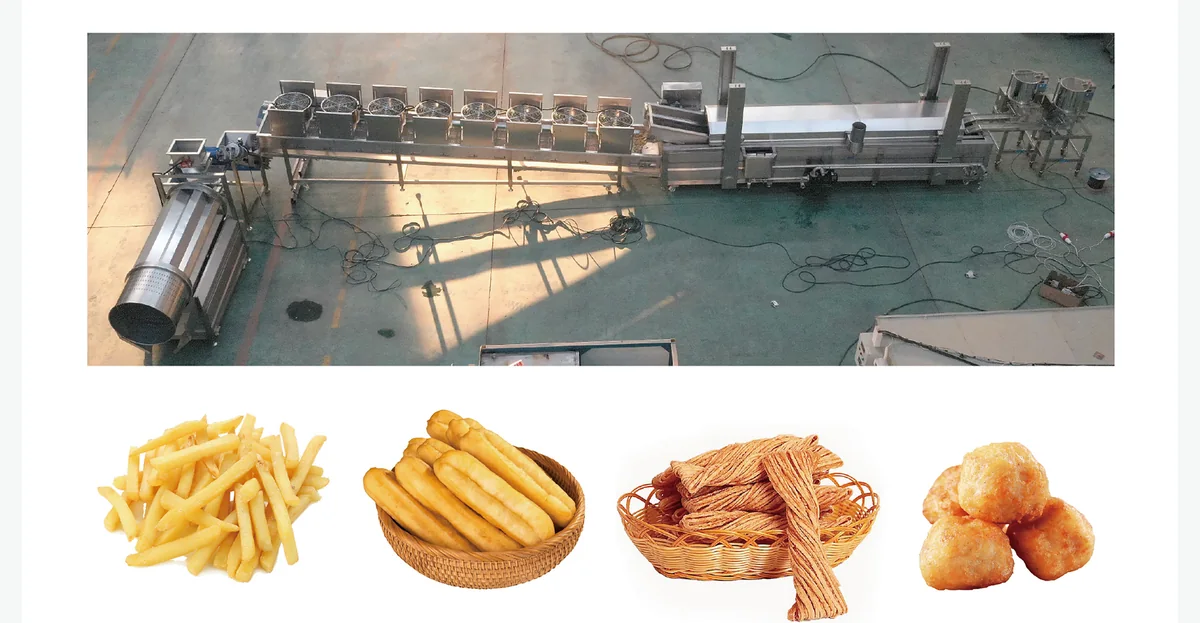
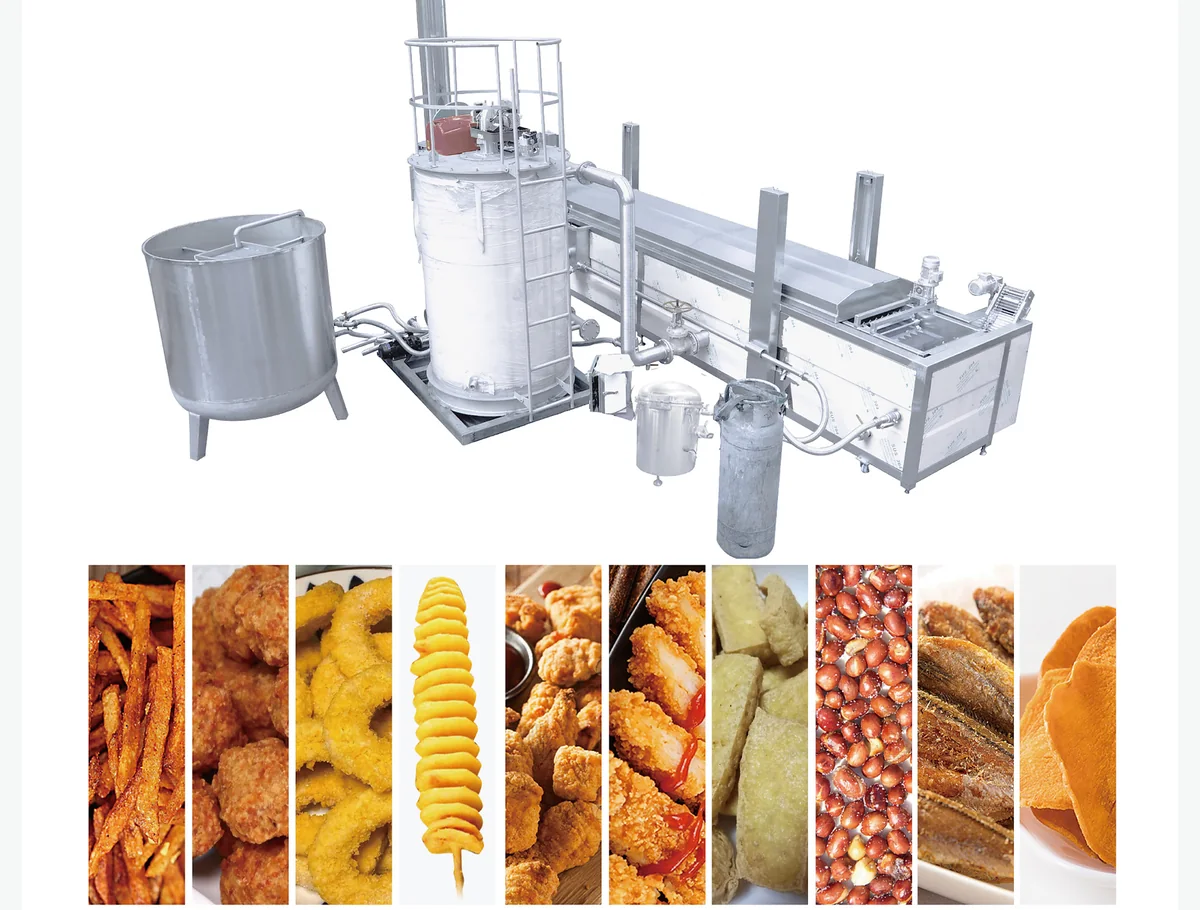
Raw materialPrepared meat, poultry, seafood, vegetables, flour products, potato products and other validated foods
Finished productFried, cooled and seasoned product ready for the confirmed packing process
Indicative outputConfigured after the product trials and the process review, with the oil turnover and the changeover time inside the shift figure.
Operator requirementsLabour is concentrated at the oil handling and the inspection points, with feeding, frying and cooling running continuously.
Factory and utilitiesPlan the room around the oil handling, the fryer heating load and the extraction, and confirm the floor level and the fire separation.
Confirm before quoteProduct dimensions, coating, frying curve, heat source, oil filtration, emissions, output, factory access and packing connection
Acceptance basis
Define the result before final configuration.
Define test product, oil temperature, residence time, finished colour or texture, acceptable loss and line-output measurement method.
Planning information
Facts to settle before a line quotation.
Raw material and finished product
State the product and its form, because a formed product and a whole piece behave differently in the same fryer. Give the raw weight per hour, the incoming moisture and oil content, and whether the product arrives frozen, chilled or fresh. The incoming state decides how the oil takes up heat and how long the batch or the continuous run needs.
Capacity and operating schedule
State the raw input per hour and the finished output per hour, and the oil turnover being bought to, because the fryer size follows the oil volume and the oil volume follows the raw rate. State the working hours and the changeover time between products, since a line running two products needs cleaning and heat-cycling time inside the shift.
Utilities and layout
The oil system constrains this layout more than anything else. Check the floor level and the drainage route for oil handling, the extraction path and the fire separation around the fryer, and the power supply against the heating load before the fryer position is fixed. Plan the cooling and seasoning downstream as one straight run from the fryer discharge.
Scope and acceptance
List the feed, the fryer, the oil filtration and residue handling, the cooling, the seasoning and the packing, with the control package, the spare parts, the installation support and the training. The oil handling and the emissions treatment deserve their own line in the scope, because they are project-specific and not standard items.
Project boundary: Final model, output, dimensions, utilities, food-contact material scope, price, delivery and service boundary require technical and commercial confirmation before quotation.
Equipment configuration
Related equipment pages
These links move from one machine to the full process requirement for the project.
Common questions about continuous fried food lines.
What does a continuous fried food line consist of?
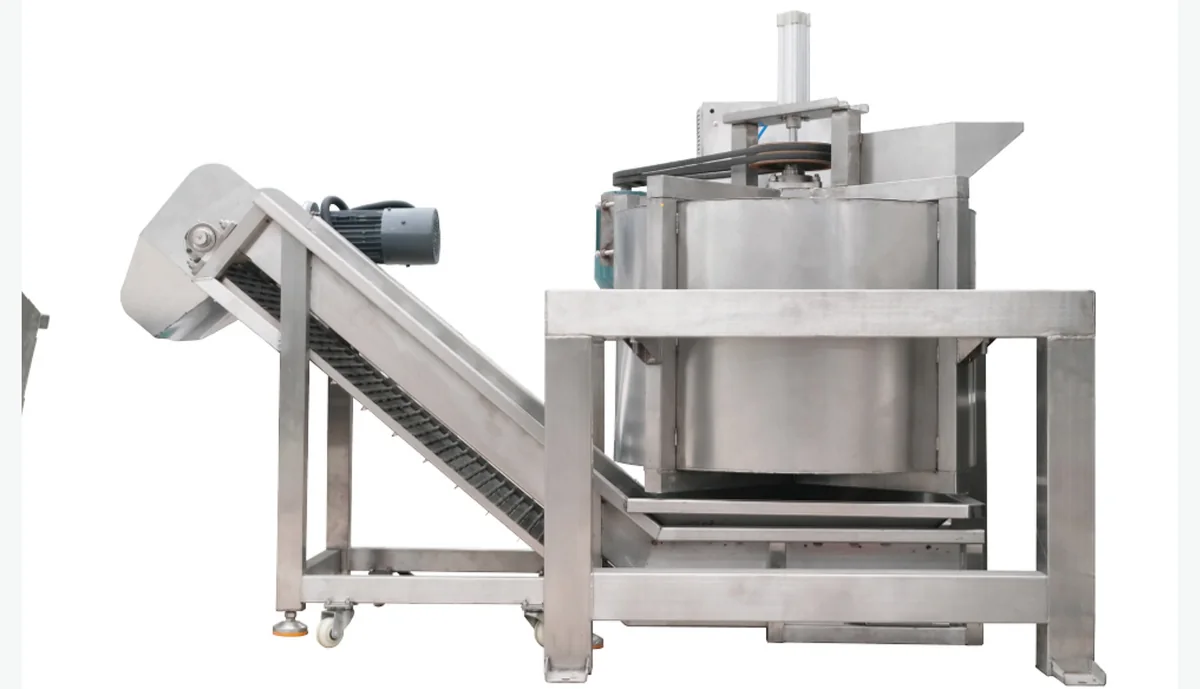
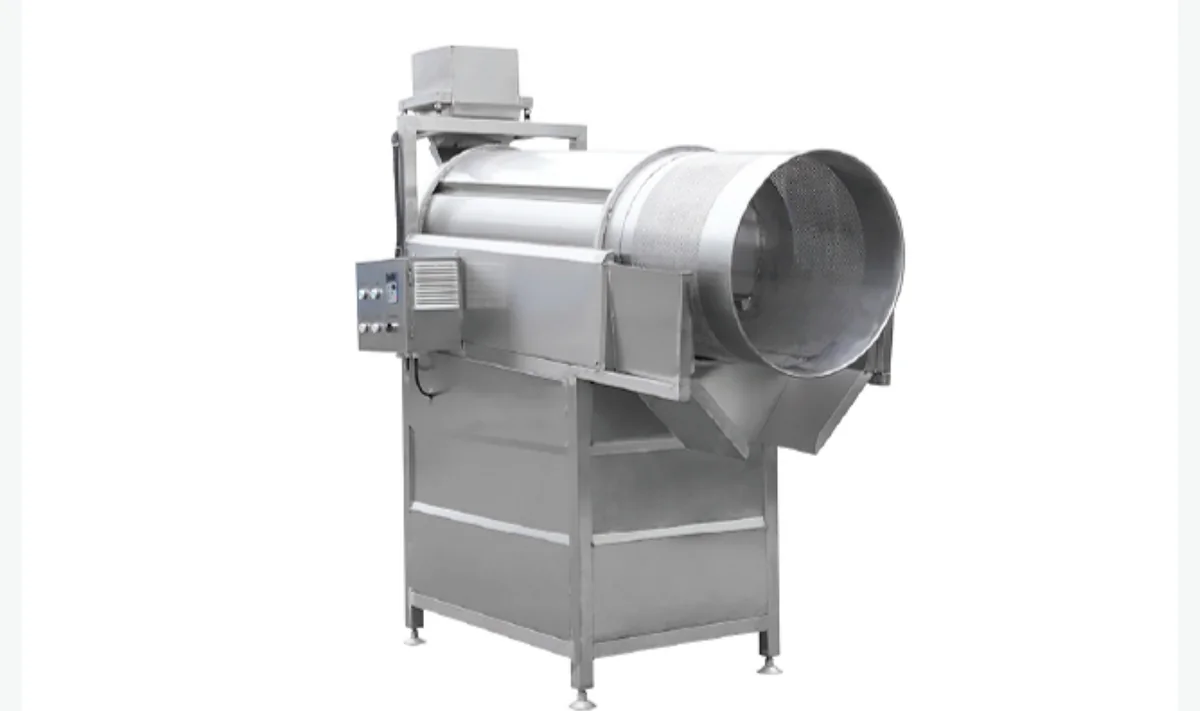
The connected line combines a feed elevator, continuous fryer, oil filtration and residue handling, an air-cooling line, an inspection conveyor, a transfer elevator, a seasoning machine and a packing interface.
Can the output of a continuous frying line be fixed in advance?
No. Line output is configured after product trials and process review, because it depends on product dimensions, coating, the frying curve and the confirmed heat source rather than a single nominal figure.
What information is needed for a continuous frying line quotation?
Provide product dimensions, coating, frying curve, heat source, oil filtration and emissions requirements, output, factory access and the packing connection, so the route can be checked before quotation.
Technical review
Confirm product, output, utilities and factory layout.