Fruit preparation
Apple Peeling & Segmenting Machine
A fruit preparation machine for peeling and segmenting suitable apples before drying, cooking, freezing or packing.
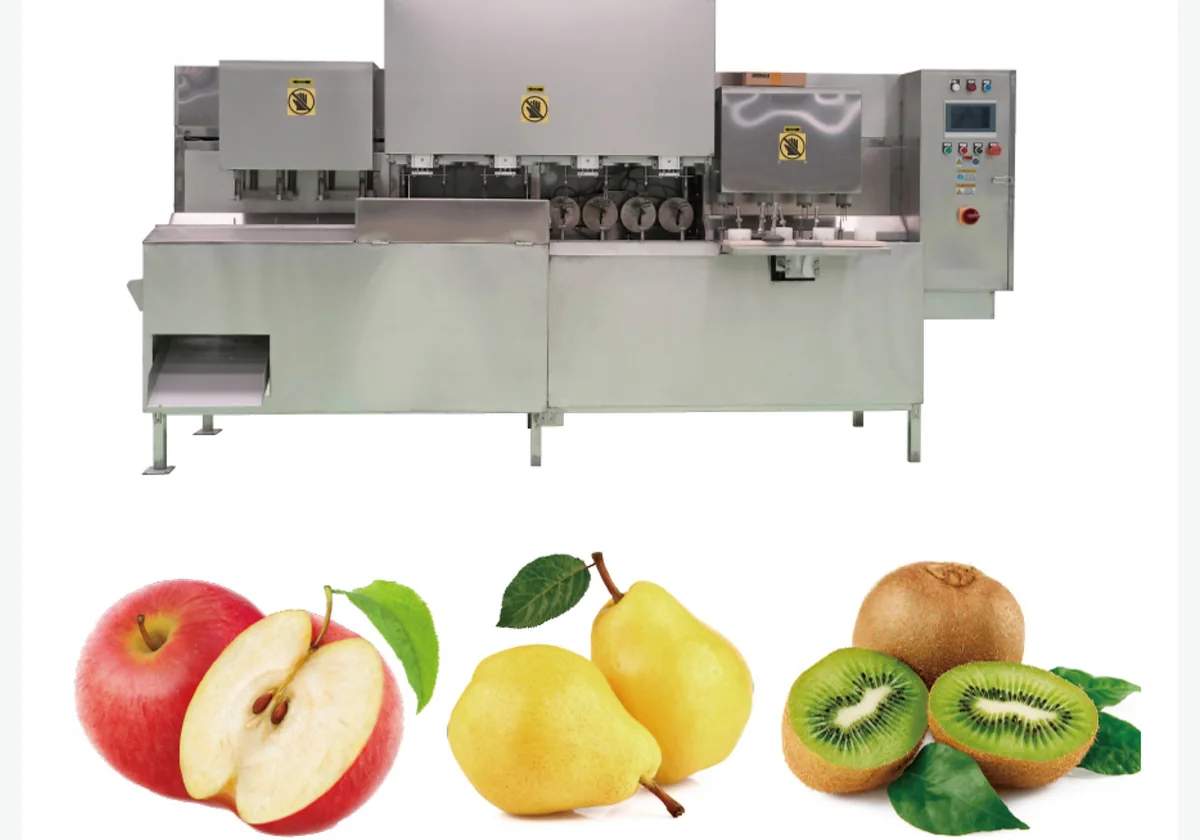
Equipment overview
Apple Peeling & Segmenting Machine
A fruit preparation machine for peeling and segmenting suitable apples before drying, cooking, freezing or packing.
Ideal applicationsApples within the confirmed diameter and firmness range
Typical process
Where this machine fits
- Apple loading
- Positioning and peeling
- Core or segment processing
- Discharge for inspection
Product highlights
Configuration points that matter
- Fruit size range and firmness affect positioning and finished yield.
- The required peel depth, core removal and segment format should be confirmed with samples.
Confirm before quotation
Apple variety, diameter range, firmness, peel-removal target, segment format and required output
Configuration detail
What changes between apple preparations.
Apple peeling and segmenting is set up around variety, firmness and the finished cut. These are the points that move yield and throughput most.
Variety and firmness
Firm, regular apples position and peel more cleanly; soft or irregular fruit needs gentler handling and a lower speed. A trial should cover the actual mix, not only uniform samples.
Peel removal and core
Acceptable peel depth and whether the core is removed are confirmed on the real fruit. Tooling is selected after the peel-removal and core-removal targets are agreed, because they decide usable yield.
Cut format
The same machine family can deliver segments, halves or diced pieces depending on tooling and downstream need. The format is fixed with the buyer before selection so the discharge matches inspection or packing.
Neighbouring stages
Preparation usually follows washing and precedes inspection, drying, cooking or freezing. Transfer height and handling are matched to the next machine so the cut pieces are not damaged at the connection.
Buyer review points
The points that confirm the right model for this project.
Material condition
State the apple variety, the size range and whether the fruit arrives washed or with skin on. Those three decide whether the machine runs as a peeler, a segmenter or both, and they also decide how much peel loss the project should accept.
Output basis
Give the incoming fruit per hour and the finished segments per hour, and say whether the segments go to juice, to drying or to fresh packing. The three destinations take different cut sizes and different packing rates, so a single output figure leaves the cutting section undefined.
Factory connection
Check the infeed table height and the discharge conveyor height against the room, and confirm where the peel is taken away from. Apple processing runs wet, so the floor drainage and the water supply at the machine position have to be settled before the layout is drawn.
Acceptance method
Agree the test on one specified apple and one peel setting: the peel removal rate, the damage rate on the segments, the cut size and the oxidation colour after cutting. Record the fruit temperature and the sample size in the same document, because browning is judged on the cut surface and needs a written reference.
Frequently asked questions
Questions to settle before selection
Which apples should be included in a peeling trial?
Use samples covering the intended variety, diameter range and firmness. Check positioning, peel removal and usable segments rather than selecting only uniform fruit.
How are peel depth and segment format agreed?
Specify the acceptable peel removal, core-removal requirement and final segment format before selecting the tooling. Confirm the result with the actual fruit.
What happens after apple peeling and segmenting?
The next stage depends on the finished product. Review inspection, drying, cooking or freezing together with transfer and handling requirements; these stages are not included automatically.
Project boundary: Final model, output, dimensions, utilities, food-contact material scope, price, delivery and service boundary require technical and commercial confirmation before quotation.
Line connection
Where this machine sits in the line
Move from apple preparation to the cut and pack stages of the line.
Configuration request