Washing & sanitation
Crate Washing Machine
A multi-stage crate washer combining heated pre-wash, alkaline wash, fresh-water rinse and air-knife drying.
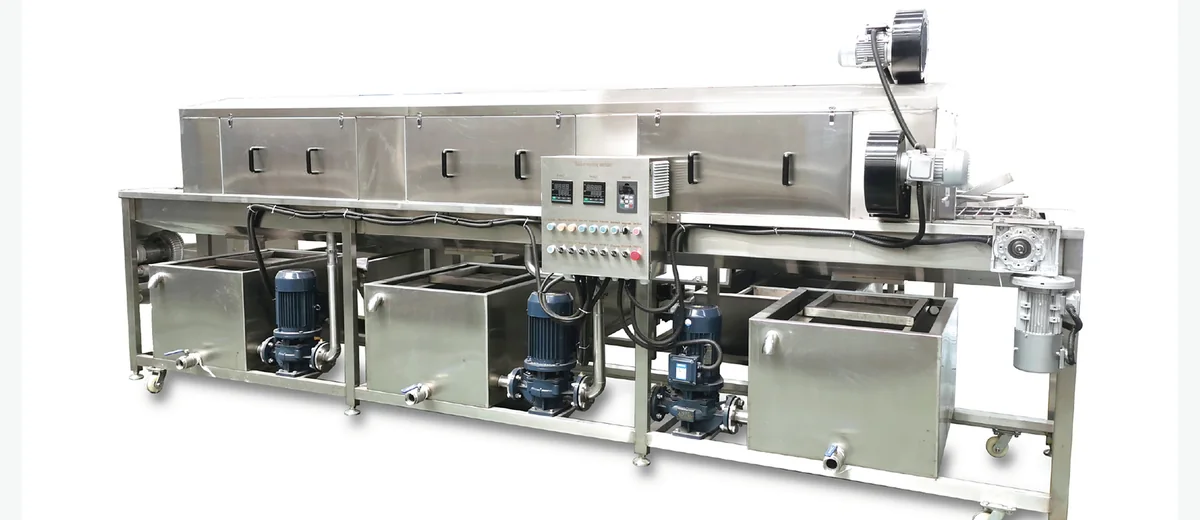
Equipment overview
Crate Washing Machine
A multi-stage crate washer combining heated pre-wash, alkaline wash, fresh-water rinse and air-knife drying.
Ideal applicationsReusable plastic crates, baskets and suitable food-factory handling containers
Typical process
Where this machine fits
- Heated clean-water pre-wash
- Heated alkaline deep wash
- Ambient clean-water rinse
- High-pressure air-knife drying
Product highlights
Configuration points that matter
- Pump flow and pressure must be matched to the crate dimensions and soil load.
- Water circulation and filtration should be reviewed with the sanitation target.
- Detergent handling, drainage and air-knife drying require site confirmation.
Confirm before quotation
Crate dimensions, soil type, detergent, sanitation requirement, hourly quantity, water supply and drainage
Buyer review points
The points that confirm the right model for this project.
Material condition
State the crate type and the condition it arrives in, because the soil type and whether the crate carries product residue decide whether washing alone is enough or a separate sanitising step is needed. Give the crate dimensions and the stacking method, since both affect how the machine has to handle the load.
Output basis
Give the number of crates per hour and the working hours, and say whether the line handles crates and pallets as well, since a mixed load changes the handling arrangement. State the time allowed for a full cycle including loading and unloading, because that figure sets the line length rather than the wash section alone.
Factory connection
Confirm the water temperature and volume available, and where the drain can take the used water, because crate washing produces a large volume of it. Check the infeed and discharge conveyor heights against the room, the floor loading for the machine base, and the power supply against the pumps. Leave room to lift a crate out for cleaning.
Acceptance method
Agree the test on one specified crate type and one soil condition: the soil remaining after the wash, the water temperature at the final rinse, and the drying state of the crate at discharge. Record the cycle time, the sample size and the number of samples in the same document, so the accepted and the delivered machine are described the same way.
Frequently asked questions
Questions to settle before selection
Which crate samples are needed for washer selection?
Provide the actual crate dimensions and soil type, together with the required hourly quantity. Include difficult-to-clean surfaces when agreeing the washing trial and sanitation target.
Are heating, detergent and rinsing part of the same review?
Yes. Confirm the selected wash stages, heating method, detergent use and fresh-water rinsing together. Water supply, circulation, filtration and drainage must match the agreed configuration.
Does air-knife drying guarantee a completely dry crate?
Do not infer that from the module name. Define the required remaining surface water and inspect the result with the actual crate at the agreed line speed.
Project boundary: Final model, output, dimensions, utilities, food-contact material scope, price, delivery and service boundary require technical and commercial confirmation before quotation.
Line connection
Where this machine sits in the line
Move from crate washing to the filling and closing stages.
Configuration request