Surface-water removal
Fruit & Vegetable Air-Drying Conveyor
An air-knife or fan-assisted conveying module for reducing surface water after washing before sorting, packing, freezing or further processing.
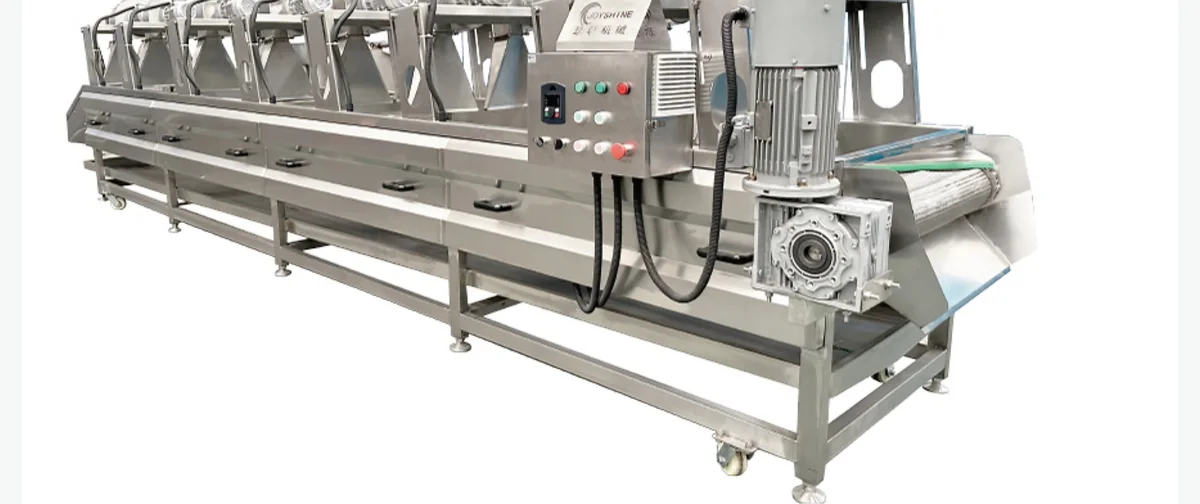
Equipment overview
Fruit & Vegetable Air-Drying Conveyor
An air-knife or fan-assisted conveying module for reducing surface water after washing before sorting, packing, freezing or further processing.
Ideal applicationsWashed fruit, vegetables, bags and suitable food-factory products
Typical process
Where this machine fits
- Washed product feeding
- Air-knife or fan water removal
- Product turning or redistribution where required
- Discharge to inspection or packing
Product highlights
Configuration points that matter
- Air pressure and belt handling must be selected to limit product damage.
- This module removes surface water; it is not a thermal drying guarantee.
Confirm before quotation
Product fragility, incoming surface water, belt width, line speed, air direction, noise and next process
Configuration detail
How the air-drying section is set up.
Surface-water removal is adjusted around the product and the line speed, not to a fixed number. The points below are the ones that change the result most.
Air-knife vs fan blow-off
Air knives give a concentrated, directional stream for steady shapes and trays; fan blow-off spreads air across a wider belt for light, irregular produce. The choice follows the product shape and the residual-water target, not a single rule.
Belt type and speed
Mesh or rod belts let air pass through; speed sets how long each piece is exposed. Fragile items run slower with gentler air, while robust items can take higher speed and stronger pressure.
Measuring the result
Residual surface water is judged by weighing or visual check at the discharge end against the agreed condition. The same trial also confirms there is no product damage from air pressure or belt handling.
Line connection
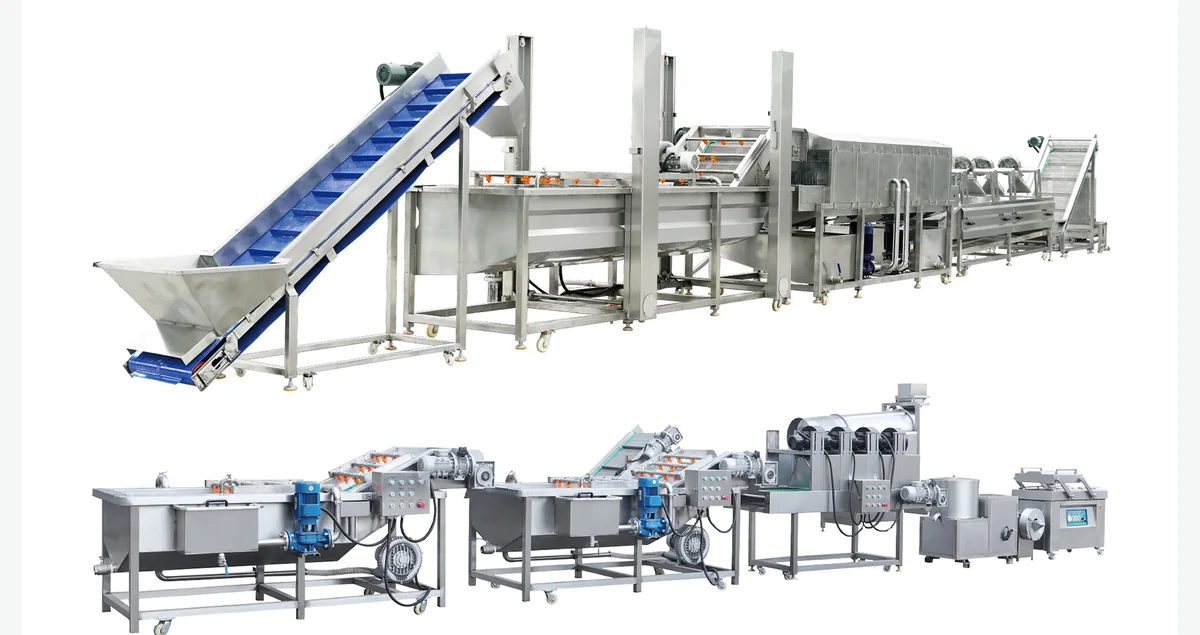
The module sits after washing and before inspection, packing, freezing or a drying line. Discharge height, belt direction and transfer method are matched to the neighbouring equipment so water is not re-wetted at the handover.
Buyer review points
The points that confirm the right model for this project.
Material condition
State the product and the moisture it arrives at, because the drying capacity is set by how much water has to leave it and how fast it has to go. Give the throughput per hour and the size range, since a thin slice and a whole root release water at very different rates. Say whether the product comes from a blancher, a fryer or fresh, because the incoming temperature changes the drying time needed.
Output basis
Give the hourly input and the target moisture at discharge, and say whether the product continues to a freezer, a packing machine or a storage bin, because the acceptable residual moisture depends on what happens next. State the working hours and whether the line runs continuously or in campaigns.
Factory connection
Drying is the stage where the layout is decided by heat and airflow, so fix the heat source and the extraction route first. Confirm the power supply and the fuel or steam source against the chosen heating method, and the air volume and duct sizes against the dryer section. Plan the infeed conveyor and the discharge cooling run in a straight line.
Acceptance method
Agree the test on one specified product and one incoming condition: the starting moisture, the moisture at discharge, the product temperature at that point, and the colour and texture change allowed. Record the drying time, the air temperature, the sample size and the number of samples in the same document, so the accepted and the delivered line are described the same way.
Frequently asked questions
Questions to settle before selection
Is an air-drying conveyor the same as a hot-air dryer?
This conveyor is intended to reduce surface water after washing. It does not establish an internal-moisture drying result or replace a separately reviewed thermal drying process.
How is airflow selected for delicate produce?
Review air direction, pressure, conveyor handling and line speed with the actual product. Check remaining surface water and product damage in the same trial.
What should be specified for the next process?
Describe whether the produce goes to inspection, packing, freezing or another stage. Agree discharge height, handling and the required surface-water condition at that connection.
Project boundary: Final model, output, dimensions, utilities, food-contact material scope, price, delivery and service boundary require technical and commercial confirmation before quotation.
Line connection
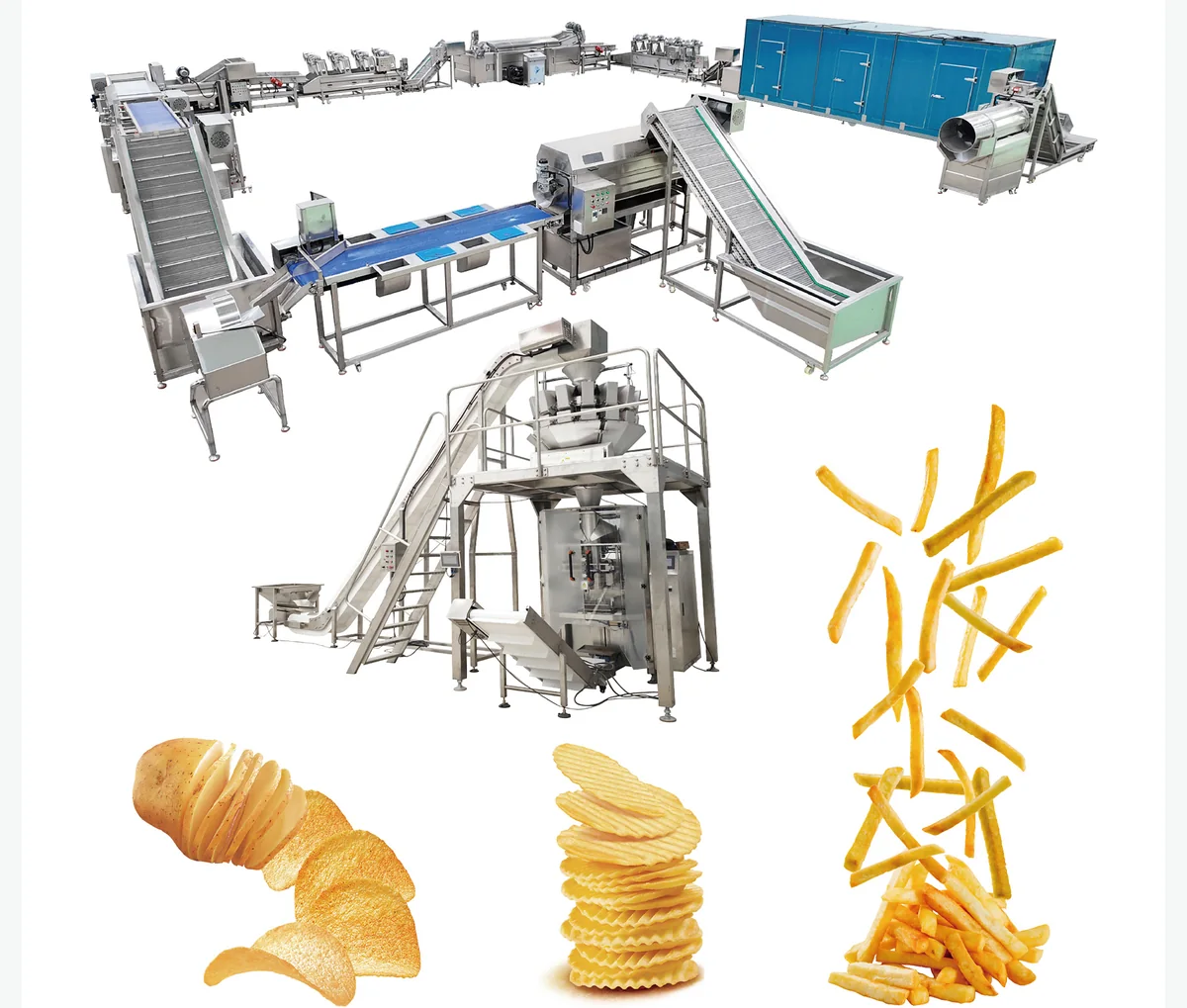
Where this machine sits in the line
Move from drying to the grading, sorting and packing stages.
Configuration request