Sorting & grading
Roller Grading Machine
A roller-based grading machine for separating suitable food products by a configured size or weight classification method.
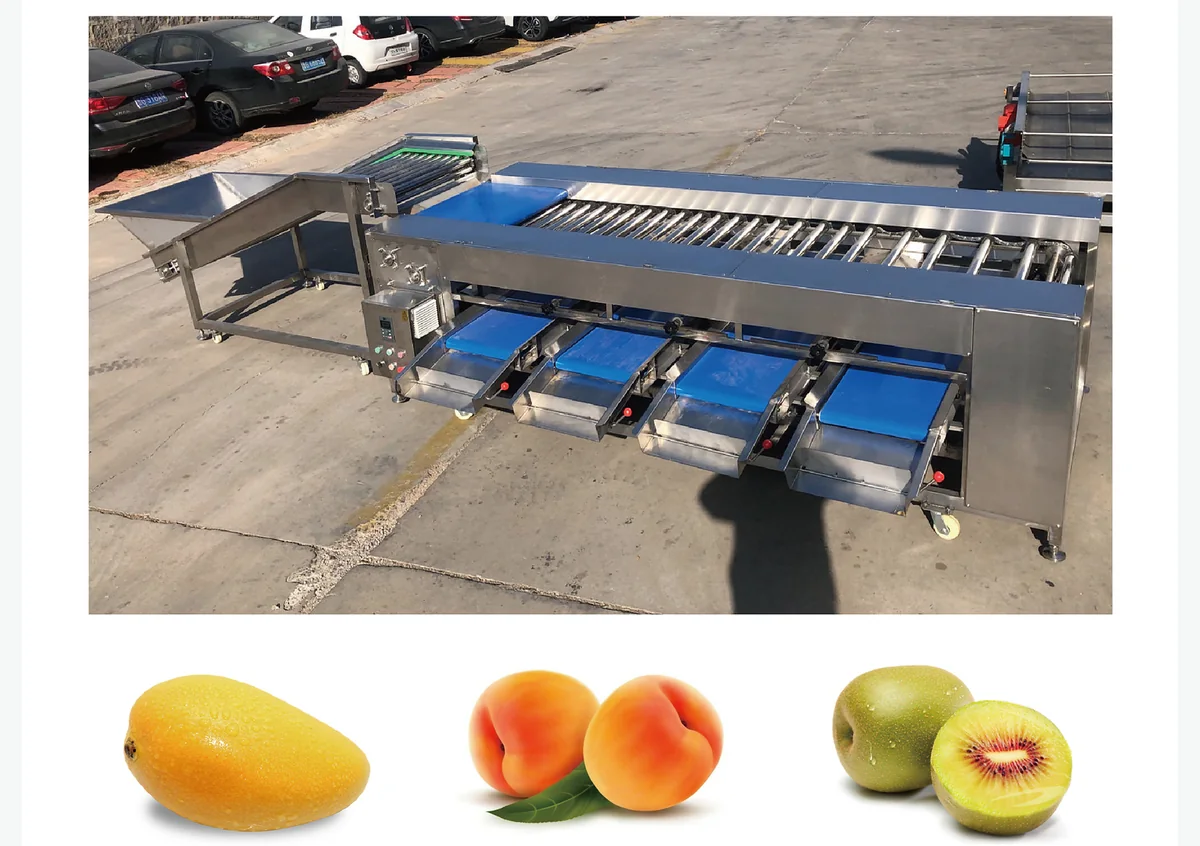
Equipment overview
Roller Grading Machine
A roller-based grading machine for separating suitable food products by a configured size or weight classification method.
Ideal applicationsFruit, poultry portions, seafood and other products suitable for roller or tray-based grading
Typical process
Where this machine fits
- Product singulation
- Weight or size measurement
- Automatic grade assignment
- Controlled discharge to collection points
Product highlights
Configuration points that matter
- Grade ranges should be set around the actual product distribution.
- Accuracy, throughput and product handling require sample testing before commitment.
- The line should be designed to avoid product impact at discharge points.
Confirm before quotation
Product dimensions, weight range, number of grades, target accuracy, speed and discharge arrangement
Buyer review points
The points that confirm the right model for this project.
Material condition
State the product, the size range and how much size variation the incoming material actually has, because grading only separates what is already mixed. Give the hourly throughput and the proportion of each grade, since that determines how many outlets the machine needs and where the reject stream goes.
Output basis
Give the hourly input and the output of each grade, and the rejection rate the project accepts, because the machine has to have enough outlets for the accepted grades and one for the reject. State the working hours and whether the grade boundaries are fixed or adjustable, since adjustable boundaries need a different arrangement.
Factory connection
Check the number of grade outlets against the room, because each outlet needs a chute and somewhere to go. Confirm the power supply against the drive and the floor loading for the machine base, and plan where the rejected material goes. Leave access for the rollers and for cleaning the product path between rollers.
Acceptance method
Agree the test on one specified product and one grade set: the grade boundaries by dimension, the distribution of the sample across the grades, the rejection rate and the damage rate at the transfer points. Record the roller spacing used, the sample size and the number of samples in the same document, because grading is checked by measurement and needs a written tolerance.
Frequently asked questions
Questions to settle before selection
Is this grader selected by size or by weight?
The grading method must be confirmed for the selected configuration. Provide product dimensions, weight range and required grades; do not infer the measurement system from the machine name.
How should grading accuracy and throughput be confirmed?
Use representative samples covering the intended product distribution. Agree grade ranges, feed spacing and the accuracy target, then test throughput under those conditions.
What should be checked at each grade discharge?
Review collection positions, discharge height and product impact. Confirm acceptable damage and the connection to trays, bins or the next conveyor with the actual product.
Project boundary: Final model, output, dimensions, utilities, food-contact material scope, price, delivery and service boundary require technical and commercial confirmation before quotation.
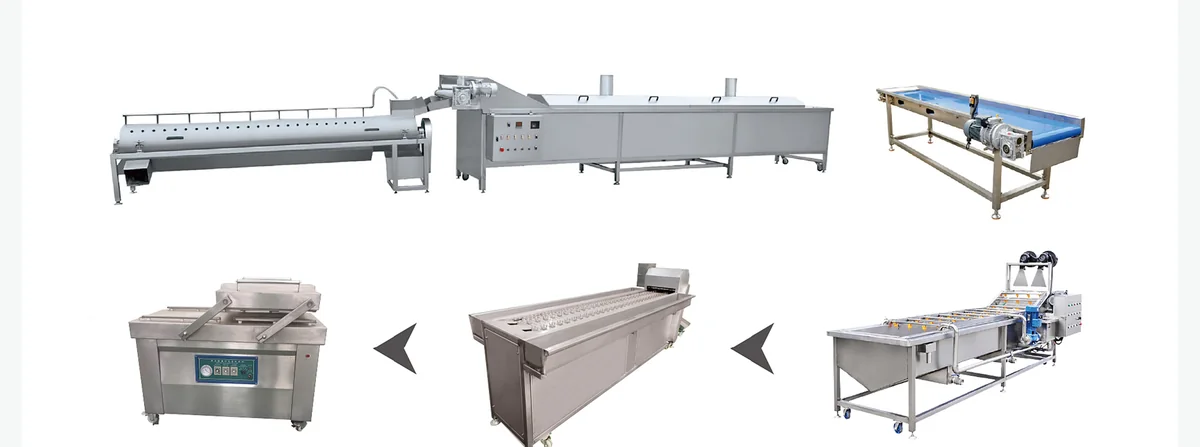
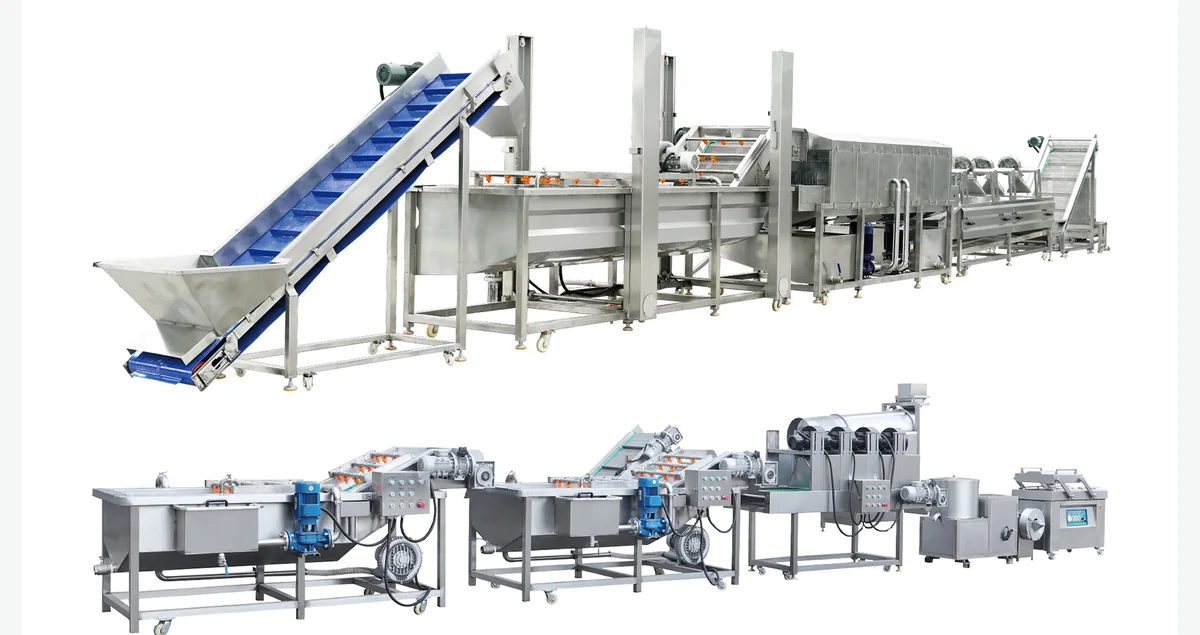
Line connection
Where this machine sits in the line
Move from grading to the sorting, packing and storage stages.
Configuration request