Sorting & conveying
Roller Sorting Conveyor
A conveying and manual-inspection module for moving products through a sorting point before washing, cutting, cooking or packing.
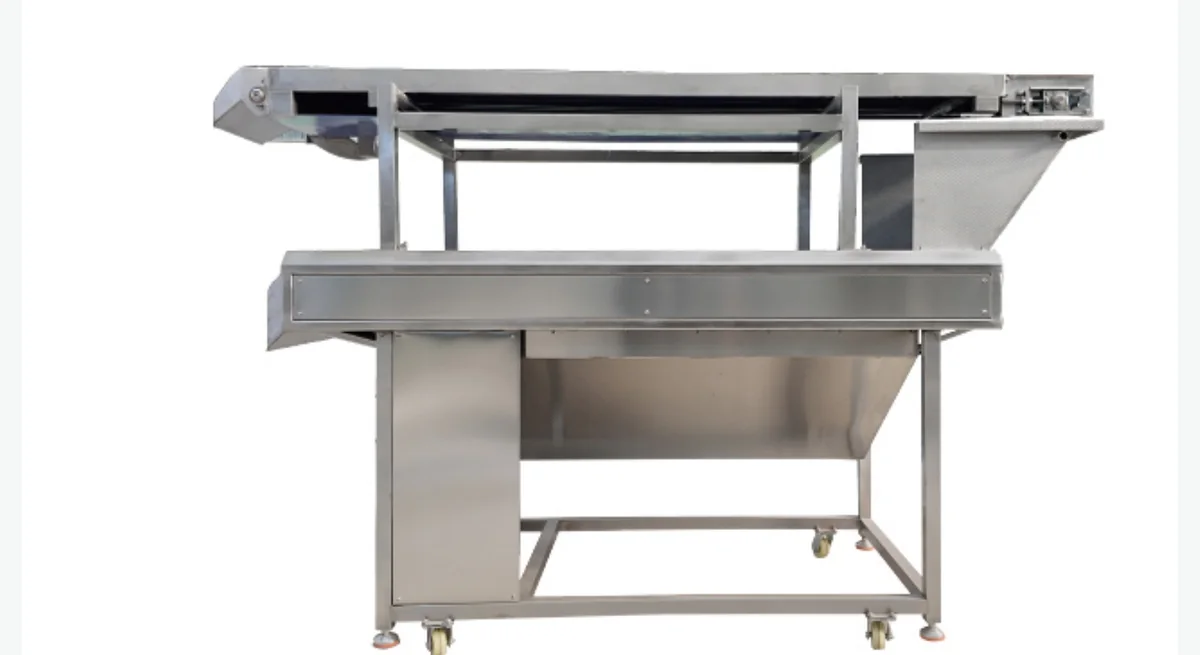
Equipment overview
Roller Sorting Conveyor
A conveying and manual-inspection module for moving products through a sorting point before washing, cutting, cooking or packing.
Ideal applicationsFruit, vegetables and suitable food products requiring visual inspection or manual trimming
Typical process
Where this machine fits
- Product feeding
- Controlled roller conveying
- Manual inspection or sorting
- Discharge to the next process
Product highlights
Configuration points that matter
- Conveyor width, speed and working height should match the labour plan.
- Roller spacing and product contact should be checked against product size and fragility.
Confirm before quotation
Product size, belt or roller spacing, line speed, inspection labour, discharge height and next machine
Buyer review points
The points that confirm the right model for this project.
Material condition
State the product and what is being sorted out of it, because a conveyor with one reject lane and one with several are different arrangements. Give the size range and how much foreign material is normally present, since that decides the reject rate and the detection arrangement rather than the conveyor itself.
Output basis
Give the hourly throughput and the working hours, and state the proportion rejected and where it goes. Say whether the sorting is continuous or needs a pause for manual removal, because manual removal sets the line speed differently from an automatic reject lane.
Factory connection
Check the conveyor length and the aisle width needed for the operator to stand and remove rejects, which is often the constraint that decides whether a longer conveyor can be installed at all. Confirm the power supply against the drive, the floor loading and the belt or roller height against the upstream and downstream machines.
Acceptance method
Agree the test on one specified product and one sorting setup: the rejection rate, the damage rate introduced by the sorting itself, and the throughput actually achieved. Record the belt or roller speed, the sample size and the number of samples in the same document, so the accepted and the delivered machine are described the same way.
Frequently asked questions
Questions to settle before selection
Does a roller sorting conveyor automatically grade every product?
This page describes a conveying and manual-inspection module. Any separate grading function, measuring system or automatic rejection must be listed explicitly in the agreed equipment scope.
How is roller spacing chosen?
Provide the smallest and largest product dimensions and the fragility limits. Check product support and contact at the proposed spacing before confirming the conveyor configuration.
What determines the inspection workstation layout?
Review conveyor width, line speed, working height and the planned inspection labour. Include discharge height and transfer to the next machine in the layout review.
Project boundary: Final model, output, dimensions, utilities, food-contact material scope, price, delivery and service boundary require technical and commercial confirmation before quotation.
Line connection
Where this machine sits in the line
Move from sorting to the packing and storage stages.
Configuration request