Frying
Round Pot Stirring Fryer
A round-pot batch fryer with product mixing and lift-assisted discharge for suitable fried-food processing.
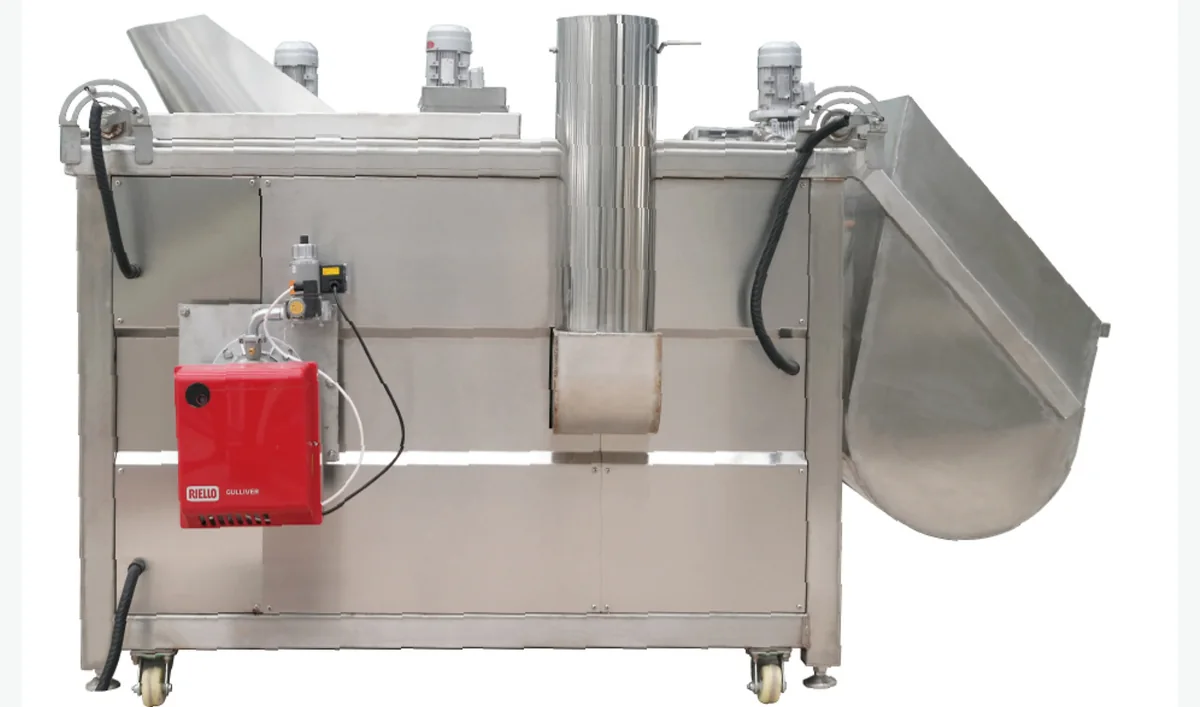
Equipment overview
Round Pot Stirring Fryer
A round-pot batch fryer with product mixing and lift-assisted discharge for suitable fried-food processing.
Ideal applicationsMeat, flour products, vegetables, beans and other products suitable for stirred batch frying
Typical process
Where this machine fits
- Product loading
- Stirred batch frying
- Oil draining
- Lift discharge to cooling or seasoning
Product highlights
Configuration points that matter
- Mixing action should be checked against product fragility and coating.
- Feeding, stirring and discharge automation are selected around labour and batch rhythm.
Confirm before quotation
Product shape, batch weight, frying time, temperature, mixing requirement, heating source and discharge method
Buyer review points
The points that confirm the right model for this project.
Material condition
State the product and its form, because a kettle fryer and a belt fryer suit different products and different shapes. Give the raw weight per hour, the incoming moisture and oil content, and whether the product arrives frozen, chilled or fresh, because the incoming state changes how the oil takes up heat and how long the batch needs.
Output basis
Give the raw input per hour and the finished output per hour, and the oil turnover being bought to, because the kettle volume and the oil volume follow the raw rate. State the working hours, the batch cycle time and the changeover time between products, since a kettle batch fryer needs the full cycle inside the shift figure.
Factory connection
The oil handling decides the layout. Check the floor level and the drainage route for oil, and the extraction path before the frying position is fixed. A kettle is worked from the front, so leave the working space and the aisle for a lifted basket or a tipping arm, and plan the discharge into the cooling section as one straight run.
Acceptance method
Agree the test on one specified product and one fry schedule: the raw input, the oil temperature at discharge, the finished colour, the moisture and the oil content figure being bought to. Record the batch cycle time, the holding time, the sample size and the number of samples in the same document.
Frequently asked questions
Questions to settle before selection
How is stirring suitability checked for coated or fragile foods?
Trial the intended product with the proposed mixing action, batch weight and frying conditions. Inspect coating retention, breakage and finished condition before confirming the stirring arrangement.
What should be agreed for lift-assisted discharge?
Confirm oil draining, discharge direction and the receiving container or conveyor. Review the selected lifting arrangement with the available operator and equipment space.
How is the batch rhythm matched to cooling or seasoning?
Include loading, frying, draining and discharge in the cycle review. Match the receiving stage to that rhythm rather than comparing only frying time.
Project boundary: Final model, output, dimensions, utilities, food-contact material scope, price, delivery and service boundary require technical and commercial confirmation before quotation.
Line connection
Where this machine sits in the line
Move from kettle frying to the cooling, seasoning and packing stages.
Configuration request