Vacuum dehydration
Vacuum Low-Temperature Dehydration Equipment
Vacuum low-temperature dehydration equipment for producing suitable fruit and vegetable chips while limiting high-temperature colour and flavour changes.
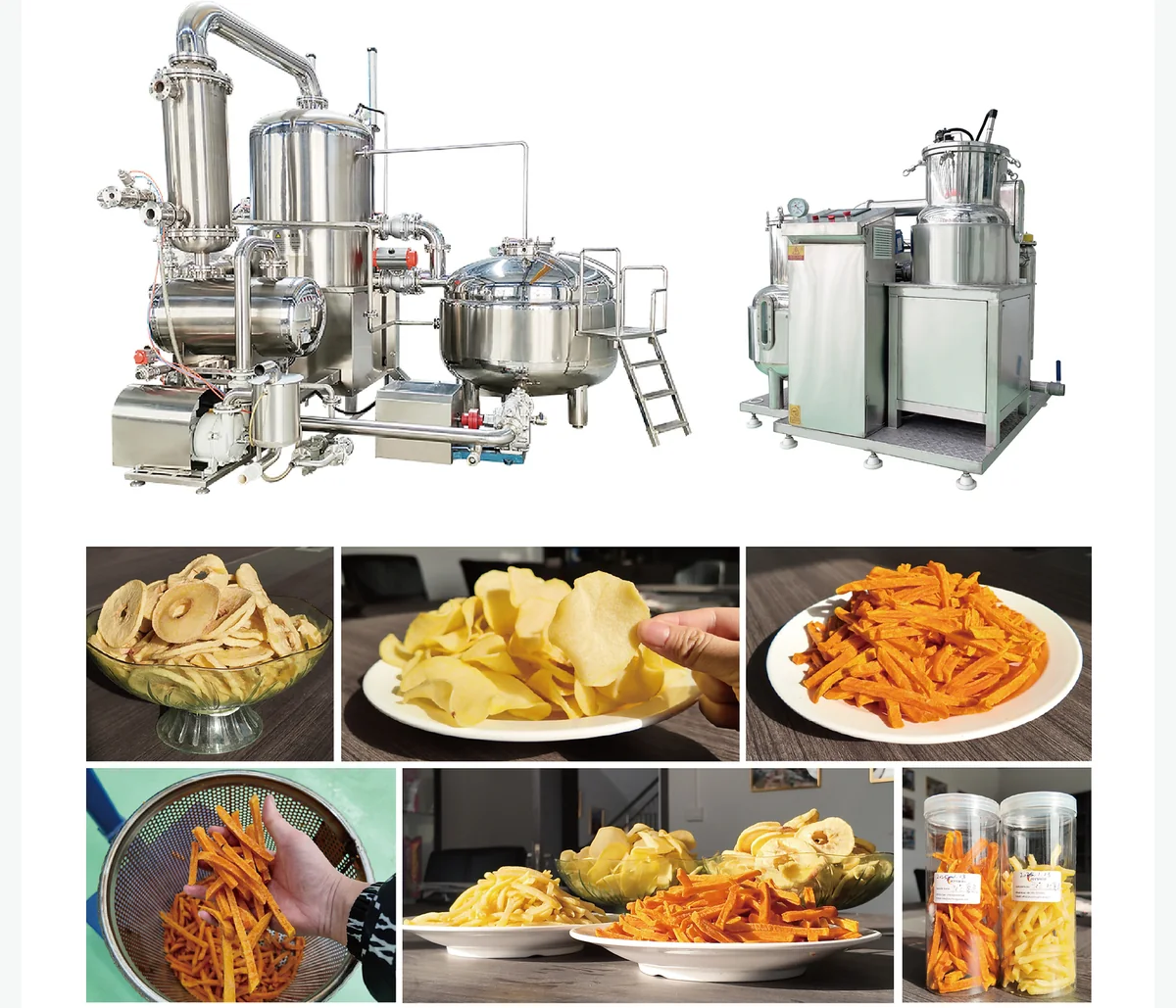
Equipment overview
Vacuum Low-Temperature Dehydration Equipment
Vacuum low-temperature dehydration equipment for producing suitable fruit and vegetable chips while limiting high-temperature colour and flavour changes.
Ideal applicationsFruit and vegetable chips and other products validated for vacuum low-temperature dehydration
Typical process
Where this machine fits
- Material preparation
- Vacuum low-temperature dehydration
- Oil removal or cooling as required
- Product conditioning and packing
Product highlights
Configuration points that matter
- Lower-temperature moisture removal can help manage colour and flavour for suitable products.
- Process time, oil content, moisture and texture require trials with the actual raw material.
- Shelf-life claims require separate packaging and product validation.
Confirm before quotation
Raw material, sugar and moisture, pre-treatment, target texture, batch size, vacuum process, oil handling and required output
Buyer review points
The points that confirm the right model for this project.
Material condition
State the product and how much water has to be removed, because the drying rate and the temperature are set by how the product is allowed to change and not only by the water to remove. Give the size range, the hourly throughput and the starting moisture, since the incoming condition sets the cycle length. Say whether the product is fresh, blanched or cooked before it arrives.
Output basis
Give the hourly input and the dried output, and the moisture at discharge that the project is buying to. State the working hours and whether the machine runs one product or several, because a changeover needs a new programme and a longer vacuum hold. Say whether the dried product is packed immediately or stored first.
Factory connection
Confirm the power supply against the vacuum pump and the heating capacity, and the room space for the vacuum tank and the condenser, since a vacuum dehydrator needs service access that a standard line does not. Check the door swing and the loading arrangement for the tray or basket size, and plan where the condensate drains.
Acceptance method
Agree the test on one specified product and one programme: the starting moisture, the moisture at discharge, the drying time, and the colour and texture change allowed. Record the programme, the vacuum level, the temperature, the sample size and the number of samples in the same document, so the accepted and the delivered machine are described the same way.
Frequently asked questions
Questions to settle before selection
What defines a vacuum low-temperature dehydration trial?
Provide raw material, sugar and moisture condition, pretreatment and target texture. Agree the vacuum process, batch size and required finished condition before evaluating a model.
Are moisture, oil content and texture guaranteed by low temperature alone?
No. These results require a trial with the actual recipe and material. Include oil handling, removal and cooling requirements where applicable in the agreed process scope.
Does the dehydrator alone establish the product shelf life?
Shelf life requires separate product and packaging validation. Confirm the conditioning, packing and storage conditions rather than treating the dehydration step as a shelf-life guarantee.
Project boundary: Final model, output, dimensions, utilities, food-contact material scope, price, delivery and service boundary require technical and commercial confirmation before quotation.
Line connection
Where this machine sits in the line
Move from dehydration to the packing and storage stages.
Configuration request