Sorting & grading
Weighing & Sorting Conveyor Line
An automatic line that classifies products by configured weight ranges and discharges them to separate collection positions.
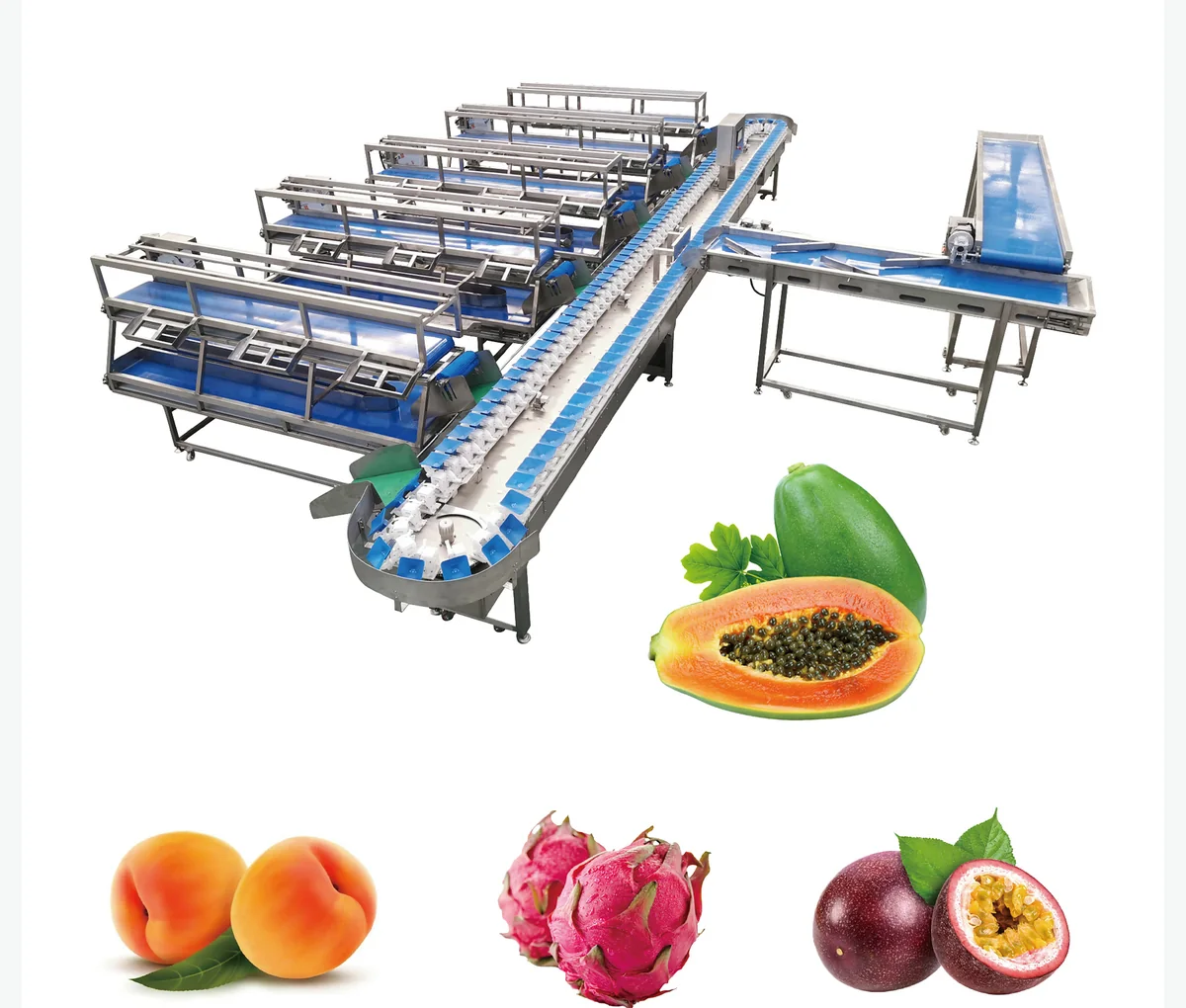
Equipment overview
Weighing & Sorting Conveyor Line
An automatic line that classifies products by configured weight ranges and discharges them to separate collection positions.
Ideal applicationsFruit, poultry portions, sea cucumber, abalone, small fish, shrimp and suitable food products
Typical process
Where this machine fits
- Product feeding and singulation
- Dynamic weighing
- Grade calculation
- Automatic tray or lane discharge
Product highlights
Configuration points that matter
- Suitable applications depend on the product shape, weight range and handling method.
- Actual accuracy and throughput require testing with the product, spacing and grading logic.
- Cleaning access and food-contact scope must be included in the technical review.
Confirm before quotation
Product weight distribution, number of grades, accuracy target, hourly quantity, product spacing and collection method
Buyer review points
The points that confirm the right model for this project.
Material condition
State the product and how much weight variation the incoming material has, because a checkweigher only removes what is already outside the limits. Give the pack format and the target net weight and the legal tolerance that applies, since the machine settings and the reject arrangement follow from that pair rather than from the average alone.
Output basis
Give the hourly pack count and the working hours, and the expected reject rate at the set limits. State the number of reject lanes and whether rejects are re-fed, because a re-feed loop changes the line length and the layout. Say whether the line runs one product or several, since a pack change means a new set of limits.
Factory connection
Confirm the power supply against the conveyor drive and the weighing units, and the compressed air if the reject uses it. Check the infeed and discharge heights against the room, and the space for the reject chute and, where applicable, the re-feed loop. Leave access for the load cells and for cleaning the product path.
Acceptance method
Agree the test on one specified product and one limit setting: the fill weight across the sample, the weight distribution, the reject rate and the legibility of any applied code. Record the limits used, the machine speed, the sample size and the number of samples in the same document, because weight is checked on calibrated equipment and needs a written tolerance.
Frequently asked questions
Questions to settle before selection
What information is needed to set weight grades?
Provide the product-weight distribution and the required collection grades. Agree range boundaries and the handling method using representative samples before confirming the sorting logic.
Can weighing accuracy be judged without the intended feed spacing?
No. Review accuracy and throughput with the actual product, feed spacing and grading logic. A measurement taken under another loading condition is not a direct production comparison.
What should be reviewed around the sorting discharge?
Confirm tray or lane discharge, collection positions and downstream handling. Include cleaning access and the food-contact scope in the technical review.
Project boundary: Final model, output, dimensions, utilities, food-contact material scope, price, delivery and service boundary require technical and commercial confirmation before quotation.
Line connection
Where this machine sits in the line
Move from weighing to the case packing and palletising stages.
Configuration request