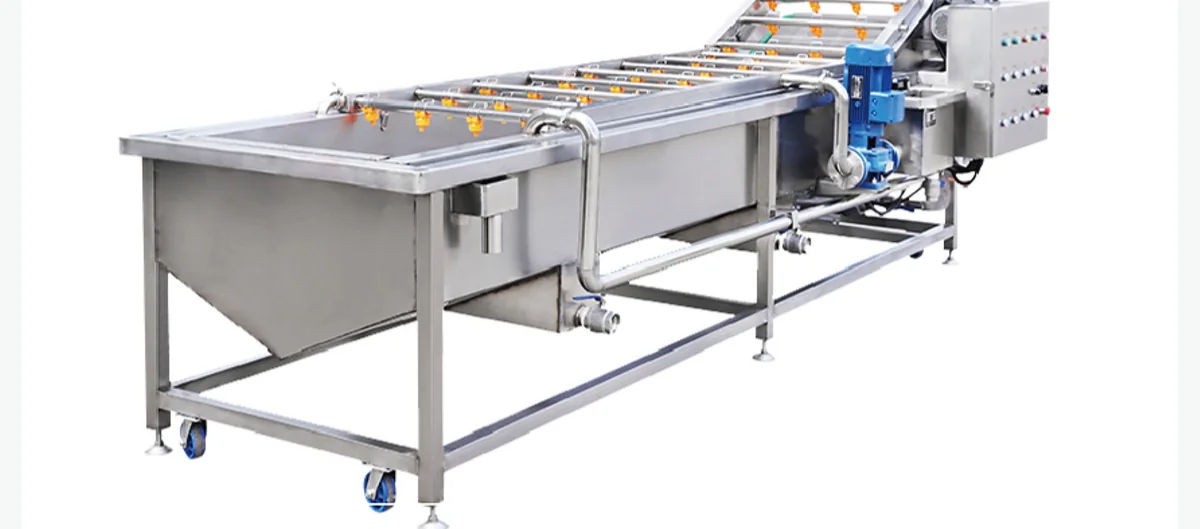
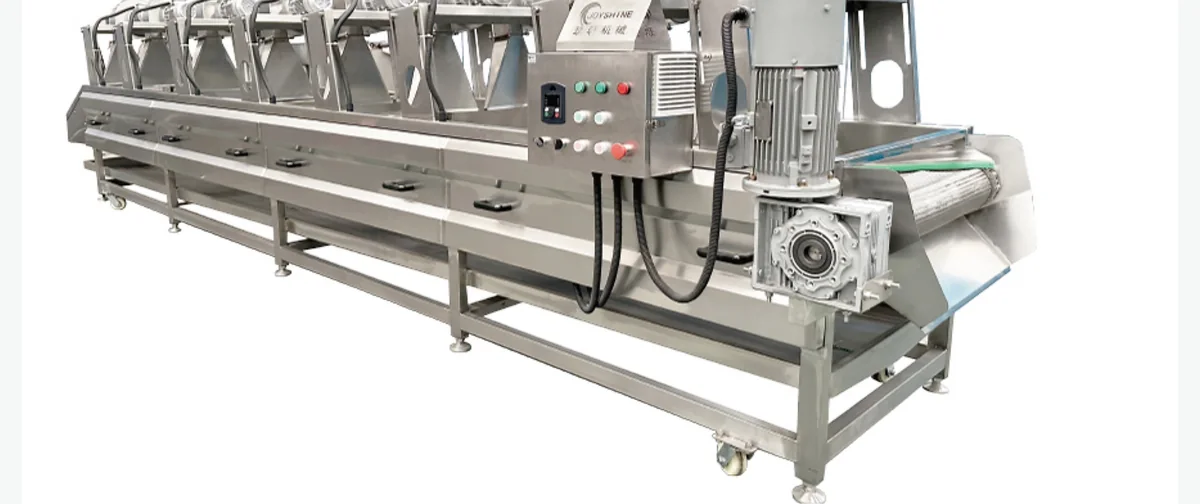
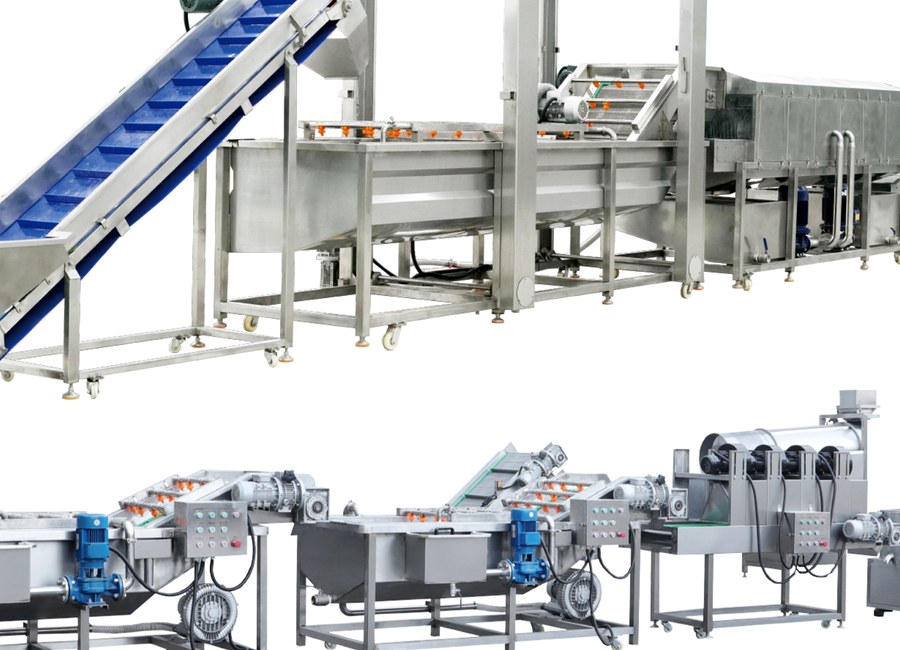
A vegetable washing line is not only a set of tanks and conveyors. It is a water-handling system connected to fresh produce, labour, drainage, hygiene and the downstream process. If the water route is not planned early, the line may clean well during a short test but struggle during a full production shift.
This guide is for processors and distributors reviewing vegetable washing, fruit washing, root crop washing or mixed produce preparation lines. It explains what to confirm before choosing a bubble washing machine, brush washer, inspection conveyor, air drying line or complete produce washing line.
1. Start with the produce and soil condition
Water planning starts with what enters the washer. Leafy vegetables, potatoes, carrots, fruit, herbs and cut vegetables do not create the same water load. Some products release soil and sand quickly; others float, bruise easily or trap residue between leaves.
Before requesting a configuration, prepare photos or short videos of the incoming product. Record whether it arrives from open field, greenhouse, storage, pre-trimmed crates or an upstream cutting step. The supplier needs to understand whether the line is removing field dirt, rinsing an already prepared product, or doing a final cleaning stage before packing.
- Product type, size range and handling sensitivity
- Soil, sand, leaf, stem or foreign-material level
- Whether the product floats, sinks or needs gentle support
- Incoming temperature and storage condition
- Manual trimming or inspection before washing
2. Define the water route before defining the machine list
A washing line may include soaking, air bubble washing, spray rinsing, brush cleaning, elevation, inspection and air drying. Each stage needs a clear water route: where clean water enters, where dirty water exits, how sediment is collected and how operators clean the tank.
Water circulation can improve efficiency, but it does not remove the need for fresh water or sanitation control. A circulating tank may need filtration, overflow, sediment baskets, regular water replacement and space for cleaning access. If this is not planned, the line becomes harder to operate as the shift continues.
| Water item | Why it matters | What to confirm |
|---|---|---|
| Fresh water inlet | Sets cleaning consistency and makeup capacity | Pressure, flow, pipe location and water quality |
| Circulation | Reduces waste but can concentrate soil if unmanaged | Filtration, overflow and replacement method |
| Sediment removal | Protects pumps and keeps the tank cleanable | Sand, soil and leaf collection route |
| Drainage | Controls floor hygiene and cleaning speed | Drain position, floor slope and wastewater handling |
| Sanitation | Affects product safety and audit readiness | Buyer standard, cleaning frequency and responsible process |
3. Match washer type to the cleaning target
The washer should be selected by product behaviour and cleaning target, not by the tank name alone. Air bubble washing is often reviewed for leafy vegetables, fruit and products that benefit from agitation without aggressive mechanical contact. Brush washing or roller washing may be more relevant for root vegetables where surface contact is needed.
For a complete line, the washer must also connect to inspection and moisture removal. If the product leaves the washer with too much surface water, packing, freezing, frying or weighing can become less stable. That is why a produce air drying line or draining conveyor may be part of the washing project rather than a separate purchase.
- Use gentle agitation for fragile products that bruise easily
- Use stronger mechanical contact only where the product can tolerate it
- Confirm discharge height and product transfer before layout approval
- Plan inspection lighting and operator space if defects must be removed
- Review downstream moisture requirement before choosing air drying
4. Capacity is limited by dwell time, not only motor power
Washing capacity is often discussed as kilograms per hour, but the real limit is the balance of feeding rate, tank dwell time, product layer thickness and discharge stability. A high feed rate can reduce cleaning effect if the product passes through the tank too quickly or piles up before the outlet.
When comparing quotations, ask what the supplier assumes about incoming soil level, product size, water depth, effective washing time and labour at inspection points. Two machines with the same nominal capacity can behave differently if one assumes pre-cleaned produce and the other assumes field-level soil.
5. The factory floor decides whether the line is easy to run
A produce washing line needs more than the machine footprint. Operators need safe access for feeding, inspection, cleaning and maintenance. Water needs to move toward drainage, not across dry packing areas. Dirty and clean zones should be thought through before the layout is approved.
Send a factory drawing that shows door position, columns, drain channels, ceiling height, clean water source, wastewater route and the next process stage. If the line connects to cutting, frying, freezing or packing, mark that connection on the same drawing. A layout that ignores water flow can look compact on paper and become difficult to clean in reality.
Vegetable washing line RFQ checklist
- Produce photos, size range and handling sensitivity
- Soil, sand, leaf and foreign-material condition
- Target output and working hours per shift
- Cleaning target: pre-wash, main wash or final rinse
- Fresh water pressure, flow and water quality condition
- Drainage route, wastewater handling and floor slope
- Need for inspection, air drying, cutting, freezing or packing connection
- Factory drawing with door, drain and utility locations
- Cleaning access and sanitation responsibility
Frequently asked questions
Can one vegetable washing line handle leafy vegetables and root vegetables?
Sometimes, but the washing intensity, product support, sediment handling and downstream drying requirements are different. A supplier should review the actual produce mix before confirming one shared line.
Does water circulation mean the line uses no fresh water?
No. Circulation can reduce waste and stabilise operation, but fresh water makeup, overflow, filtration, sediment removal and sanitation rules still have to be planned for the specific product and factory.
What should be sent before requesting a vegetable washing line quotation?
Send produce photos, soil load, target output, water source, drainage condition, available space, downstream process, cleaning standard and whether air drying, inspection or packing will be included.