A washing line should remove the agreed soil and loose impurities without creating unnecessary product damage. The correct process depends on whether the product is leafy, firm, delicate, rooted, peeled, cut or packed whole.
Machine selection must therefore begin with the product and cleaning target rather than a standard line drawing.
Separate products by handling requirement
List the products, but also group them by surface sensitivity, shape, density and dirt condition. One line can sometimes process several products, but the feeding, washing intensity and changeover method may need adjustment.
| Product condition | Possible process | Main confirmation point |
|---|---|---|
| Leafy or delicate produce | Controlled water agitation and spray rinsing | Product damage, floating behaviour and residence time |
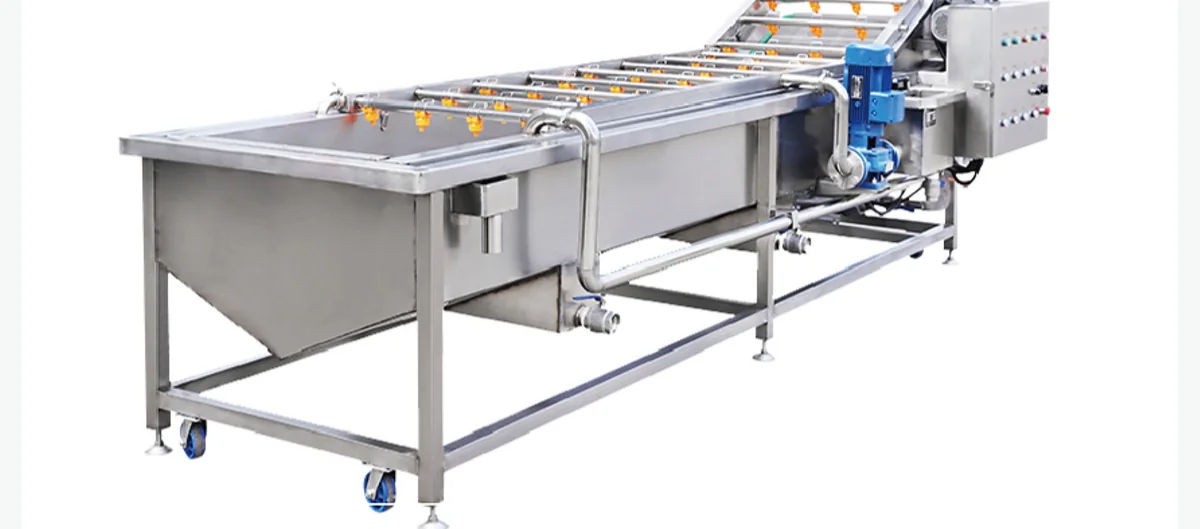
| Firm fruit and vegetables | Bubble washing, spray rinsing and inspection | Dirt type, rolling impact and surface finish |
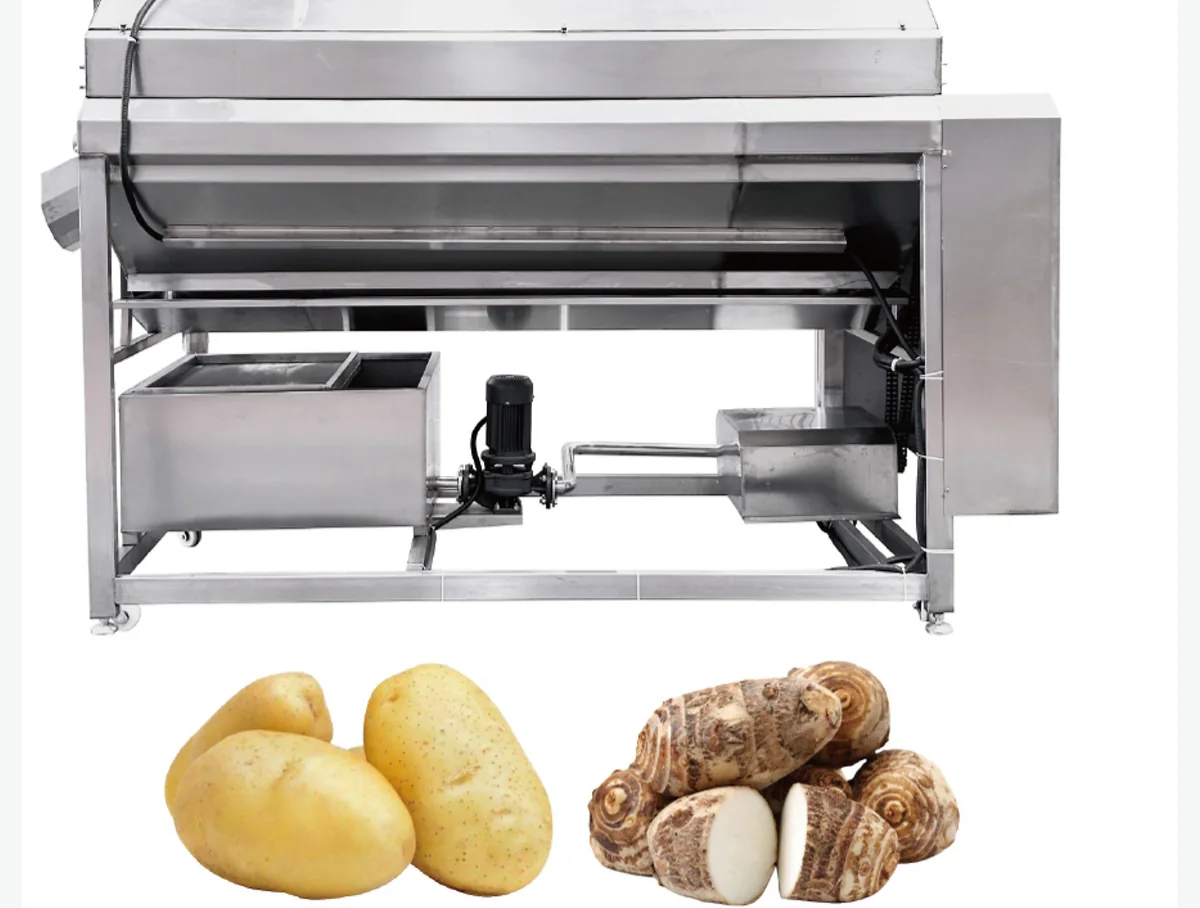
| Root vegetables | Brush washing or surface peeling | Brush stiffness, peeling depth and wastewater |
| Cut produce | Gentle washing and controlled transfer | Cut-surface damage, water quality and downstream dewatering |
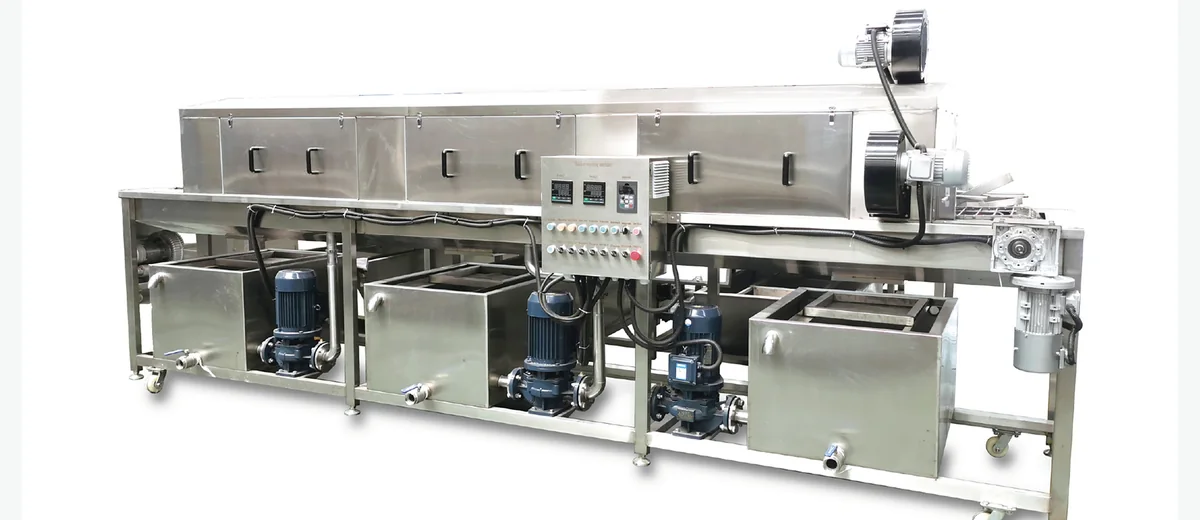
| Reusable crates | Separate multi-stage crate washing process | Crate size, soil, detergent, sanitation and drying |
Build the line from process modules
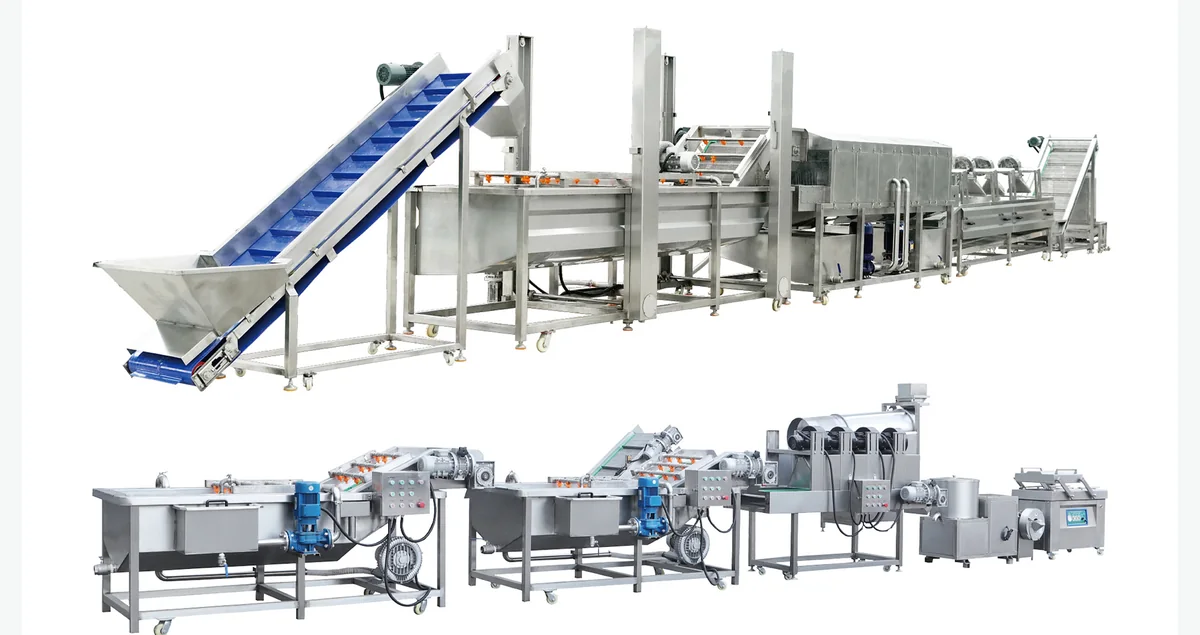
A produce line may use feeding, preliminary sorting, washing, fresh-water rinsing, inspection, cutting, surface-water removal and packing preparation. The sequence should keep dirty and clean zones visible and avoid unnecessary transfer points.
- Controlled feeding to prevent overloading
- Pre-sorting or removal of large impurities
- Primary washing matched to the product
- Fresh-water final rinse where required
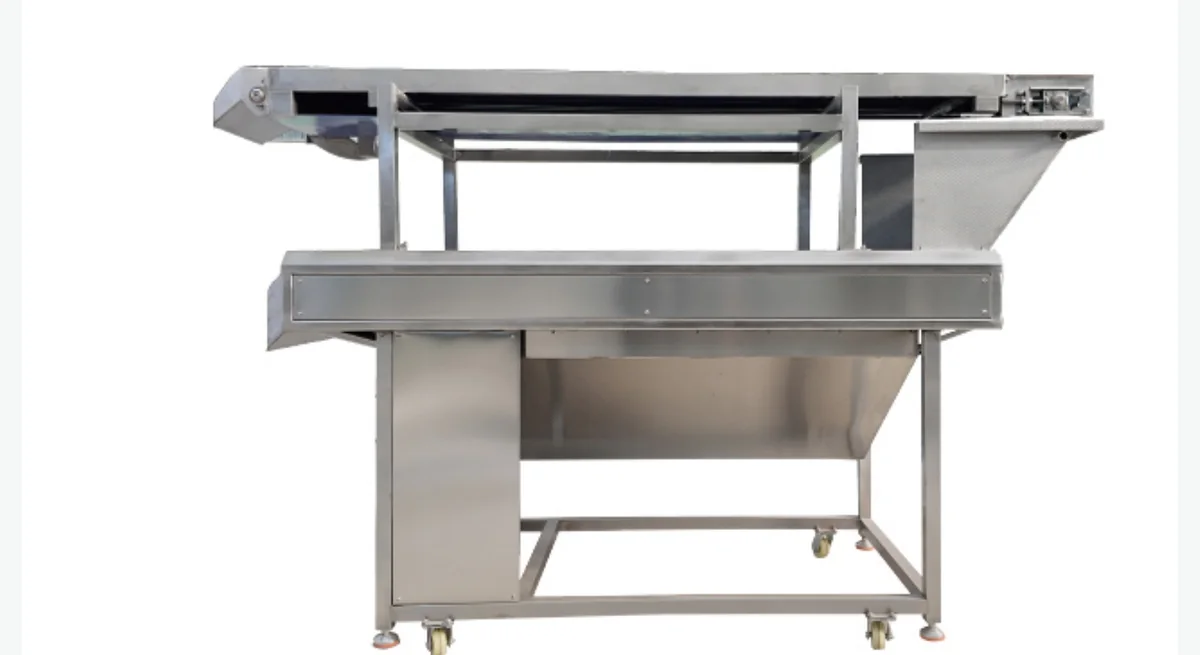
- Inspection or trimming station
- Cutting or grading modules
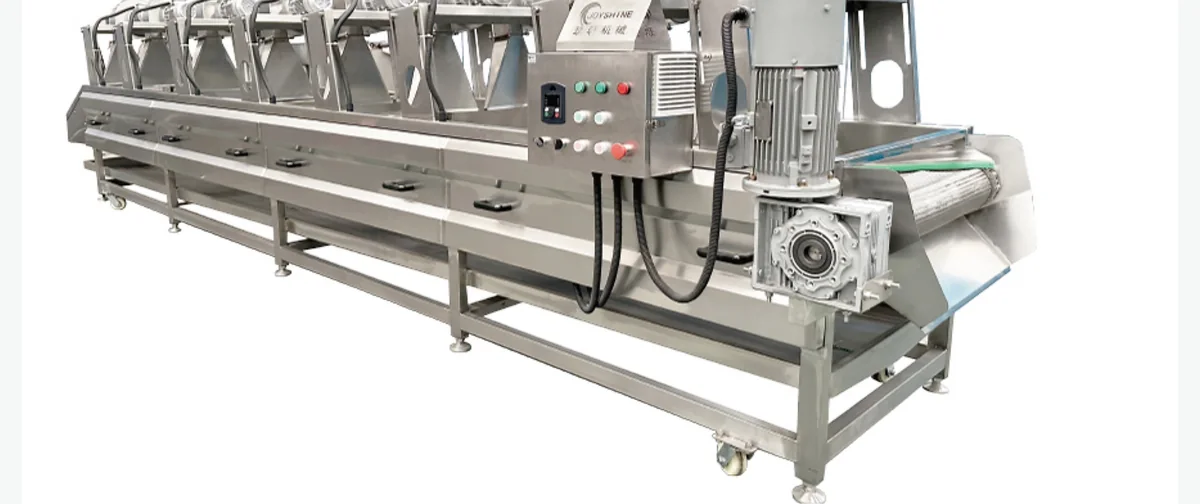
- Air drying or other surface-water removal
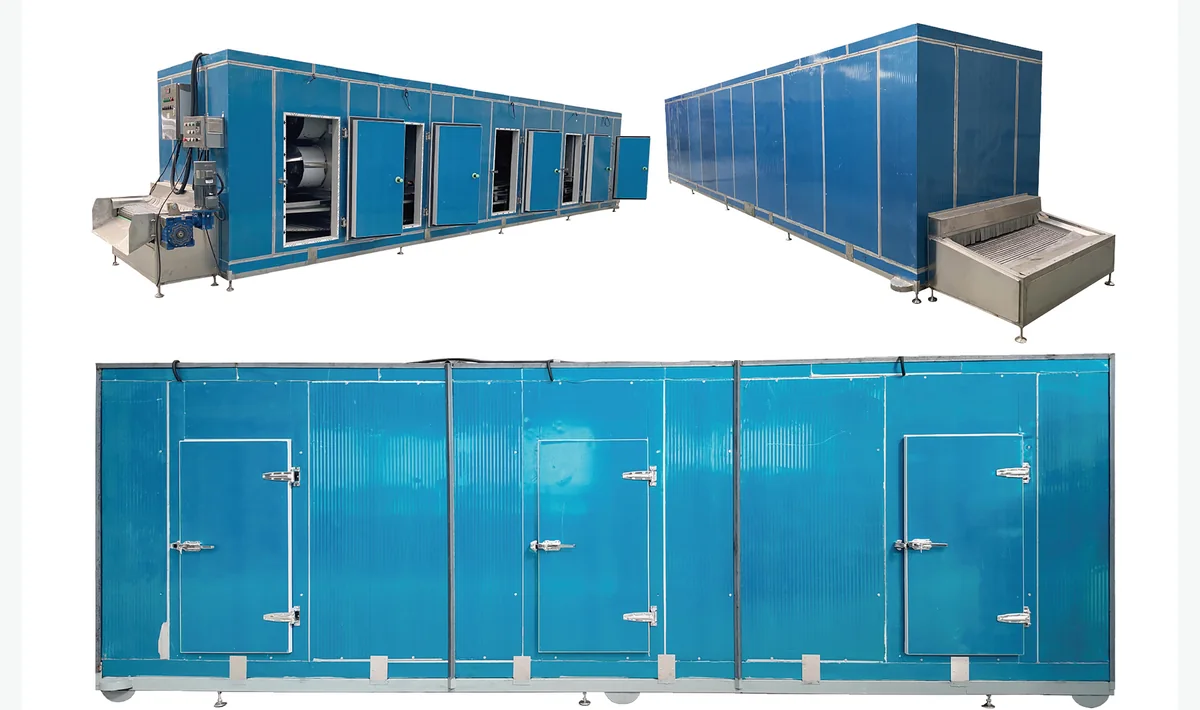
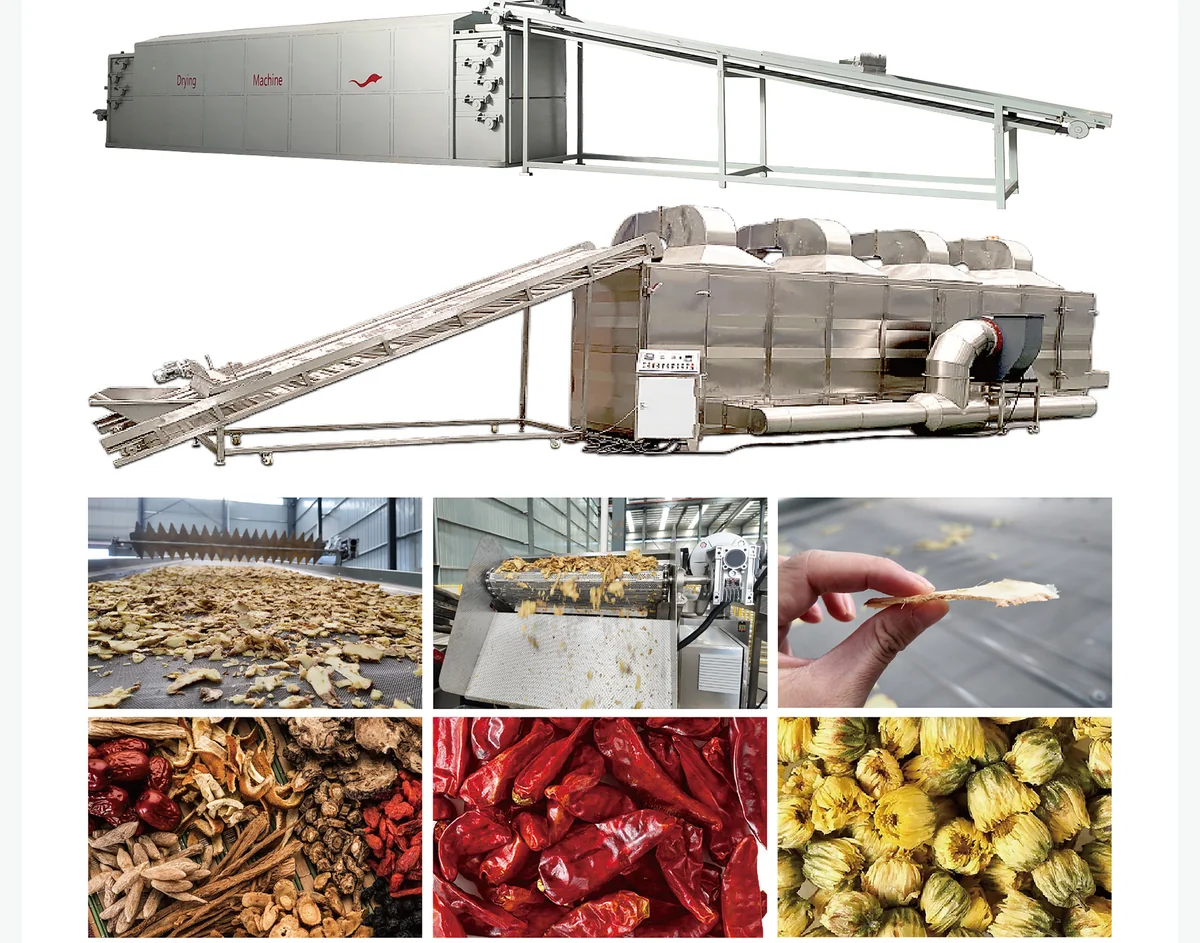
- Transfer to packing, freezing, drying or cooking
Plan water, filtration and sanitation together
Water recirculation can reduce fresh-water use, but the filtration, make-up water, cleaning method and wastewater route must match the sanitation requirement. The equipment alone cannot define the complete water-management plan.
Record the available water quality, supply pressure, drainage capacity, wastewater handling and cleaning chemicals. Any sanitation or food-safety requirement should be reviewed by the responsible process and compliance team.
Balance the washing line with the next process
A washer can only operate steadily when feeding and discharge are controlled. If cutting, inspection, air drying or packing is slower than the washer, product can accumulate and the actual line result will differ from a stand-alone machine test.
Confirm the expected product loading per metre, conveyor speed, operator positions and transfer heights during layout review.
Use a product-based acceptance test
Define the incoming dirt condition, test quantity, washing settings, inspection method and acceptable finished condition. For delicate products, include a damage or breakage check. For root vegetables, clarify whether the target is cleaning, surface polishing or peeling.
The accepted test material should represent normal production. A final performance commitment requires the agreed product and test method.
Washing line input list
- Product list and photos
- Incoming dimensions and dirt condition
- Required cleaning result
- Surface-damage limit
- Hourly output and shift plan
- Water supply and quality
- Drainage and wastewater route
- Downstream cutting, drying or packing
- Factory layout and operator plan
- Cleaning and sanitation requirement
Frequently asked questions
Can one washing line process several vegetables?
It may be possible when the products have compatible handling and sanitation requirements. Feeding, washing intensity, residence time, transfer and changeover should be reviewed for each product.
Is a bubble washer suitable for root vegetables?
A bubble washer can remove loose surface soil, while some root vegetables may require brush washing or peeling. Product surface, dirt type and the required finished condition determine the process.
What comes after washing?
The next stage may be inspection, cutting, blanching, air drying, freezing, drying or packing. The downstream process should be confirmed before the washer discharge and line layout are selected.