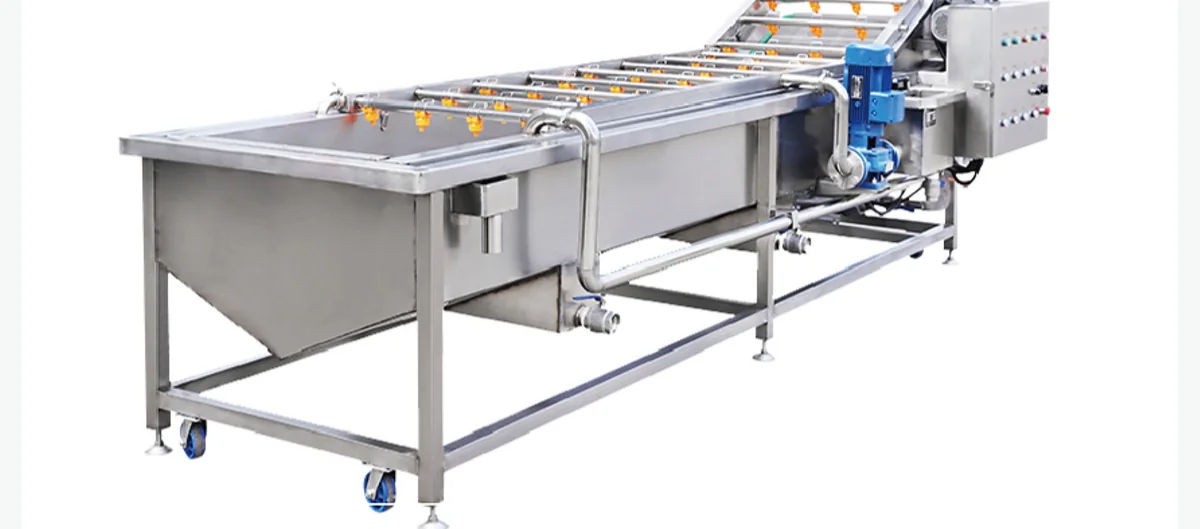
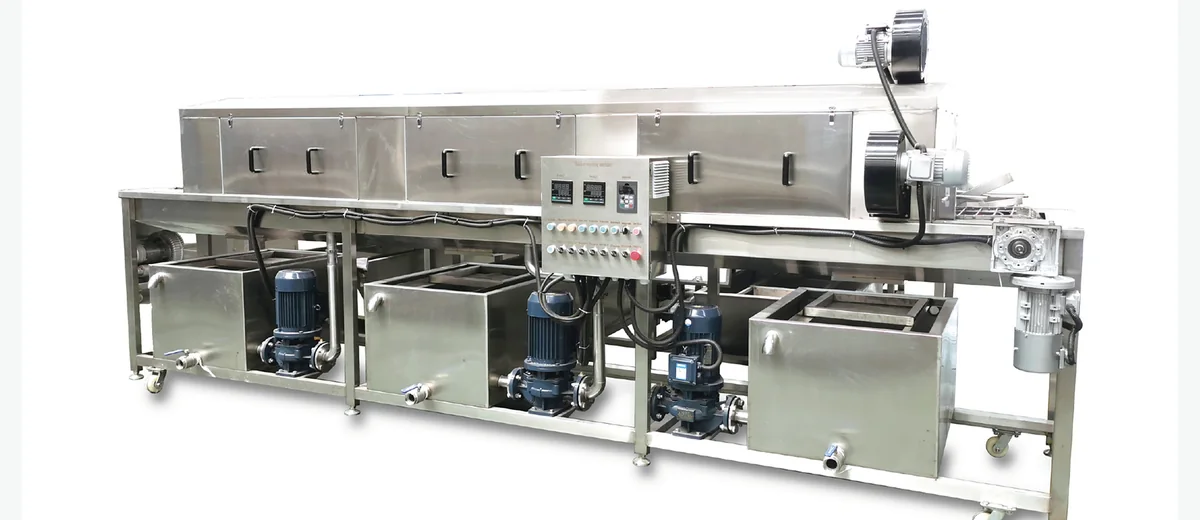
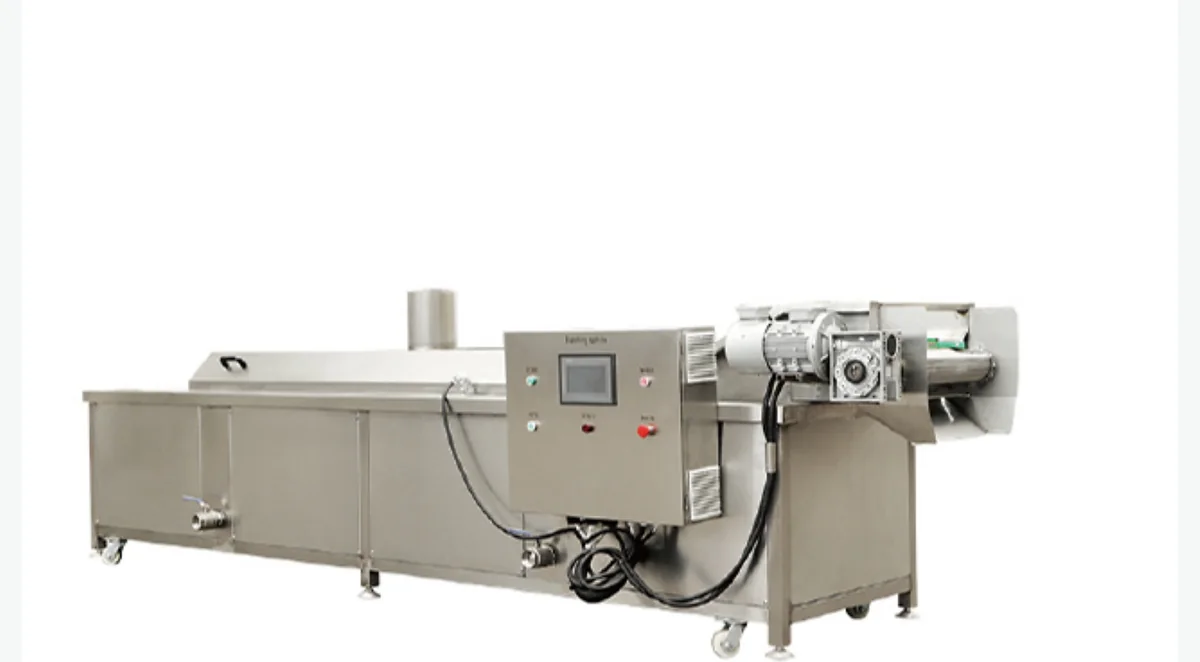
A bubble washing machine cleans vegetables and fruits by forcing air into a water tank, creating bubbles and turbulence that lift soil away from the product surface while the material moves along the tank. It is one of the most common first stages in a fresh produce line because it is gentle on the product and works well with produce that still carries field soil.
Choosing one is less about the product name and more about matching the tank, belt, water system and discharge height to your actual product and supply rhythm. This guide covers what to confirm before you request a quotation.
1. How a bubble washing machine works
The working principle is straightforward. Produce enters the tank and is carried forward by a conveyor belt or by water flow. A blower or air pump pushes air through pipes at the bottom of the tank, producing a continuous stream of bubbles. The rising bubbles agitate the water and the product, so soil, sand and loose surface matter separate from the material and settle or are carried away by the water exchange.
In most designs a spray section sits above the discharge end. The product leaves the water, passes under fresh-water nozzles and moves on to the next stage already partly drained. Agitation strength, water level and belt speed are the three parameters operators adjust most often.
Because the product is moved by water and air rather than by hard brushing, the method suits items that bruise easily, including leafy greens, berries and soft fruit.
2. Which vegetables and fruits it suits
Air bubble washing is a good starting point for a wide range of fresh produce, but the working parameters are not identical for every material. The table below shows where the method is usually a strong fit and where it needs support from another stage.
| Produce type | Fit with bubble washing | Points to confirm |
|---|---|---|
| Leafy greens (lettuce, spinach, cabbage, herbs) | Very good | Gentle agitation, short contact time, careful discharge to avoid bruising |
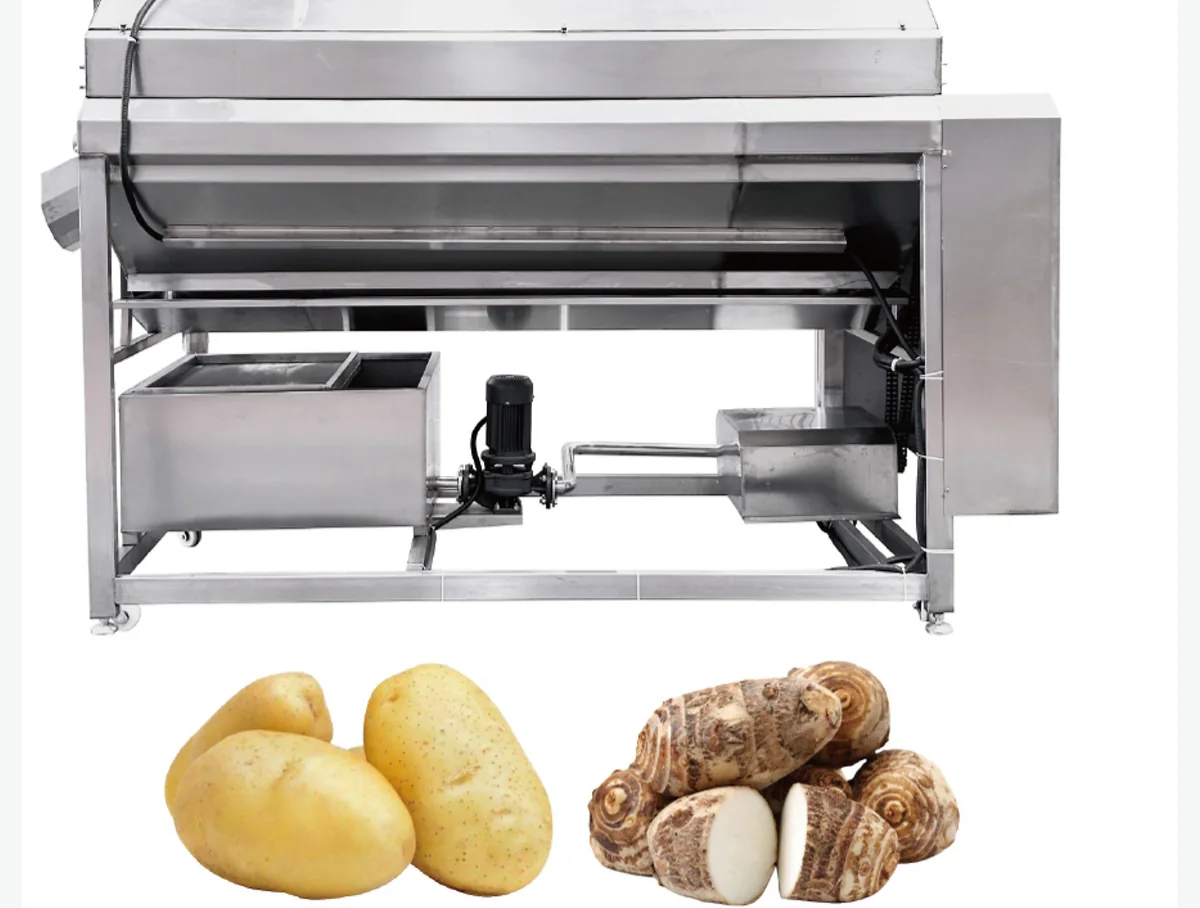
| Root vegetables (potato, carrot, ginger, taro) | Good, often with a brush stage | Heavier soil load; may need pre-soak or brush roller before the washer |
| Fruit (apple, tomato, citrus, mango) | Good | Surface sensitivity, stem damage, soft spots |
| Berries and delicate fruit | Possible with reduced agitation | Reduced air pressure, lower belt speed, padded transitions |
| Cut or sliced vegetables | Good for rinsing | Shorter contact time, hygiene control, water exchange rate |
| Heavily soiled, mud-coated material | Not as a single stage | Pre-wash or dry de-soiling first, then bubble washing |
If your product mix changes seasonally, tell the supplier which material is the most difficult or the most important. A configuration reviewed around the hardest product is usually safer than one tuned only to the easiest.
3. Main components to review
Two machines with the same stated capacity can differ a lot in construction. These are the parts worth reviewing in a specification sheet.
- Tank: length, width, depth, material thickness and internal structure
- Air system: blower or air pump type, pipe layout, air volume and adjustment range
- Conveyor: belt type, belt width, speed range and drive motor
- Spray section: number of nozzle rows, water pressure and coverage at the discharge end
- Water exchange: inlet arrangement, overflow design and drain position
- Filtration and recycling: filter screen, settling zone, optional circulation pump or tank
- Discharge: height and direction, so the washer matches the following machine
- Frame and hygiene: stainless steel grade, welding finish, cleanability and drainage slope
- Control: simple start-stop panel or variable-speed control for belt and air
Optional equipment such as ozone or UV treatment, additional spray zones and water recycling units should be decided during planning, not after the machine is built. Retrofitting these systems usually costs more than including them in the original design.
4. Bubble washing compared with other washing methods
Bubble washing is one option among several. The right choice depends on the product surface, the soil type and the required finish.
| Method | Usually selected for | Limitations |
|---|---|---|
| Air bubble washing | Leafy greens, root vegetables, fruit, high field-soil load | Needs water exchange and drainage planning; very heavy mud may need a pre-stage |
| Brush roller washing | Potato, ginger, carrot and other firm root crops with surface soil | Not suitable for delicate or bruised material |
| High-pressure spray washing | Firm products, crates and containers | Higher water consumption; can damage soft produce |
| Immersion with pre-soak | Very heavy soil, dried mud | Needs longer residence time and larger tank volume |
In practice many lines combine two methods: a brush roller stage for firm root crops followed by air bubble washing, or a pre-soak tank followed by bubble washing with a final spray rinse. Combining stages is normal, and the combination should be reviewed together with the capacity of each unit.
5. Specifications to confirm before requesting a quotation
A quotation is only as useful as the information behind it. These points cover most of what a supplier needs to review a bubble washing machine configuration.
| Item | What to confirm |
|---|---|
| Product | Exact produce type, shape and size range, fresh or cut |
| Capacity | Peak incoming volume per hour, not only the daily average |
| Soil level | Field soil, sand, mud, wax or surface residues |
| Required finish | Visual standard, water clarity, final rinse requirement |
| Water supply | Available flow rate and pressure, water source and quality |
| Drainage | Drain position, floor slope, whether water recycling is planned |
| Utilities | Voltage, phase and frequency at the site (for example 380V / 50Hz or 415V / 50Hz) |
| Layout | Available length and width, ceiling height, access route for installation |
| Upstream and downstream | Feeding method and the machine that follows the washer |
| Operating plan | Shifts per day, cleaning routine between products, labor available |
If some of these points are not yet fixed, say so clearly. A supplier can still review the project with working assumptions, but the assumptions should be written down so they can be confirmed later.
6. Water, filtration and drainage planning
Water management is where many bubble washing projects are won or lost. The washing result depends on water quality as much as on bubble intensity: circulating dirty water will re-contaminate clean produce at the discharge end.
Three practical points are worth planning early. First, decide the water exchange rate, meaning how quickly dirty water leaves the tank and fresh water enters. Second, plan solid separation, usually a filter screen or settling zone that catches sand and leaves before they block the air pipes. Third, plan the drain: the drainage point, floor slope and whether wash water goes to treatment or to a recycling tank.
For buyers in regions where water cost or discharge rules are strict, a recycling arrangement with filtration and a settling tank may be worth including from the start. It usually costs less than retrofitting after installation, and it reduces the volume of wastewater the site has to handle.
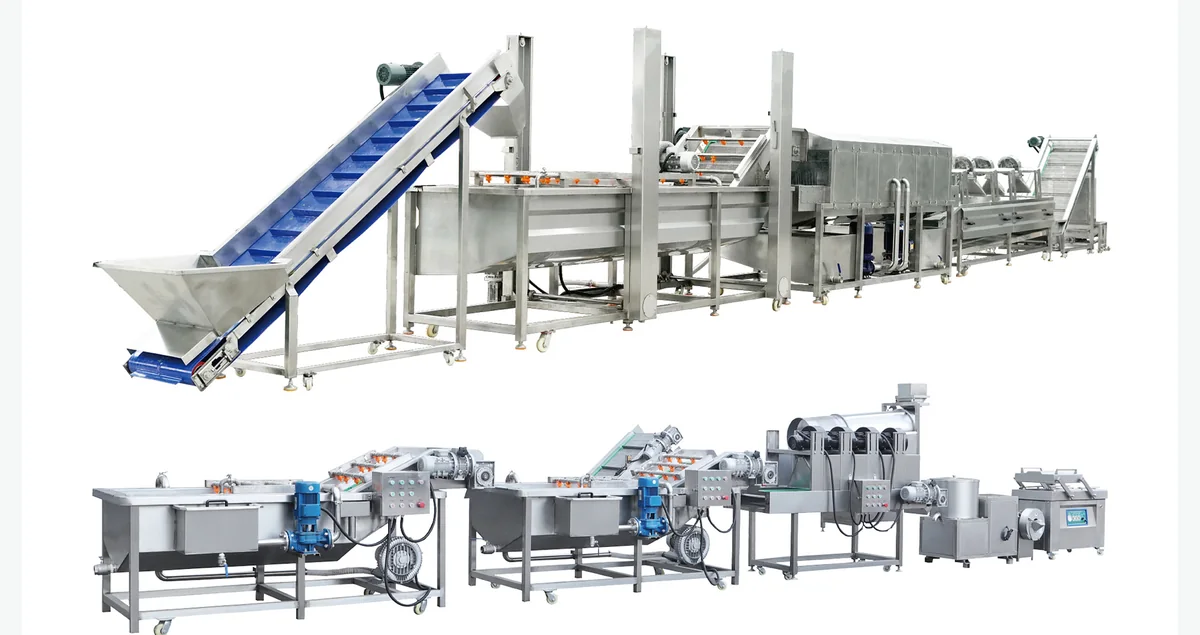
7. How the washer fits into a produce line
A bubble washer is rarely used alone. It normally sits between receiving and the next processing stage, and the connections on both sides determine whether the line runs smoothly or creates bottlenecks.
- Upstream: receiving, dry de-soiling, destoning or a pre-soak tank, depending on soil level
- The washer itself: air bubble tank with a spray section at the discharge end
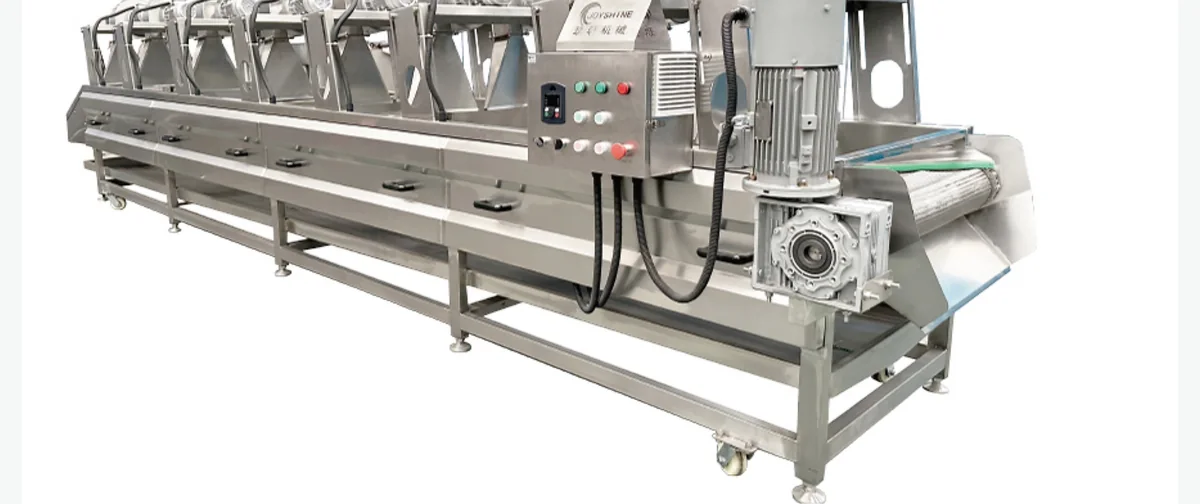
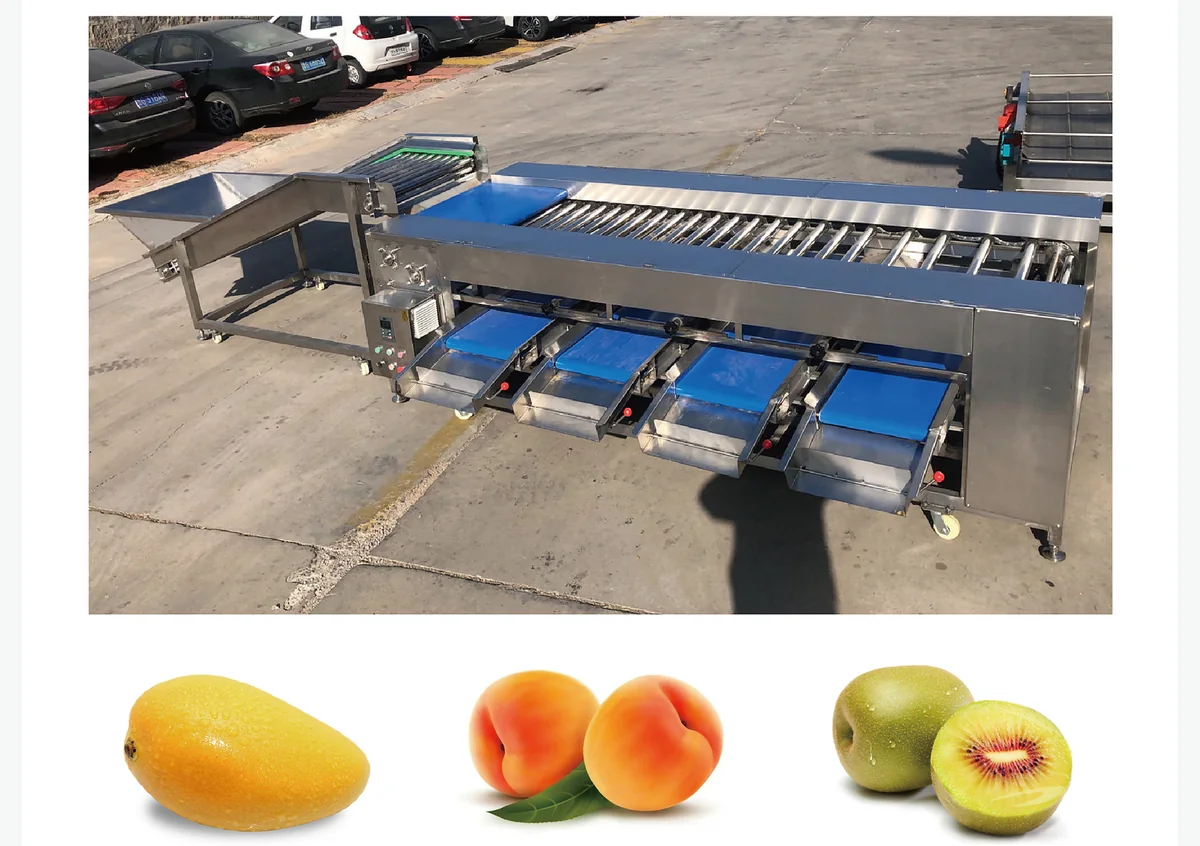
- Downstream: draining, air drying, grading, cutting, blanching or packing
The discharge height of the washer should match the inlet height of the next machine, or a transfer conveyor should be planned between them. If the next stage is a grading or sorting unit, the washer output should be matched to the grading capacity so that product is not left waiting in water.
For a fuller picture of how the individual machines connect, including water use, layout and capacity matching across the whole process, see our planning guide on planning a fruit and vegetable washing line. Buyers preparing a first enquiry may also find the food processing equipment RFQ checklist useful before contacting suppliers.
8. Common selection mistakes
Most problems that appear after installation can be traced back to decisions made during selection. These are the ones we see most often.
- Sizing by daily average. Fresh produce arrives in batches, so a washer sized on average output is undersized at peak hours.
- Ignoring the discharge height. If the washer does not align with the next machine, an extra conveyor and extra cost appear later.
- Treating the washer as a complete cleaning solution. Heavy soil or waxed produce often needs a stage before or after the washer.
- Leaving water planning until the end. Insufficient water supply, blocked drains or no recycling plan can limit the whole line.
- Comparing price without comparing scope. Tank dimensions, belt width, stainless steel grade, spray coverage and control type all differ between quotations.
- Not testing with the real product. Final cleaning performance should be reviewed against the actual material and the required finished standard.
Bubble washing machine RFQ checklist
- Produce type, size range and fresh or cut condition
- Peak incoming volume per hour
- Soil and residue level of the incoming material
- Required finished cleaning standard
- Water supply, pressure and drainage conditions
- Voltage, phase and frequency at the site
- Available floor space and ceiling height
- Feeding method and the machine that follows the washer
- Whether water recycling or an additional rinse stage is required
- Cleaning routine, labor plan and spare-parts expectation
Frequently asked questions
What is the difference between a bubble washing machine and an air bubble washing machine?
They usually describe the same type of equipment. Air is blown into a water tank to create bubbles and turbulence that lift soil away from the produce. Naming can differ between suppliers, so the specification sheet matters more than the product name.
Can one bubble washing machine handle both leafy greens and root vegetables?
Often it can, but the working parameters are not identical. Leafy greens need gentler agitation and shorter contact time, while root vegetables usually carry more soil and may need a longer tank, a pre-soak or a brush roller stage before the bubble washer.
How much water does a bubble washing machine use?
Water use depends on tank volume, exchange rate, the soil load of the material and whether a recycling or filtration system is installed. Buyers should confirm the expected water consumption per ton of product and plan the drainage and recycling arrangement before installation.
Does a bubble washer remove soil and surface residues?
It removes loose soil, sand, surface dust and part of the surface residues through agitation and flushing. Stubborn residues or wax layers may require additional stages such as brush washing, blanching or a dedicated treatment step. Final cleaning performance should be verified with the actual product sample.
What capacity should a buyer choose?
Capacity should be based on peak incoming volume rather than average daily output, because fresh produce arrives in batches. The washer should be matched to the upstream supply rhythm and to the downstream draining, grading or drying equipment so the line does not bottleneck.
Can a bubble washing machine be added to an existing line?
In many cases yes, but the discharge height, belt width, available floor space, water supply and drainage points need to be measured first. Sharing photos and dimensions of the existing line helps the supplier review whether the new washer can connect without major changes.