Thermal preparation
Food Blanching Machine for Fries & Vegetables
Controlled hot-water blanching equipment for french fries, potato slices and vegetables, reviewed by temperature, residence time, heating source, cooling and line connection.
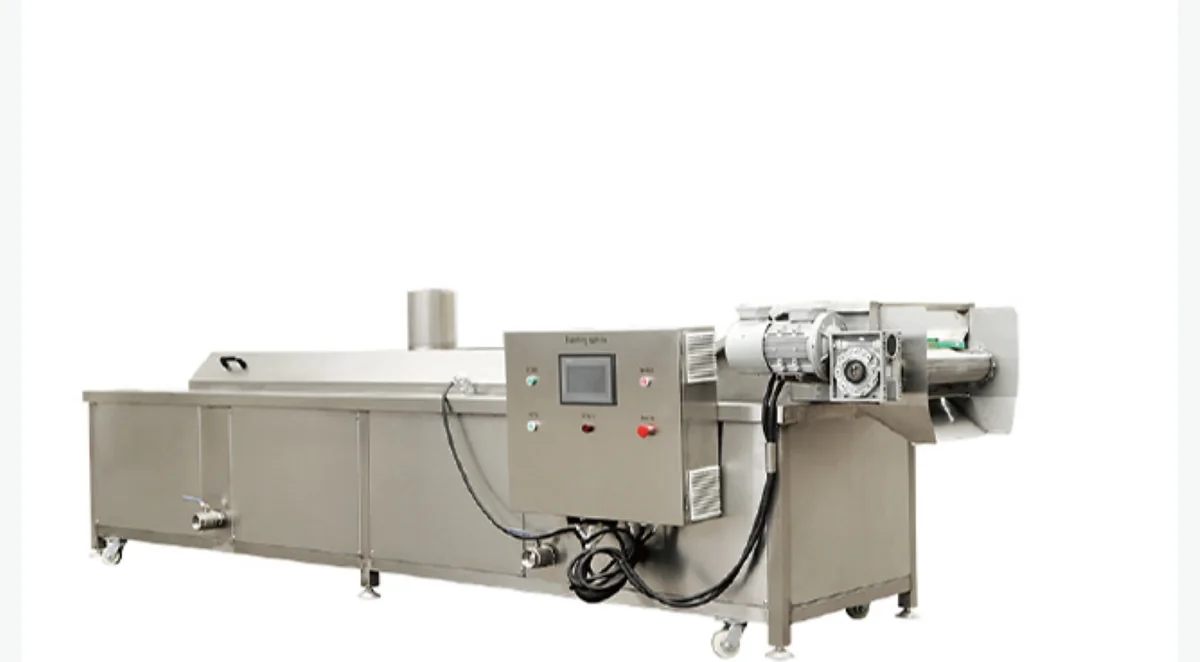
Equipment overview
Food Blanching Machine
A food blanching machine uses controlled hot water or steam-assisted hot-water treatment to prepare product before frying, freezing, drying, cooling or packing. In potato and vegetable lines, the blanching step helps stabilise colour, reduce enzyme activity, improve texture and prepare the surface condition for the next process.
Ideal applicationsFrench fries, potato slices, leafy or cut vegetables and suitable food products with an agreed blanching recipe
Typical process
Where this machine fits
- Washed or cut product feeding
- Controlled hot-water blanching
- Residence-time and temperature control
- Discharge to cooling, dewatering, air drying, frying or freezing
Product highlights
Configuration points that matter
- Temperature and residence time must be matched to the intended finished product and raw material condition.
- Water circulation, make-up, sanitation, cooling and downstream dewatering should be reviewed as one process.
- For french fries, blanching affects colour, texture, sugar control, frying stability and freezing performance.
Confirm before quotation
Product size, inlet condition, target temperature, residence time, heating source, cooling step, dewatering method and required output
Process role
Blanching is a control step, not only a heating step.
In a potato or vegetable processing line, blanching is used to prepare the product before the next operation. For french fries, the blanching condition can influence final colour, internal texture, surface moisture and frying consistency. For vegetable lines, it can reduce enzyme activity and help stabilise colour before cooling, drying, freezing or packing. The correct machine selection therefore depends on the product recipe, not just on the machine length.
For french fries
Review cut size, potato variety, sugar level, blanching temperature, residence time, discharge moisture and the downstream air-drying or frying step.
For potato chips or slices
Confirm slice thickness, starch removal target, breakage risk and whether the process requires rinsing, blanching, dewatering or direct frying.
For vegetables
Confirm product shape, colour target, cooling speed, water replacement, final pack route and whether the product goes to drying, freezing or cooking.
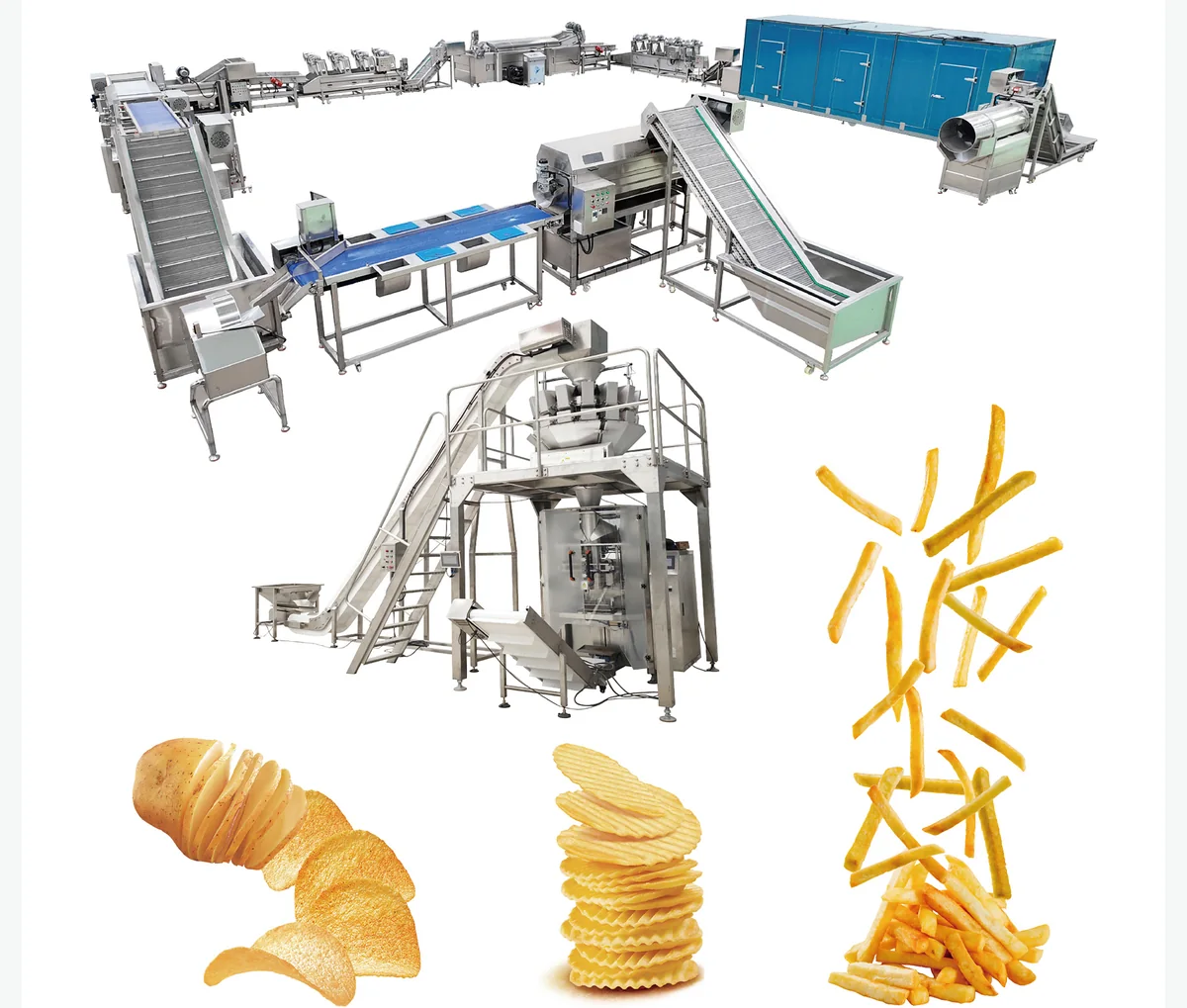
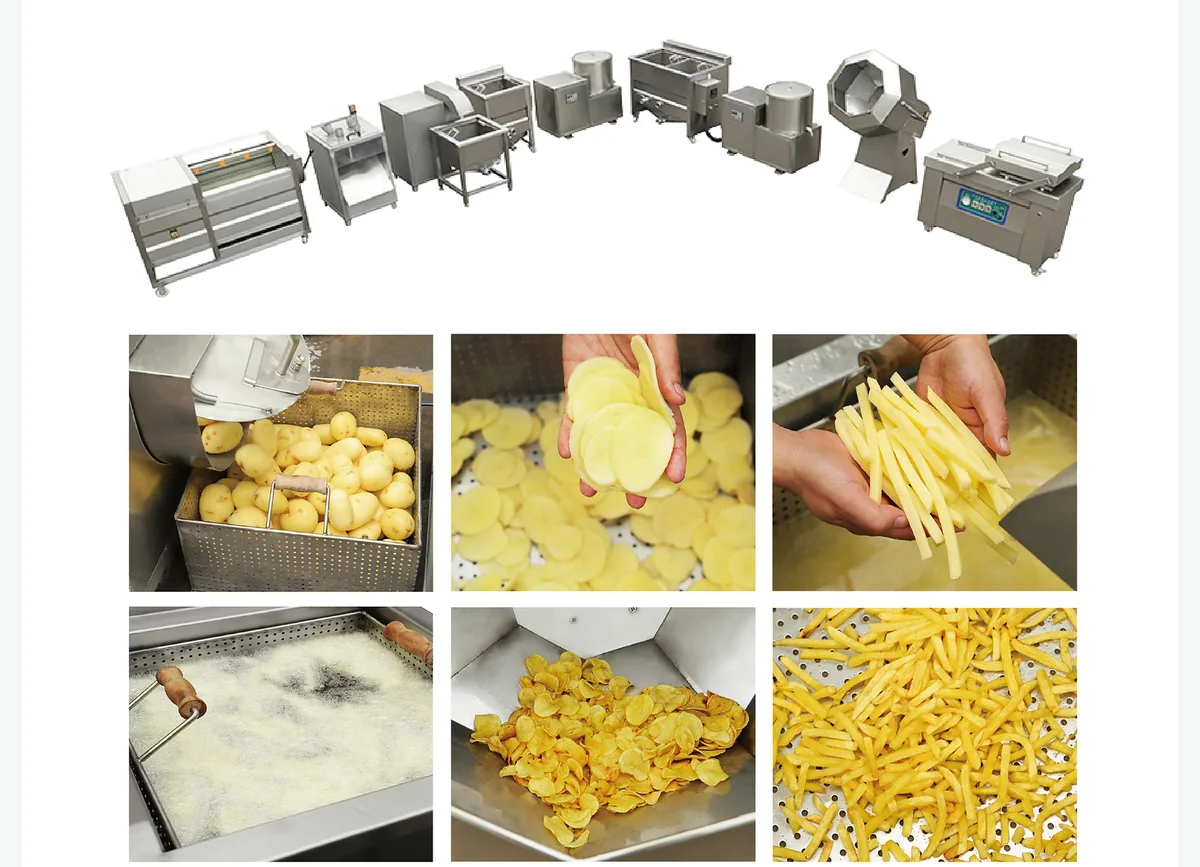
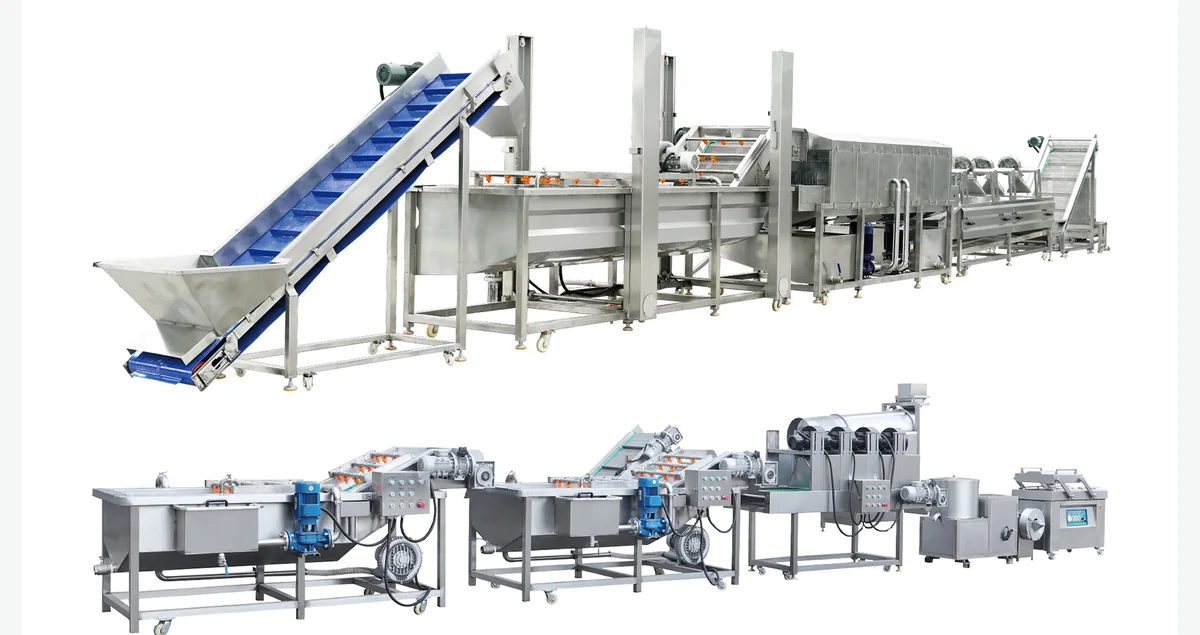
For complete lines
Match the blancher to upstream washing or cutting speed and downstream cooling, dewatering, air drying, fryer, freezer or packing equipment.
Selection parameters
What decides the right blanching machine?
| Parameter | Why it matters | What to confirm |
|---|---|---|
| Product size and shape | Controls belt loading, water flow, residence time and breakage risk | Whole, strip, slice, cube, leaf or mixed-size product |
| Inlet condition | Washed, peeled, cut or preheated material behaves differently in hot water | Product temperature, starch, soil, peel and surface moisture |
| Temperature and time | The same machine can produce different results under different recipes | Target temperature range, residence time and allowable variation |
| Heating source | Decides power, utility load, operating cost and installation scope | Electric, gas, steam or other available plant utilities |
| Cooling and dewatering | Blanching normally creates a downstream heat and moisture load | Cooling tank, cold water, air drying, vibration draining or conveyor dewatering |
| Sanitation and cleaning | Starch, vegetable solids and process water affect daily cleaning workload | Drain points, access covers, water replacement and cleaning routine |
Buyer review points
The points that confirm the right model for this project.
Material condition
State the raw vegetable or potato, its size range and its initial temperature, because blanching time and temperature are set by how the tissue has to change rather than by a fixed recipe. Say how long the product has been stored, since storage affects how the tissue responds, and whether the product is washed before it arrives.
Output basis
Give the incoming weight per hour and the output after blanching, and the blanch time the process needs, because the tunnel length and the belt speed follow from holding the product at temperature for that time. State the working hours and whether the line is continuous or in campaigns, and whether the water is recirculated.
Factory connection
Blanching runs hot and wet, so the steam or hot water supply and the extraction at the tunnel decide the layout. Confirm the water demand and the drainage capacity at the machine position, and check the infeed and discharge conveyor heights against the room. Leave access for the temperature control panel and for cleaning access at both ends.
Acceptance method
Agree the test on one specified raw material and one blanch profile: the incoming temperature, the temperature held at the exit, the holding time, and the colour and texture change the buyer is buying to. Record the belt speed, the sample size and the number of samples in the same document, because the result is judged on the cut surface and needs a written reference.
RFQ preparation
Information to send before a blanching machine quotation
A useful quotation should be based on your product and process route. If only the machine name is provided, suppliers can only give a rough reference. Send the following information before comparing price.
| Information | Why it matters | Example |
|---|---|---|
| Product and dimensions | Sets belt width, loading depth and handling method | French fries 9 mm, potato slices, carrot cubes, leafy vegetables |
| Target process result | Clarifies whether the machine is used for colour, texture, enzyme control or pretreatment | Before frying, before freezing, before drying or before packing |
| Temperature and residence time | Determines tank length, belt speed, heating load and output | Supplier to review if recipe is not fixed |
| Capacity basis | Prevents confusion between raw input and finished output | kg/h raw product, kg/h after blanching or shift output |
| Utilities and heating | Decides electrical load, steam/gas scope and installation boundary | Voltage, phase, frequency, steam pressure, gas source or electric heating |
| Line connection | Determines inlet height, discharge direction and control coordination | Washer, cutter, cooling tank, air dryer, fryer, freezer or packing machine |
Frequently asked questions
Questions to settle before selection
What products can use a food blanching machine?
A blanching machine can be reviewed for french fries, potato slices, vegetables and other suitable products when the required temperature, residence time, product size and downstream process are confirmed.
What information is needed before quotation?
Send product photos, product size, inlet condition, target output, blanching temperature and time if known, heating source, voltage, cooling method, factory layout and downstream equipment.
Can the machine be connected to a complete line?
Yes. The feeding height, discharge direction, conveyor speed, water circulation, cooling step and controls need to be reviewed with the complete process.
Is the capacity guaranteed by the website?
No. Website figures are reference information. Capacity and finished-product results require confirmation with actual material and agreed test conditions.
Project boundary: Final model, output, dimensions, utilities, food-contact material scope, price, delivery and service boundary require technical and commercial confirmation before quotation.
Line connection
Where this machine sits in the line
Move from blanching to the cutting, frying or freezing stages.
Configuration request