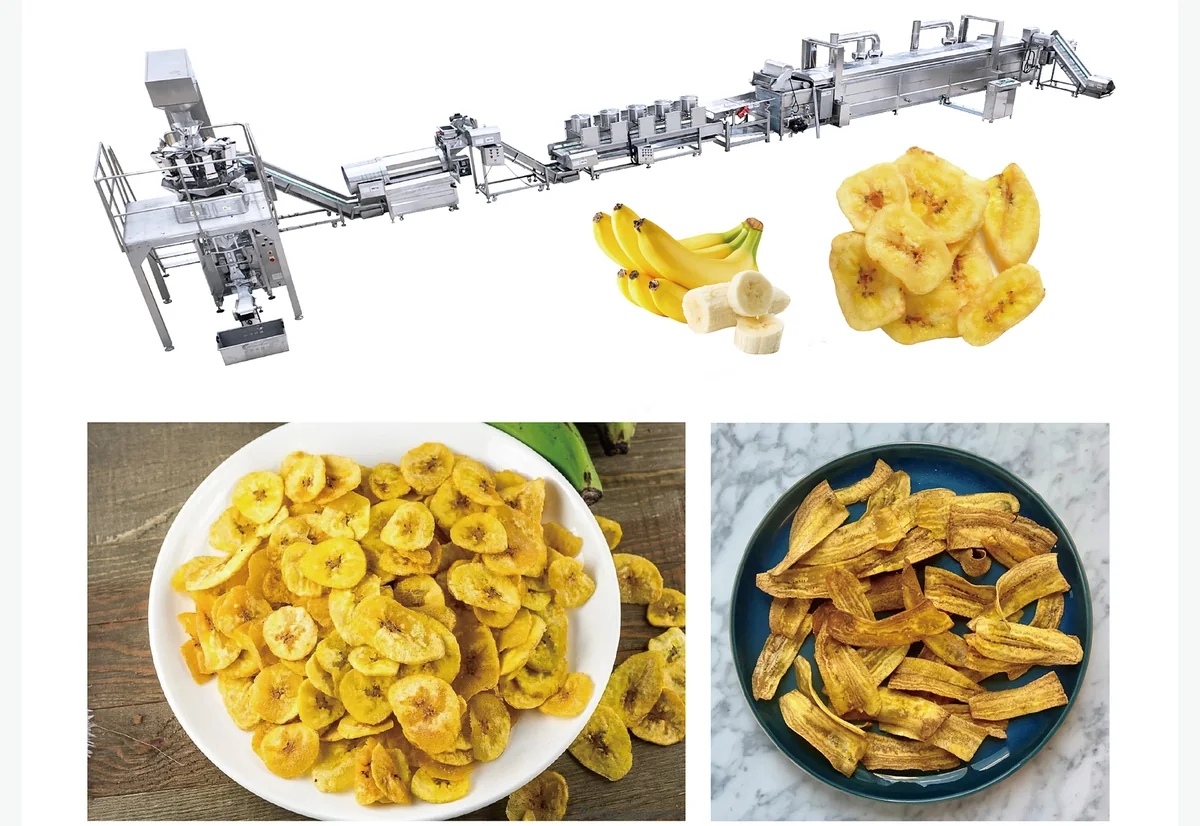
A banana chips production line turns raw bananas into fried, seasoned and packed chips through a fixed sequence of stages: peeling, slicing, washing, frying, de-oiling, seasoning and packing. The machines are mostly shared with potato chips and other fried snack lines, but the raw material behaves differently, and that changes how the line should be sized.
This guide walks through each stage, the choice between semi-automatic and fully automatic configurations, and the capacity calculation that should be settled before requesting a quotation.
1. What a banana chips line includes
The process from farm crate to retail pack is short, but every stage affects the next one. The table below shows the standard stages, the equipment normally used and what deserves attention at each point.
| Stage | Typical equipment | What it does | Points to confirm |
|---|---|---|---|
| Receiving and peeling | Manual peeling tables or a peeling machine | Removes peel, sorts out over-ripe or damaged fruit | Peeling labour cost, variety and ripeness range |
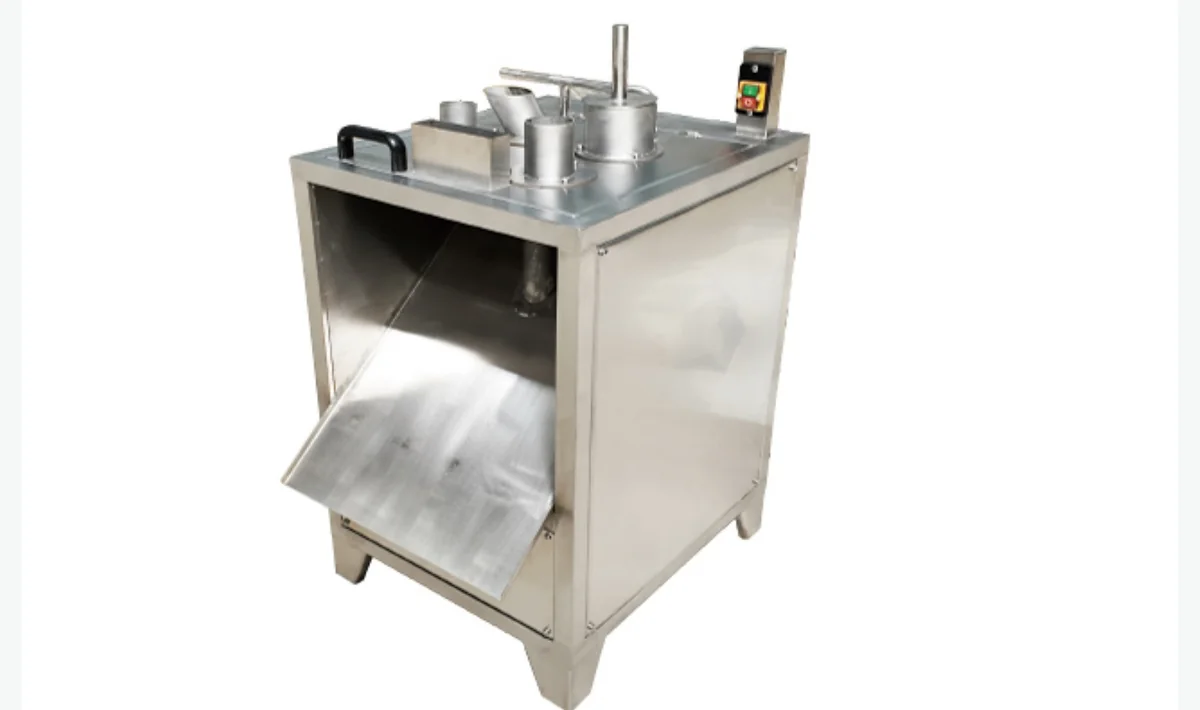
| Slicing | Slicing machine with adjustable thickness | Cuts even slices for uniform frying | Slice thickness range, blade change, wet slicing vs dry |
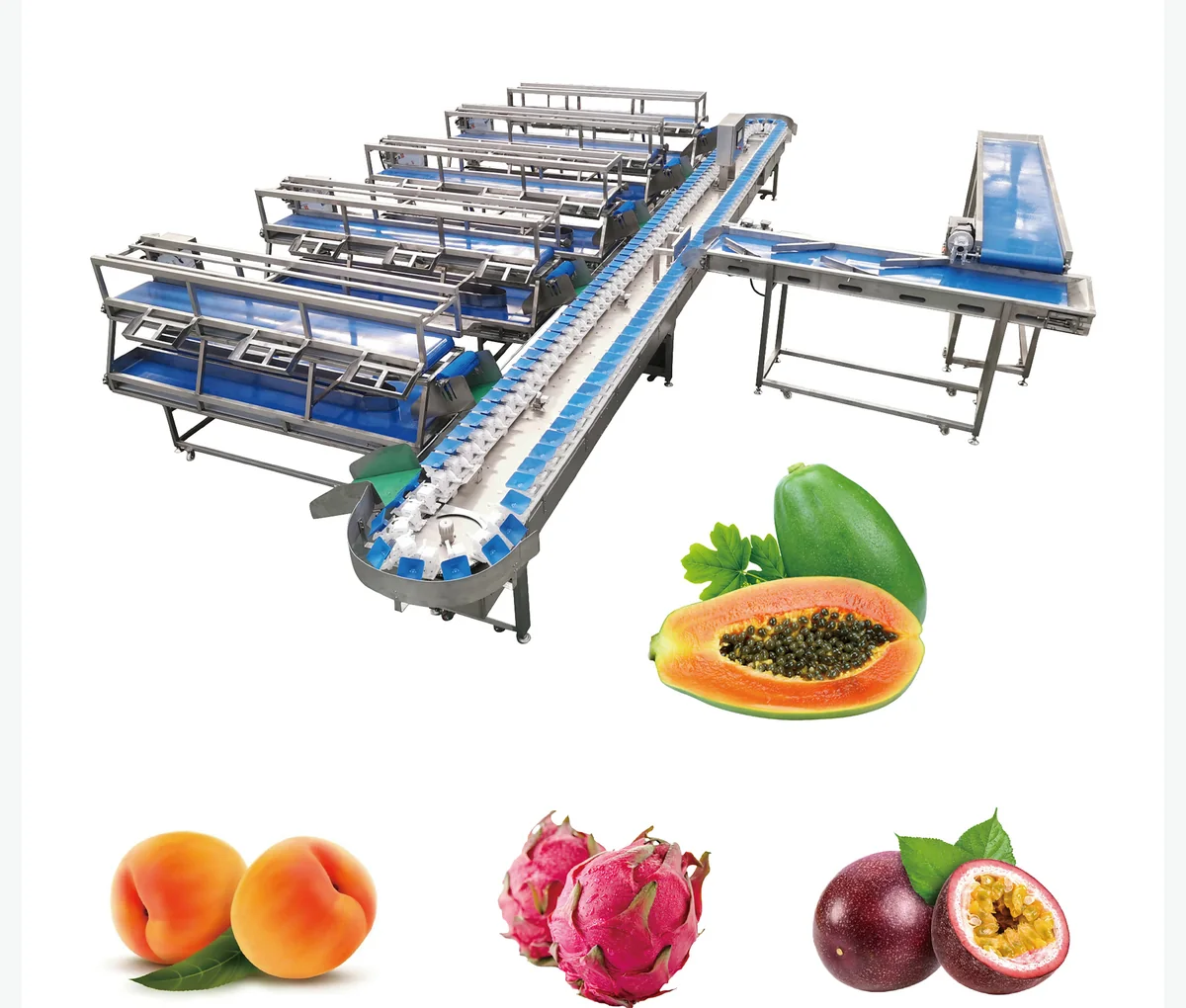
| Washing / rinsing | Bubble washer or rinse tank | Removes surface starch so slices do not stick | Water exchange, slice handling, drainage |
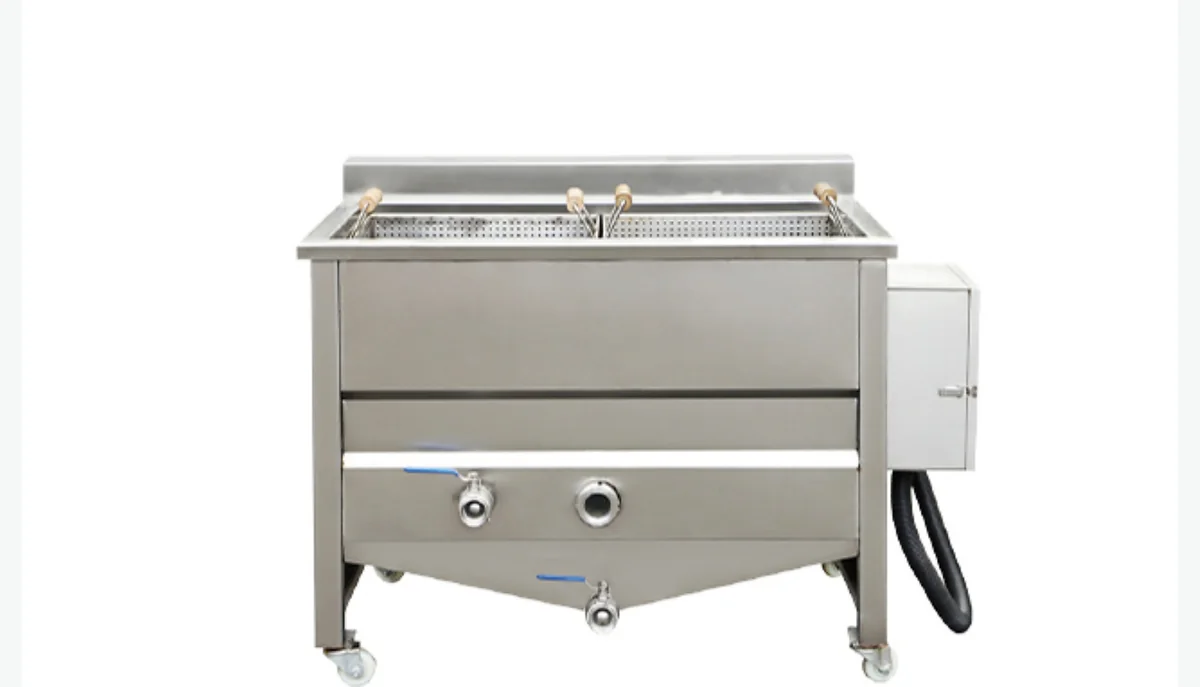
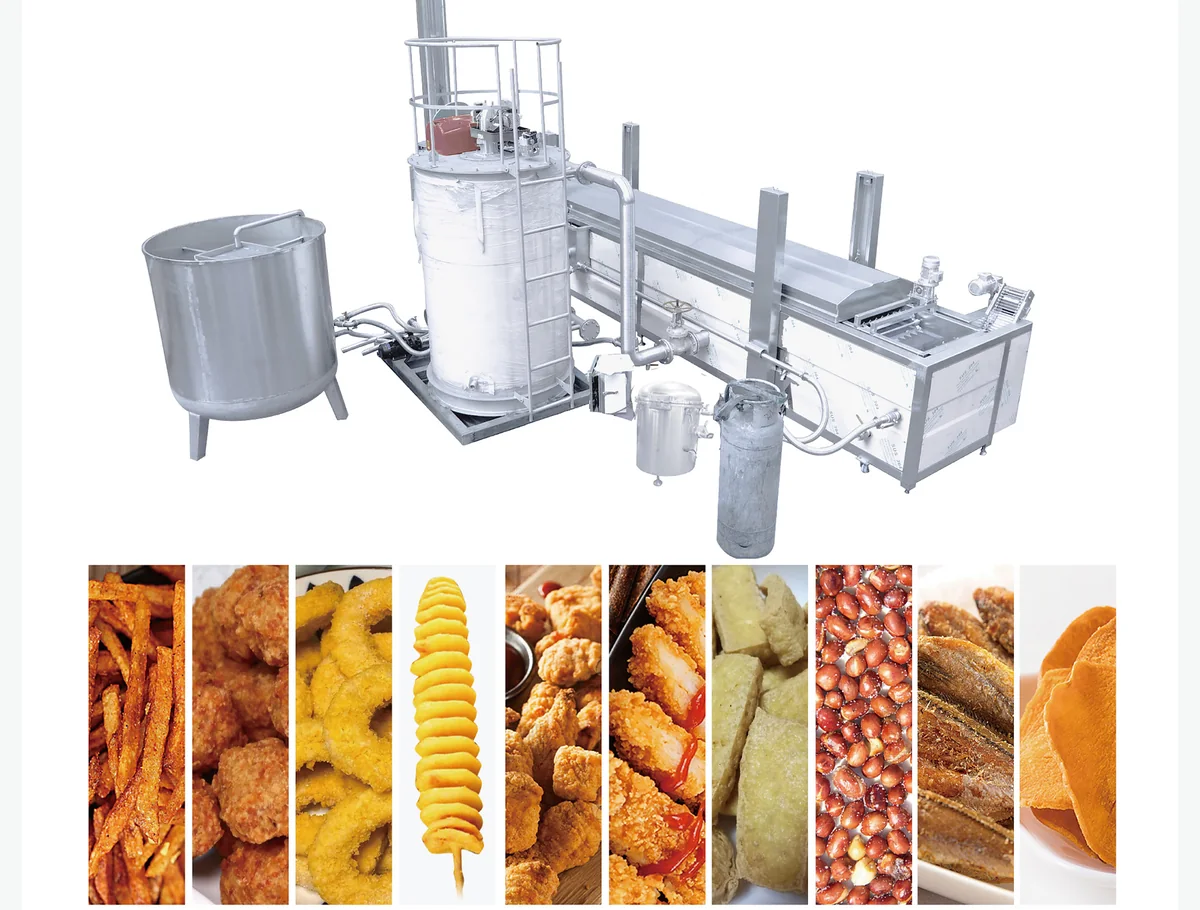
| Frying | Batch fryer or continuous fryer | Cooks slices to colour and crispness | Heating source, oil capacity, temperature control |
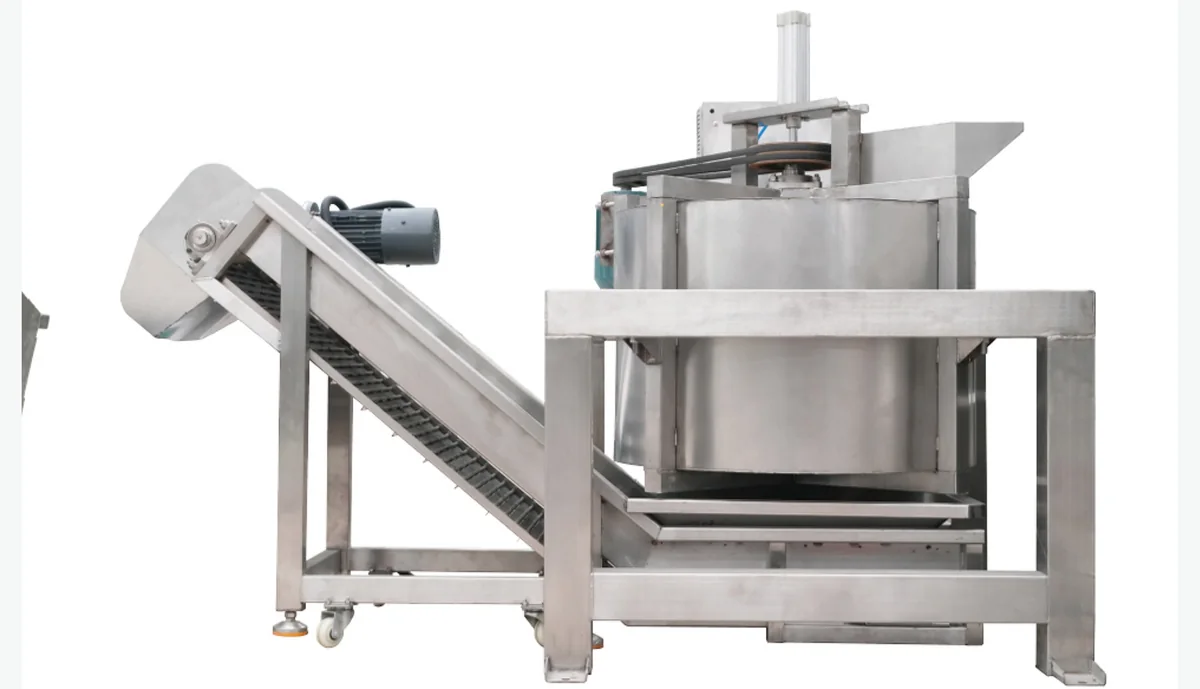
| De-oiling | Centrifugal de-oiler | Spins surface oil off hot chips | Drum size matching fryer output, cycle time |
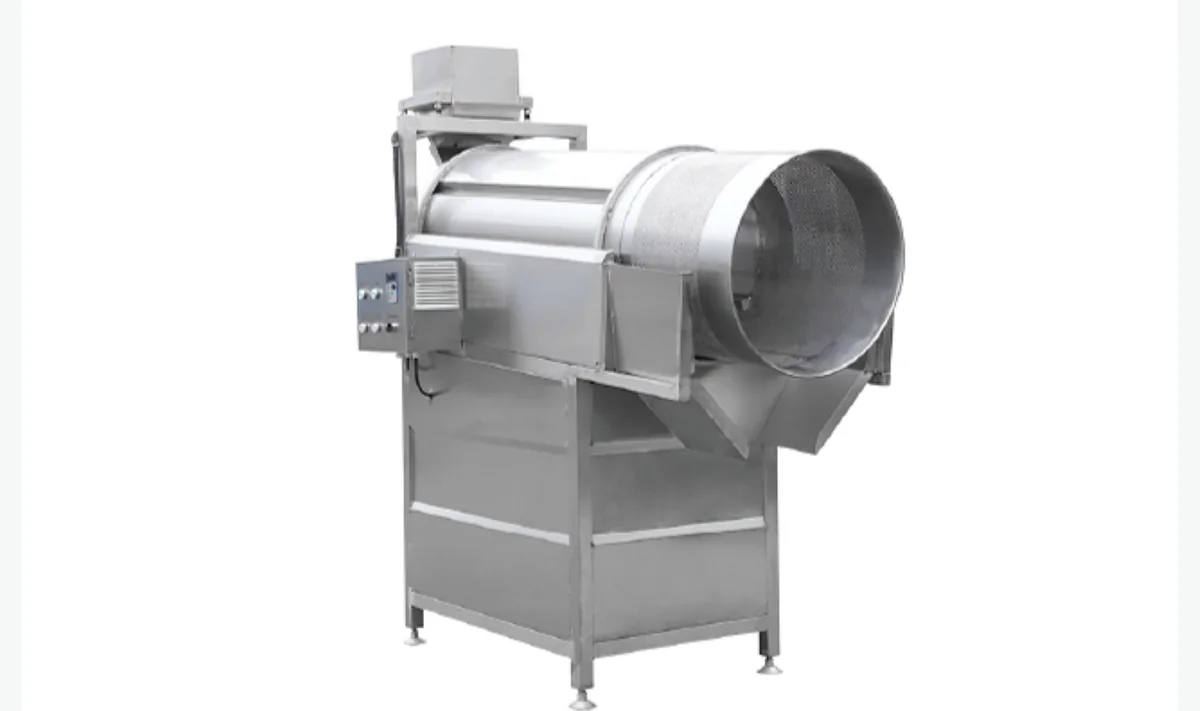
| Seasoning | Batch or continuous seasoning machine | Applies powder or flavour evenly | Flavour range, dosing accuracy, cleaning |
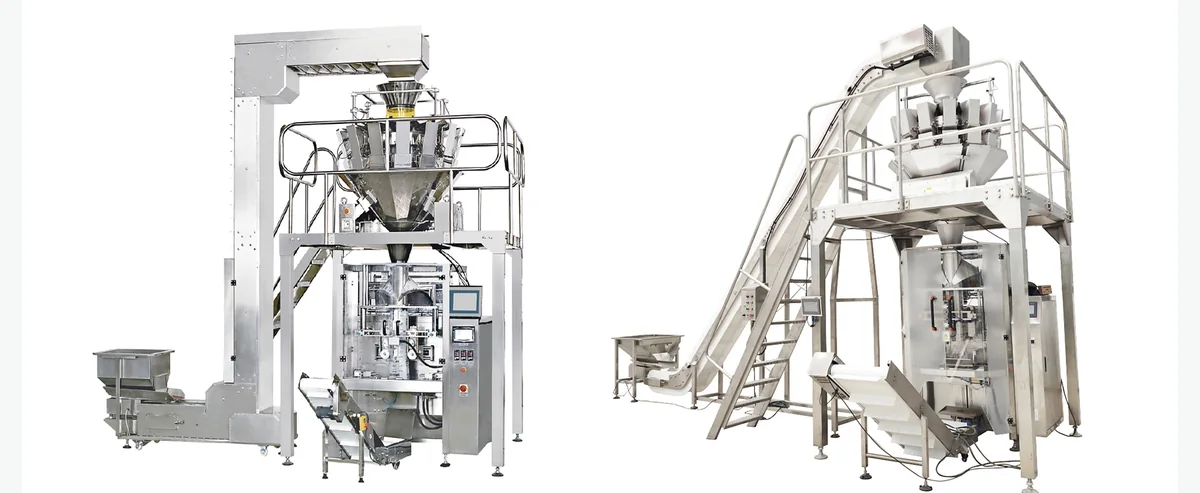
| Cooling and packing | Cooling conveyor, weighing and sealing | Brings chips to pack temperature, seals packs | Pack sizes, nitrogen flush option, weighing range |
Not every plant needs every machine from day one. A small plant can start with a slicer, a batch fryer and a manual packing table, then add stages as sales grow — provided the layout was planned with that growth in mind.
2. Semi-automatic or fully automatic
The biggest configuration choice is how the stages connect. Both models exist in profitable banana chips plants; the right one depends on output target, labour cost and how stable the product range is.
| Aspect | Semi-automatic line | Fully automatic line |
|---|---|---|
| Stage connection | Standalone machines, manual transfer between stages | Conveyors link every stage end to end |
| Suitable output | Small to medium, growing step by step | Medium to large, stable single product |
| Staffing | More operators, simple training | Fewer operators, more skilled supervision |
| Product flexibility | High — easy to change product or recipe | Lower — best for one flagship product |
| Investment | Lower entry cost, expandable | Higher initial cost, lower cost per kilogram |
| Quality consistency | Depends on operator discipline | More uniform once parameters are set |
A practical path for many buyers is to start semi-automatic with machines whose capacity is one step above current demand, and reserve floor space and power for conveyors later. Machines bought too small cannot be upgraded; machines bought too large sit idle and tie up cash.
3. Main equipment and what to confirm
Two quotations with the same stage list can still differ a lot in construction. These are the details worth reviewing machine by machine.
- Slicing machine: thickness adjustment range, blade material and spare blade supply, whether slices feed directly into water to prevent browning
- Fryer: oil volume per batch or per metre, heating method, temperature control precision, sediment removal and oil drain design
- De-oiler: drum volume versus fryer output, cycle time, vibration and balance at speed, discharge height for the next stage
- Seasoning machine: drum or pan type, dosing method, how easily it cleans between flavours
- Packing: weighing accuracy, seal type, speed matching the line, optional nitrogen flush for shelf life
- Throughout the line: material grade and thickness, discharge heights, conveyor speeds matched stage to stage, and emergency stop coverage
Discharge heights deserve special attention. If the de-oiler discharge sits lower than the seasoning machine inlet, product must be lifted manually and the automation benefit is lost. These interfaces are decided at layout stage, not after delivery.
4. Capacity planning: from bananas to packs
Banana chips lines are sized on raw material input, because the finished weight is only a fraction of what arrives at the gate. Peel loss, moisture loss during frying and trimming all reduce weight. The exact yield depends on the variety and the slice specification, so it should be confirmed with sample tests on your own bananas before the line is fixed.
The calculation itself is simple once the parameters are known:
| Parameter (example values) | Value | Note |
|---|---|---|
| Raw banana received per day | 4 t | Peak supply day, not the annual average |
| Peel and sorting loss | Set by sample test | Varies strongly by variety and ripeness |
| Frying moisture loss | Set by sample test | Depends on slice thickness and oil temperature |
| Finished chips yield | Result of the two lines above | Confirm by trial, do not rely on brochure figures |
| Working hours per day | 8–10 h, one or two shifts | Line capacity must fit real working hours |
| Required line throughput | Finished yield ÷ working hours | Compare against the fryer and de-oiler ratings |
Two practical rules follow from this table. First, size the line on the peak supply day, because bananas do not wait. Second, match the de-oiler and packing capacity to the fryer output, not the other way round — the fryer sets the rhythm of the whole line.
5. Frying and oil management
Frying is the stage that determines colour, crispness and a large share of running cost. Oil temperature, residence time and oil freshness interact: a lower temperature with longer residence darkens the chips differently than a higher temperature with shorter residence, and each banana variety reacts differently.
Oil management is where money leaks. Sediment that stays in the oil burns and carries its flavour into every following batch, so the fryer should have a practical way to remove it — a sediment drawer, a bottom drain or a filtration option depending on the model. Oil level, top-up discipline and shutdown procedures should be part of the operating plan, not afterthoughts.
The heating source also deserves an early decision. Electric heating is clean and precise but depends on a stable supply and a workable tariff; gas or LPG heating shifts the cost structure and needs safety clearances. Confirm what is actually available and reliable at your site before choosing, and ask the supplier to price the line for both options if you are unsure.
6. Utilities, factory space and staffing
A banana chips line is not power-hungry by food industry standards, but the details still decide whether installation day goes smoothly.
- Power: total installed load of all machines running together, supply voltage and phase standard, and whether the fryer heating source is electric
- Water and drainage: washing and rinsing need a supply point and a floor drain; hot oil areas need separate, safe drainage rules
- Floor space: machine footprint plus working space around each stage, plus raw material and finished goods storage
- Fuel safety: if frying uses gas or LPG, ventilation, cylinder storage and shutdown procedures need planning
- Staffing: peeling is usually the largest labour block in semi-automatic plants and should be counted in the operating cost, not forgotten
Send the supplier a simple factory sketch with door positions, ceiling height and where power and water enter the building. That single drawing usually prevents most installation surprises, and it costs nothing to produce.
7. Common selection mistakes
- Sizing on average sales instead of peak raw material supply, then watching bananas over-ripen while the line runs at capacity
- Buying a fryer without confirming the de-oiler matches its output, so hot chips wait and quality drops
- Ignoring discharge heights and buying machines that cannot be connected without manual carrying
- Choosing the frying heat source before checking what fuel is actually reliable and affordable at the site
- Planning storage as an afterthought — bananas need shade and speed, finished packs need dry, cool space
- Skipping the sample test, so the line capacity is built on brochure yield figures instead of the real variety
None of these mistakes is technical or exotic. They are planning failures, and all of them are avoidable with the checklist below.
8. What to send the supplier before asking for a quotation
- Banana variety, ripeness range and where the raw material comes from
- Peak daily raw material supply and the target working hours per day
- Target pack sizes and the sales channel — retail packs, bulk bags or both
- Heating source available at the site: electric, gas or LPG, with the supply standard
- Factory sketch: floor area, ceiling height, door positions, power and water entry points
- Budget range and the phased plan, if the line is meant to grow in stages
- A sample test request, so yield and slice colour are confirmed on your own bananas
A quotation built on these facts will state machine-by-machine configurations, total installed power, floor layout and what is excluded — which is exactly the document worth comparing between suppliers.
Frequently asked questions
What equipment does a banana chips production line include?
A typical line covers receiving and peeling, slicing, surface washing or rinsing, frying, de-oiling, seasoning, cooling and weighing or packing. Semi-automatic lines connect standalone machines with manual transfer, while fully automatic lines use conveyors to link the stages. The exact composition depends on the raw material, target output and labour cost.
How much finished chips come from one ton of raw banana?
Finished yield depends on banana variety, ripeness, peel loss and slice thickness, and is usually a fraction of the raw input weight. Buyers should confirm the yield with sample tests on their own material before fixing line capacity, then size the line on peak raw material supply rather than average daily sales.
Should a banana chips plant use a batch fryer or a continuous fryer?
Batch fryers suit smaller outputs, mixed products and frequent recipe changes, and cost less to start. Continuous fryers suit stable single-product output at higher volume and give more uniform frying with less labour per kilogram. The decision should follow the planned output, product range and staffing.
Why is de-oiling important for banana chips?
Chips leave the fryer with hot oil on the surface. A centrifugal de-oiler removes most of that surface oil, which reduces oil consumption per kilogram of product, improves shelf life and gives a cleaner taste. Skipping or undersizing this stage shows up directly in oil cost and product quality.
What utilities does a banana chips line need?
Confirm installed electrical power and the supply standard, the heating source for frying such as electric, gas or LPG, water and drainage for the washing stage, and floor space including space around the machines for operation and cleaning. Heating source and electricity tariff have a large effect on running cost.
Can the line be extended later?
In many cases yes, if the layout, discharge heights and conveyor speeds were planned for it at the start. Buyers planning to grow should tell the supplier the target output of the second phase, so the first phase is installed with the correct interfaces instead of being rebuilt later.