Cutting & size reduction
Food Slicing Machine
A slicing machine for preparing suitable food materials to an agreed thickness before blanching, frying, drying or packing.
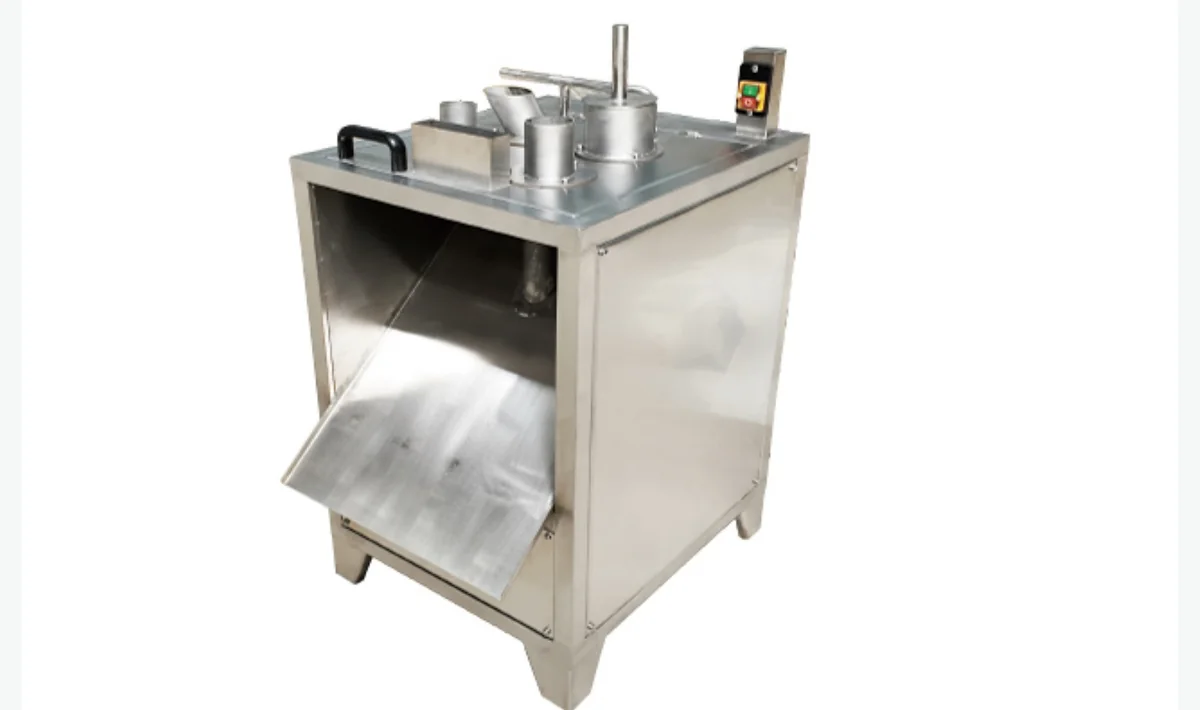
Equipment overview
Food Slicing Machine
A slicing machine for preparing suitable food materials to an agreed thickness before blanching, frying, drying or packing.
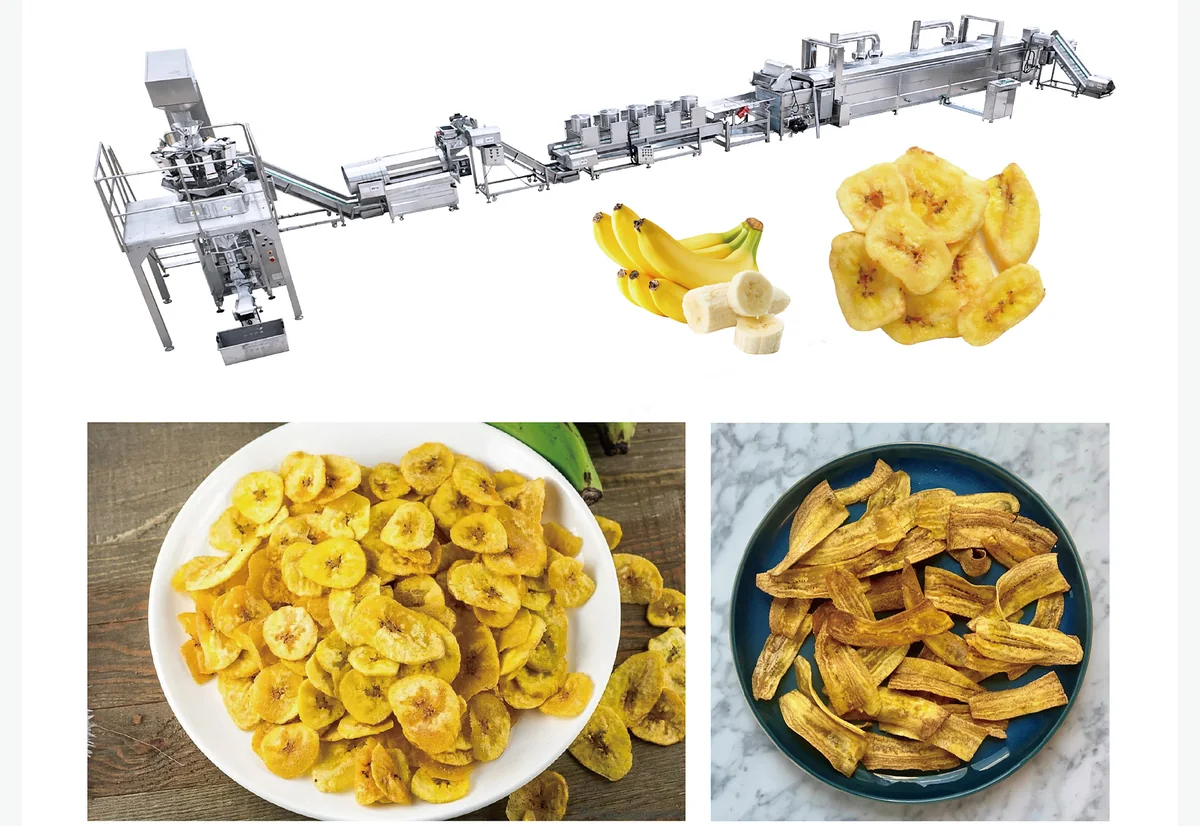
Ideal applicationsPotatoes, bananas, fruit, vegetables and other suitable products after sample testing
Typical process
Where this machine fits
- Prepared product feeding
- Controlled slicing
- Thickness inspection
- Transfer to rinsing, frying or drying
Product highlights
Configuration points that matter
- Blade type and feeding orientation should match the target slice.
- Product trials are required where thickness tolerance and breakage affect the final product.
Confirm before quotation
Product type, diameter, firmness, target thickness, blade style and required output
Buyer review points
The points that confirm the right model for this project.
Material condition
State the vegetable or fruit, its size range and whether it is peeled or washed before it reaches the machine, because the surface condition decides how the slices release and whether the machine needs a rinse section. Give the required slice thickness and the acceptable variation, since the thickness carries through to the cooking result.
Output basis
Give the hourly input and the sliced output per hour, and the trim loss that goes with the size range, because a wide size range means more trimming. State the working hours and whether the machine handles several vegetables in one shift, since each changeover includes a clean-down and a re-set of the cut.
Factory connection
Confirm the power supply against the drive and the extraction at the cutting section, since cut vegetables release moisture and the area needs ventilation. Check the infeed and discharge heights against the room and plan where the trim goes, as it is a continuous stream. Leave access for blade changes and for cleaning under the machine.
Acceptance method
Agree the test on one specified raw material and one cut setting: the slice thickness across the sample, the acceptable thickness variation, the damage rate on the cut edges and the yield after trim. Record the blade and the gap setting used, the sample size and the number of samples in the same document, because thickness is checked by measurement and needs a written tolerance.
Frequently asked questions
Questions to settle before selection
How should slice thickness be specified?
State the target thickness and acceptable variation, together with product diameter and firmness. Confirm blade style and feeding orientation with a representative sample trial.
Can potatoes and bananas be sliced with one untested setup?
Each intended product needs a cutting review. Check size consistency and breakage for its actual condition before agreeing that one machine configuration covers both.
What should follow the slicer in a snack line?
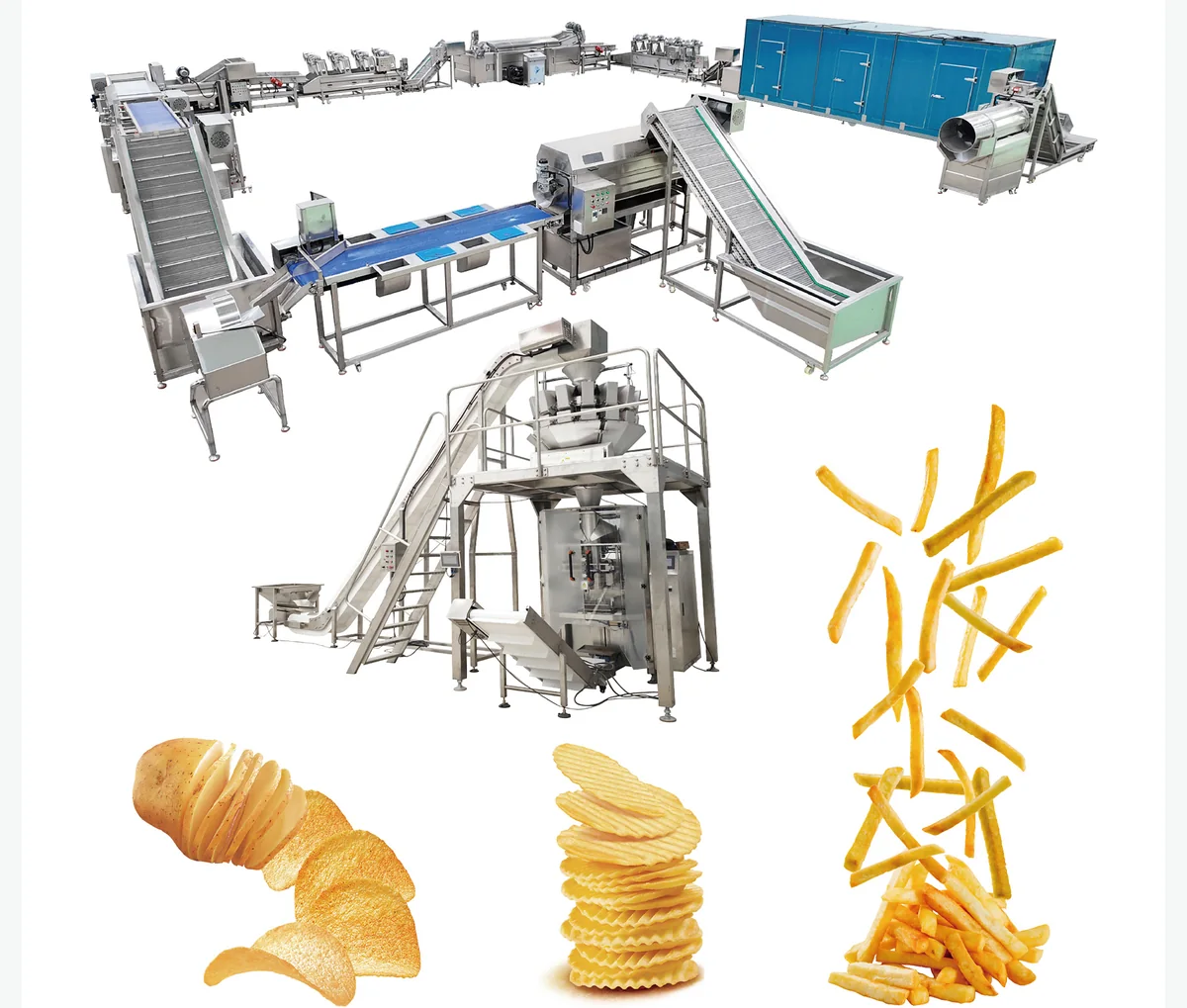
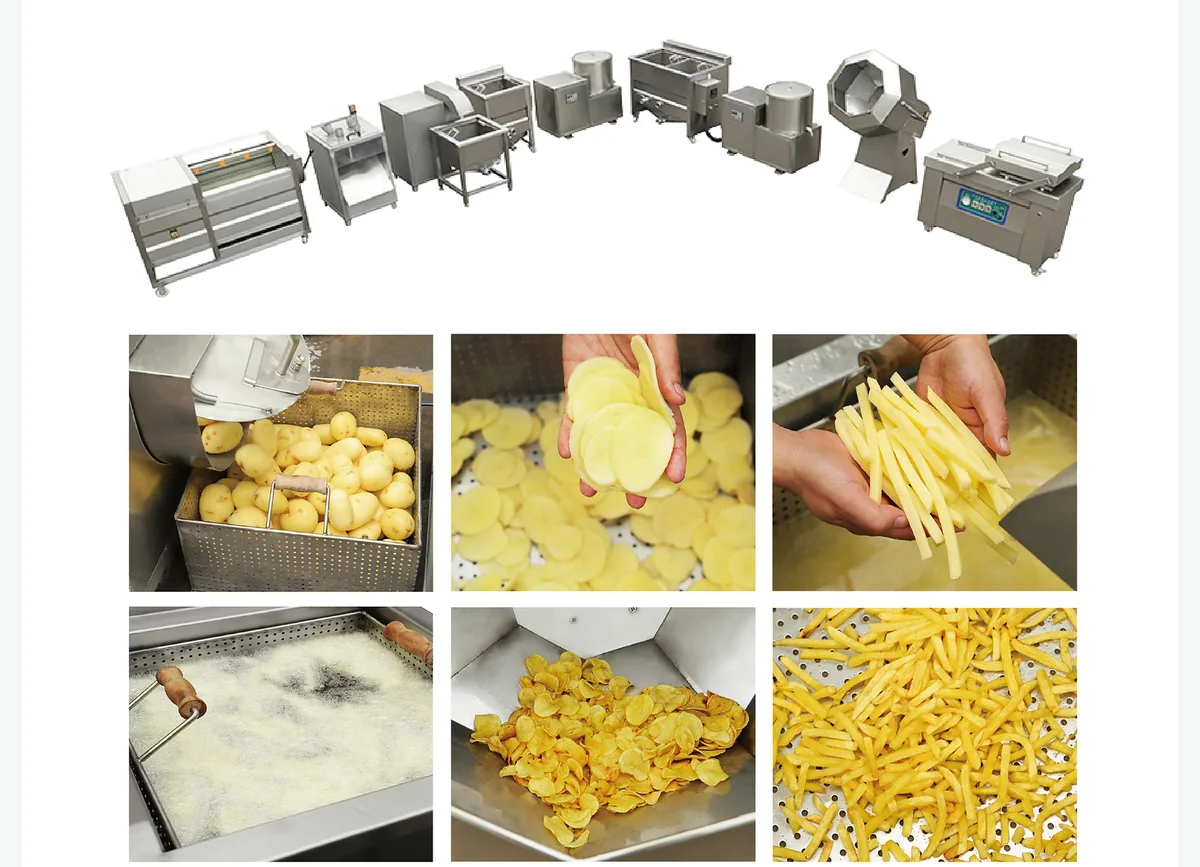
The route may include rinsing, blanching, frying or drying according to the finished product. Confirm transfer handling and timing with the selected process rather than the slicer alone.
Project boundary: Final model, output, dimensions, utilities, food-contact material scope, price, delivery and service boundary require technical and commercial confirmation before quotation.
Line connection
Where this machine sits in the line
Move from slicing to the washing, blanching and packing stages.
Configuration request