A potato washing and peeling line is the preparation section that protects every process behind it. If soil, stones, damaged potatoes, surface starch and peel residue are not handled correctly, the cutting, frying, freezing and packing stages will all become harder to control.
This guide is written for processors, distributors and project contractors who are reviewing potato fries, potato chips or other potato processing projects. It explains what to confirm before selecting a washer, brush roller peeler, inspection conveyor or connected preparation line.
1. Start with the raw potato condition
The same equipment name can perform very differently with different raw material. Fresh potatoes from sandy soil, clay soil or stored supply may require different washing time, roller contact, manual inspection and water circulation design.
Before asking for a formal configuration, prepare photos or short videos of the incoming potatoes. Record the size range, soil load, surface defects, sprouting condition, damaged ratio and whether stones or field debris may enter the line. This information helps the supplier judge whether a simple washing unit is enough or whether the line needs stronger pre-cleaning and inspection.
- Potato variety, shape and average size range
- Soil type and visible dirt level on incoming potatoes
- Stone, stem, leaf or foreign-material risk
- Storage condition before processing
- Expected manual sorting or inspection points
2. Define the washing stage before peeling
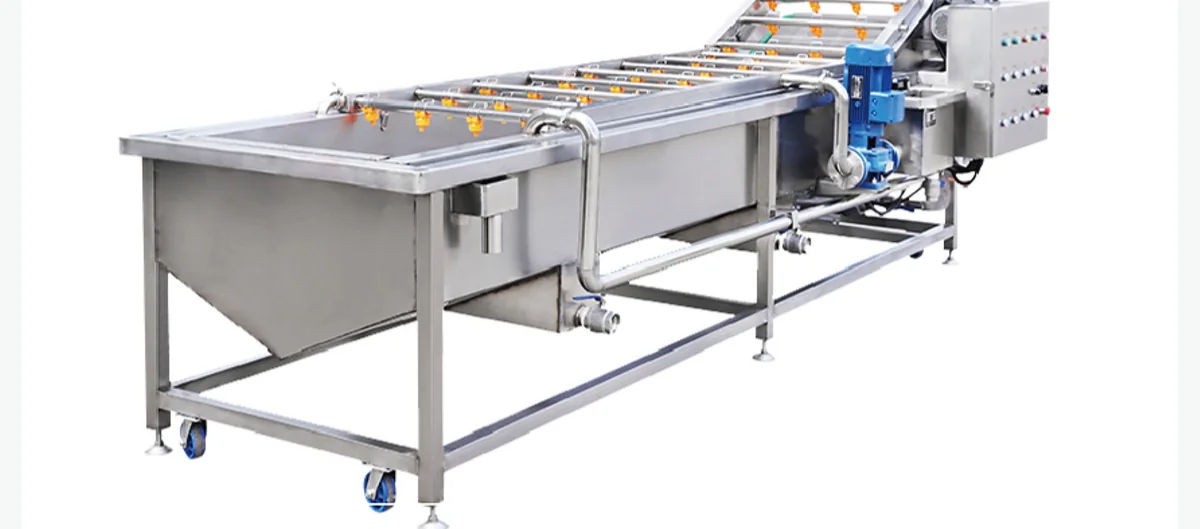
The washing section is not only for appearance. It reduces dirt entering the peeler, protects knives and pumps behind the line, and helps operators identify potatoes that should be removed before cutting.
A project may use air bubble washing, spray washing, brush washing or a combined arrangement depending on the potato condition and factory water plan. For a fries or chips project, the washer outlet height, discharge direction and handoff to the peeling or inspection conveyor should be confirmed together with the full line layout.
| Item to review | Why it matters | Buyer information to prepare |
|---|---|---|
| Soil load | Decides washing intensity and water replacement frequency | Incoming potato photos and soil description |
| Water source | Affects cleaning quality, circulation and sanitation management | Water pressure, available flow and treatment plan |
| Discharge height | Controls connection to the next machine | Layout drawing and next-machine inlet height |
| Inspection point | Helps remove defects before cutting | Labour plan and product acceptance requirement |
3. Choose the peeling method by product target
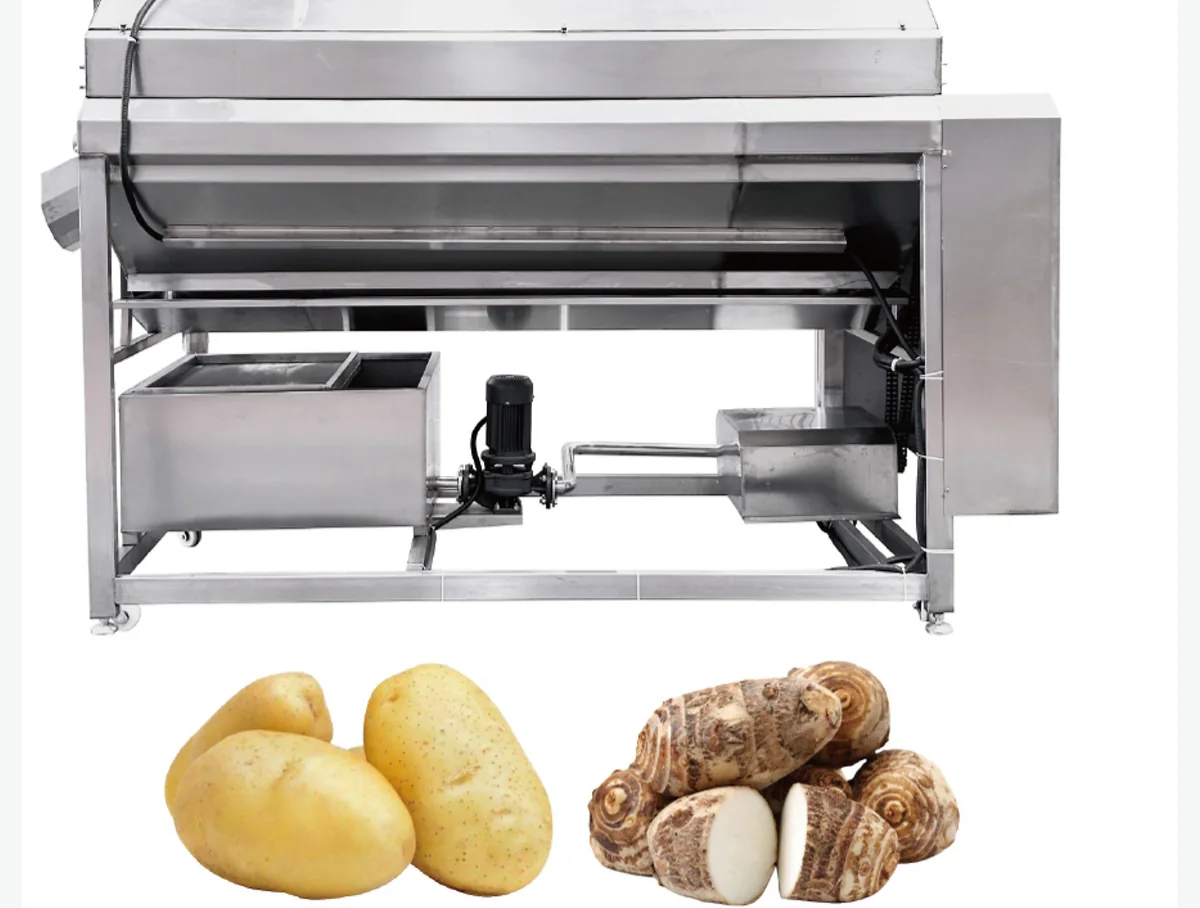
Peeling is a balance between appearance, yield, labour and downstream quality. For many small and medium potato fries or chips projects, brush roller peeling is commonly reviewed because it can combine surface cleaning with peel removal and is relatively easy to integrate with a preparation line.
The buyer should still define what "peeled" means for the project. Some products accept a light peel-removal result, while retail fries or uniform chips may require stricter visual quality. A more aggressive peeling target may increase product loss or require more inspection and trimming.
- Expected peel removal level and allowed remaining skin
- Whether the finished product is fries, chips, diced potato or another format
- Acceptable product loss during peeling and trimming
- Need for manual inspection after peeling
- Cleaning and maintenance access around rollers and discharge area
4. Match capacity with the downstream line
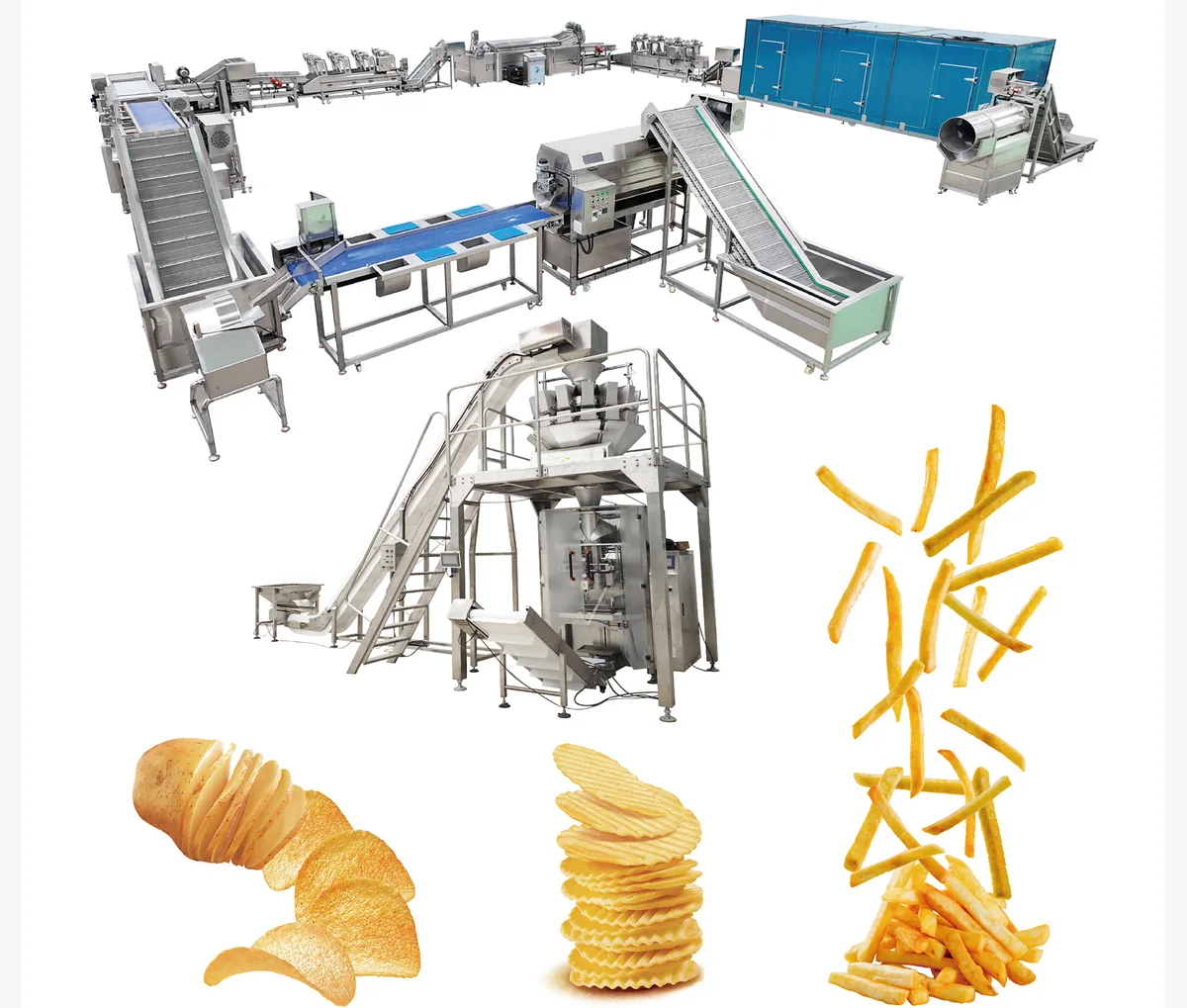
A potato preparation line should not be sized as an isolated machine. Its output must support the cutter, blancher, fryer, freezer and packing route behind it. If washing and peeling are too slow, the whole line waits. If they are oversized, the factory may pay for capacity that cannot be used downstream.
Clarify whether the target is raw potato input capacity or finished product output. For potato products, yield changes across peeling, cutting, blanching, frying and freezing. A quotation should therefore state the capacity basis and the assumptions behind it.
| Capacity question | What to confirm |
|---|---|
| Raw input | Potatoes per hour entering washing and peeling |
| Finished output | Fries, chips or prepared potato after the complete process |
| Working schedule | Hours per shift, shifts per day and cleaning time |
| Yield assumption | Loss in peeling, trimming, cutting and thermal processing |
| Bottleneck stage | The machine that limits the final line output |
5. Plan water, drainage and peel waste early
Potato washing and peeling can create a significant amount of dirty water, peel residue and starch-containing discharge. These are not only machine issues. They affect the factory floor, drainage route, cleaning schedule and local environmental requirements.
Before the line is confirmed, the buyer should check where water enters the line, where waste exits, how operators clean the equipment and whether waste collection needs baskets, conveyors or separate treatment. A supplier can propose a practical route only when the workshop layout and buyer-side responsibilities are clear.
- Clean-water inlet position and pressure
- Drainage channel, floor slope and sewage handling
- Peel and sediment collection method
- Cleaning space around the washer and peeler
- Food-contact material requirements that must be confirmed for the project
6. Connect preparation with cutting and frying
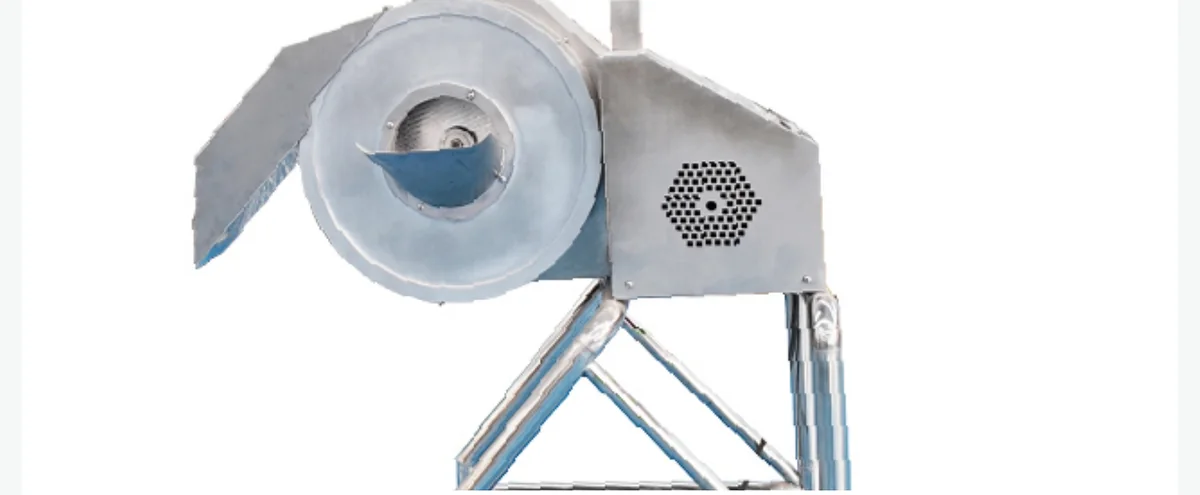
The handoff from washing and peeling to cutting is a common source of hidden problems. Potatoes should arrive at the cutter with a controlled flow, reasonable surface condition and enough inspection opportunity. Poor transfer design can cause product pile-up, operator intervention or irregular feeding.
For fries and chips projects, review the preparation section together with the French fries cutter, blanching machine, continuous fryer and the complete French fries and potato chips line. This avoids buying machines that look suitable individually but do not work smoothly as one process.
Potato washing and peeling line RFQ checklist
- Raw potato photos, size range and soil condition
- Target product: fries, chips, diced potato or another format
- Raw input target and finished output target
- Required washing and peeling result
- Water source, drainage and waste handling plan
- Factory layout, access doors and machine placement direction
- Voltage, frequency and available power
- Inspection, trimming and labour arrangement
- Acceptance method and test raw material
Frequently asked questions
Is washing and peeling required before every potato fries or chips line?
Most potato fries and chips projects need controlled washing, inspection and preparation before cutting. The exact washing intensity and peeling method depend on soil load, potato size, product specification and factory water conditions.
How should a buyer choose between brush peeling and other peeling methods?
The choice should be reviewed against raw potato condition, peel removal target, product yield, labour arrangement, water use and downstream quality. A supplier should confirm the method after reviewing the actual material and finished product requirement.
What information is needed for a potato washing and peeling line quotation?
Prepare raw potato photos, soil load, potato size range, target output, peeling target, downstream product, factory drawing, water and drainage conditions, voltage, working hours and any inspection or acceptance standard.