Raw materialCleaned seeds, nuts or grains with confirmed moisture and impurity condition
Finished productRoasted product at the agreed colour, aroma, moisture and cooling condition
Indicative outputConfigured after the roast profile is agreed, with the moisture at discharge set against the roasting result.
Operator requirementsLabour is concentrated at the material handling and the packing stations, with roasting and cooling running automatically.
Factory and utilitiesPlan the room for the heat source and the extraction at the roaster, and confirm the floor loading and the maintenance access.
Confirm before quoteMaterial, inlet moisture, roast profile, heat source, output, cooling, seasoning, dust handling and packing
Acceptance basis
Define the result before final configuration.
Agree the sample, roast colour or moisture target, acceptable breakage, test batch and inspection method.
Planning information
Facts to settle before a line quotation.
The planning sequence behind these facts — roast endpoint, cooling, changeover and acceptance — is set out in the sesame roasting line planning guide.
Raw material and finished product
State the material and why it is being roasted, because the roast profile is set by what the roasting is meant to achieve. Give the moisture and the impurity level, the size range and the hourly throughput. Say whether the material arrives raw or has been cleaned and dried already, and whether oil is added before roasting, since that changes both the process and the equipment.
Capacity and operating schedule
State the hourly input and the roasted output, and the moisture needed at discharge, because roasting and cooling together remove a stated amount of water. State the working hours and the campaign pattern, and whether one profile or several are needed, since a changeover costs time, heat and product. Say how much of the output is packed hot and how much is cooled and held.
Utilities and layout
The heat source and the cooling step decide this layout. Confirm the fuel or steam supply and the extraction route against the chosen heating method, and the electrical load against the fan and the conveying equipment. Plan the flow from the raw bin through the roaster to the cooler in a straight run, since material moves by gravity and vibration at this stage.
Scope and acceptance
List the reception, the cleaning, the roasting, the cooling, the seasoning where it applies and the packing, with the control package, the spare parts, the installation support and the training. The roast profile, the colour reference and the cooling time belong in the written scope, because they are what the acceptance is judged against.
Project boundary: Final model, output, dimensions, utilities, food-contact material scope, price, delivery and service boundary require technical and commercial confirmation before quotation.
Equipment configuration
Related equipment pages
These links move from one machine to the full process requirement for the project.
Common questions about sesame and nut roasting lines.
What stages make up a sesame and nut roasting line?
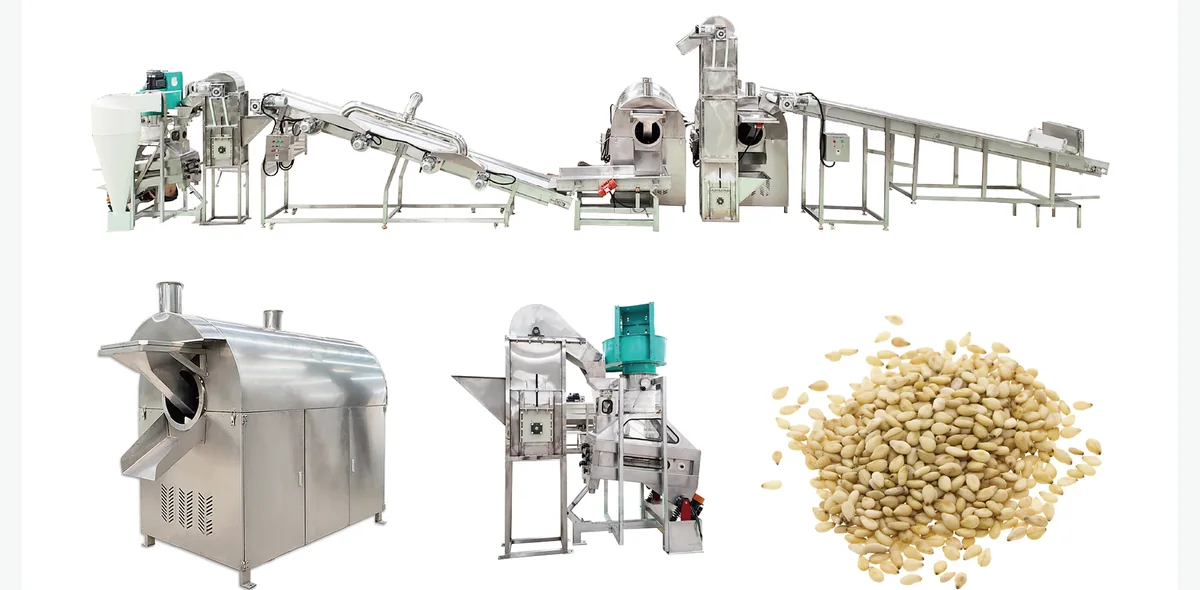
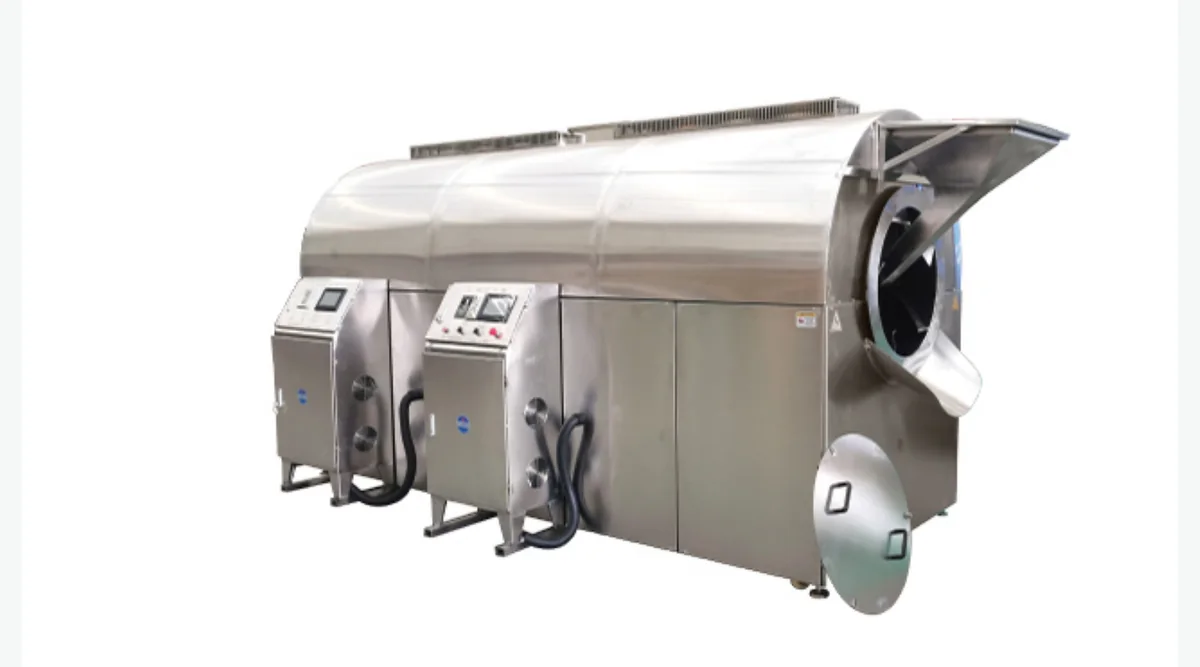
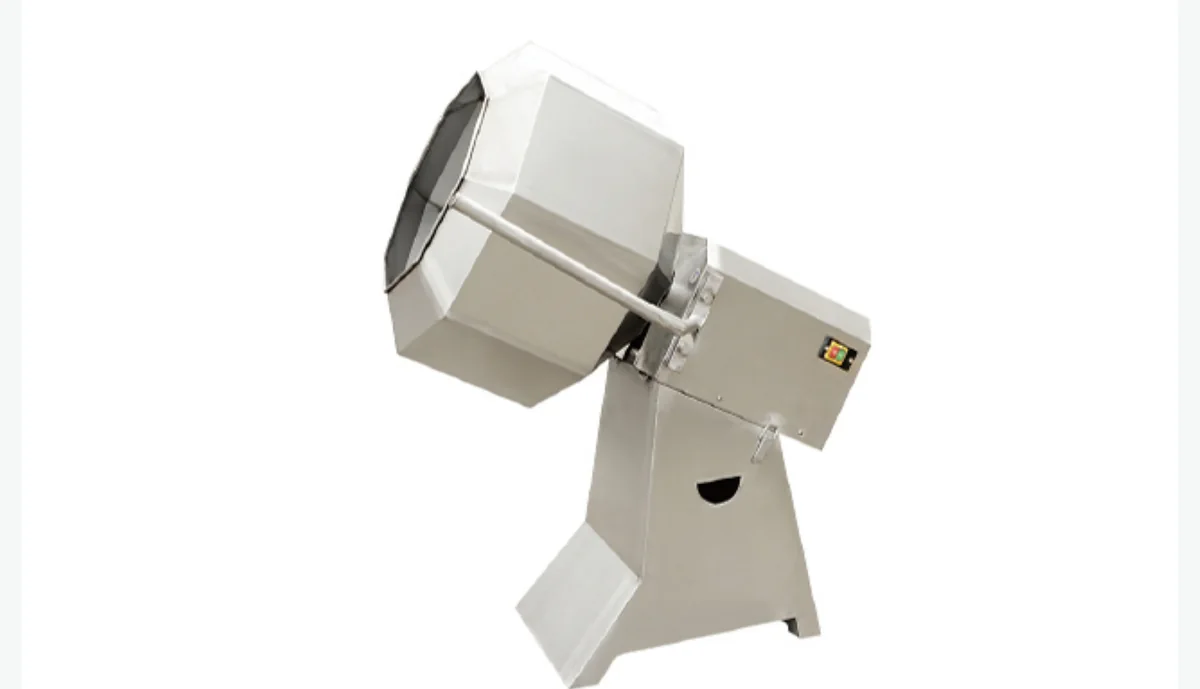
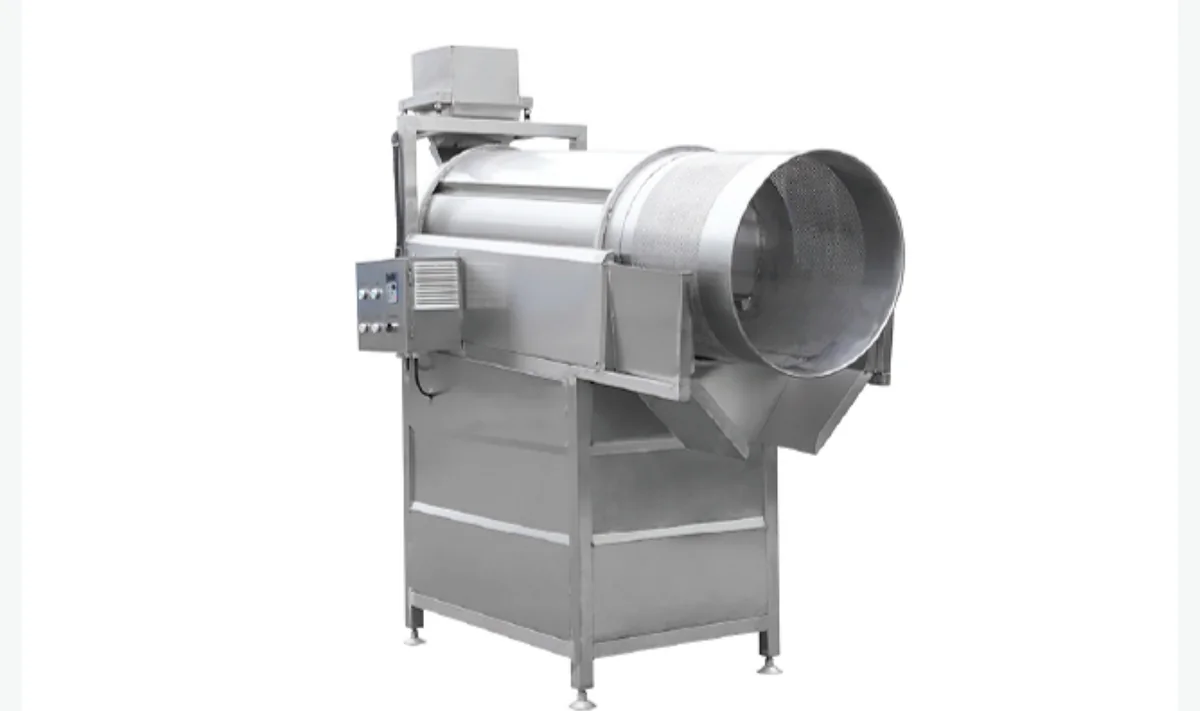
The line is built around feeding, stone and impurity removal, an electromagnetic or selected roaster, cooling and optional seasoning or packing, with the packing interface at the end.
How is the roasting line capacity determined?
Roasting line output is set after the material trials and the process review. It follows from the material, the inlet moisture, the roast profile, the heat source and the cooling arrangement.
What is the acceptance basis for a roasting line?
Agree the sample, roast colour or moisture target, acceptable breakage, test batch and inspection method, together with dust handling and the packing connection.
Technical review
Confirm product, output, utilities and factory layout.