'300, 500 or 1000 kg/h?' is one of the first questions a French fries line buyer asks, and one of the easiest to answer wrongly — because the number means something different to every party in the conversation. To a factory planner it may mean raw potatoes going in. To a distributor it may mean packed frozen fries coming out. To a machine supplier it may mean the throughput of one unit under agreed test conditions.
This guide explains how capacity is measured in a fries project, what the three common tiers change in the equipment behind the number, and which figures have to be fixed before two quotations can be compared at all.
1. What 'capacity' actually measures
Three different figures are routinely called capacity in the same project meeting. They are not interchangeable, and mixing them is the main reason a line is delivered that is technically as ordered and commercially too small.
Raw potato input
Receiving, storage and procurement are planned on raw input: tonnes of potatoes per hour or per day at peak supply. This is the basis most often quoted by buyers who own farmland or hold a supply contract, because it describes what they can deliver to the factory gate.
Finished product output
Sales, packing and cold storage are planned on finished output: kilograms of packed fries per hour, or cases per shift. Peeling, trimming, cutting, starch removal, de-oiling and quality rejects all remove material, so finished output is always lower than raw input. The gap between the two is yield — and yield has to be measured on your own potato variety and strip size, not assumed from a generic percentage.
Throughput under agreed test conditions
Machine throughput is measured on a defined product, strip cross-section, incoming temperature, recipe and finished requirement. Change any of them and the same machine produces a different hourly figure. A capacity discussion without a product definition is therefore not yet a technical discussion.
2. Why buyers converge on three tiers
Most first-time fries projects arrive at roughly 300, 500 or 1000 kg/h. These are not standards. They are clusters created by two forces: the size of the market the owner can realistically sell into, and the smallest equipment set that can run the route without constant manual transfer.
Around 300 kg/h
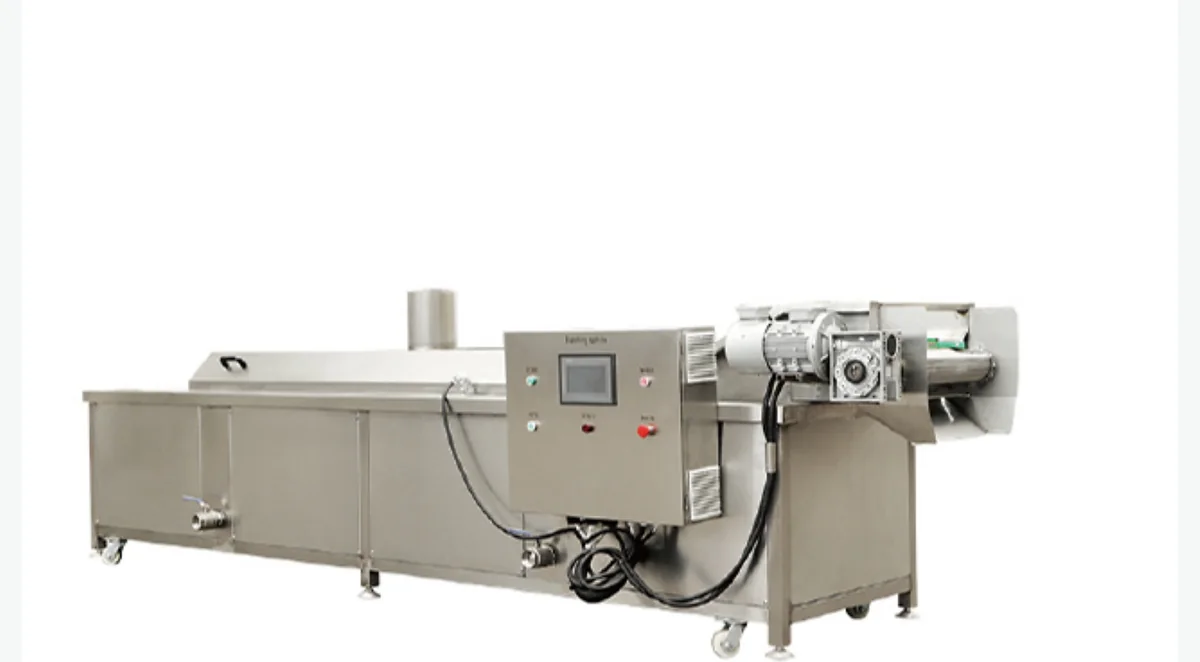
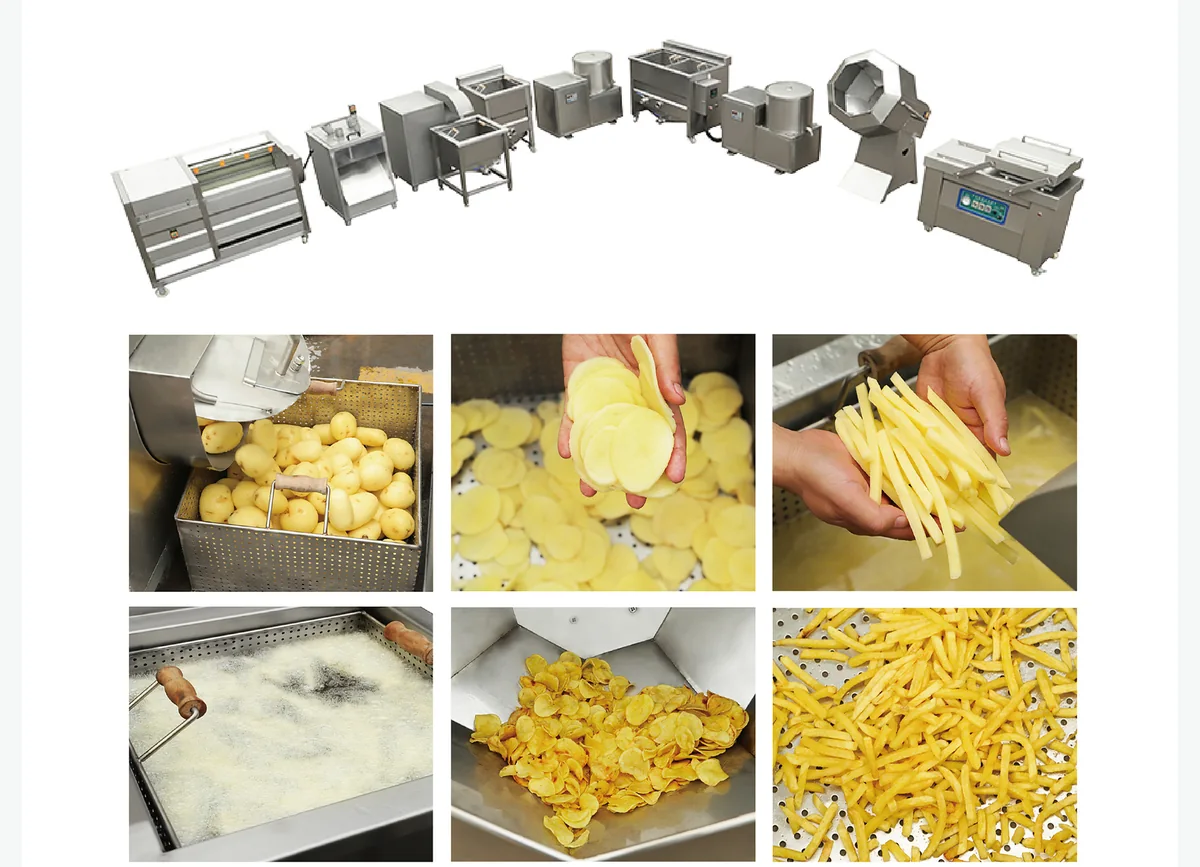
At this level the line is usually built from modular, semi-automatic equipment that can be started, stopped and cleaned stage by stage. The published indicative output of a semi-automatic French fries and potato chips line is 30–500 kg/h, and the smaller continuous fryer models are listed at indicative ranges of 100–200 kg/h and 150–300 kg/h. Labour remains a significant part of the operating plan, but the investment stays modular and can be extended later.
Around 500 kg/h
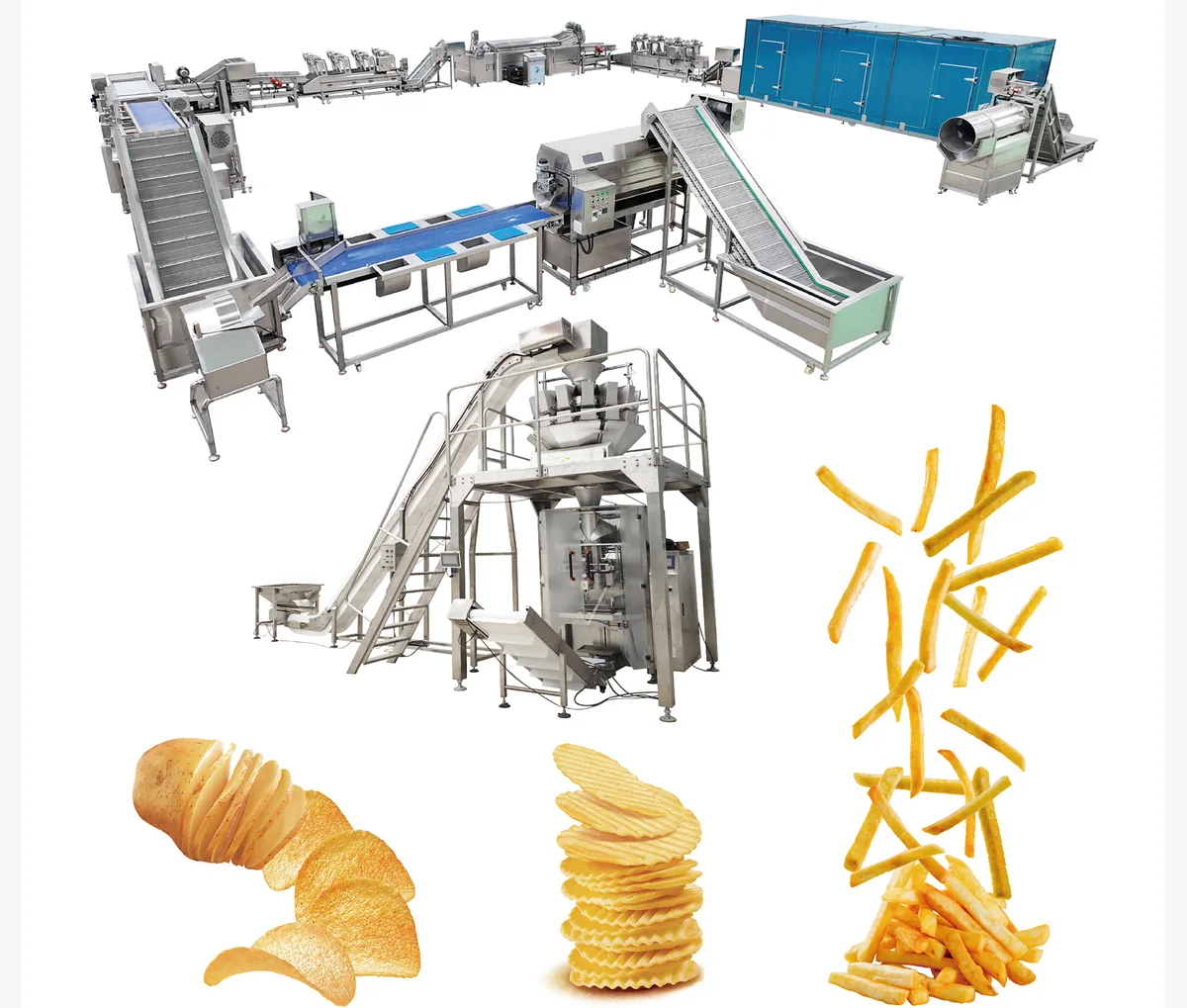
A 500 kg/h project normally needs a longer connected route: automatic transfer between stages, a wider frying belt, more blanching and dewatering capacity, and a freezing stage that can absorb the fried output without queueing. Indicative fryer ranges in this band start at 200–500 kg/h. The step from 300 to 500 is rarely about one larger machine — it is about whether the whole route can run without manual transfer.
Around 1000 kg/h
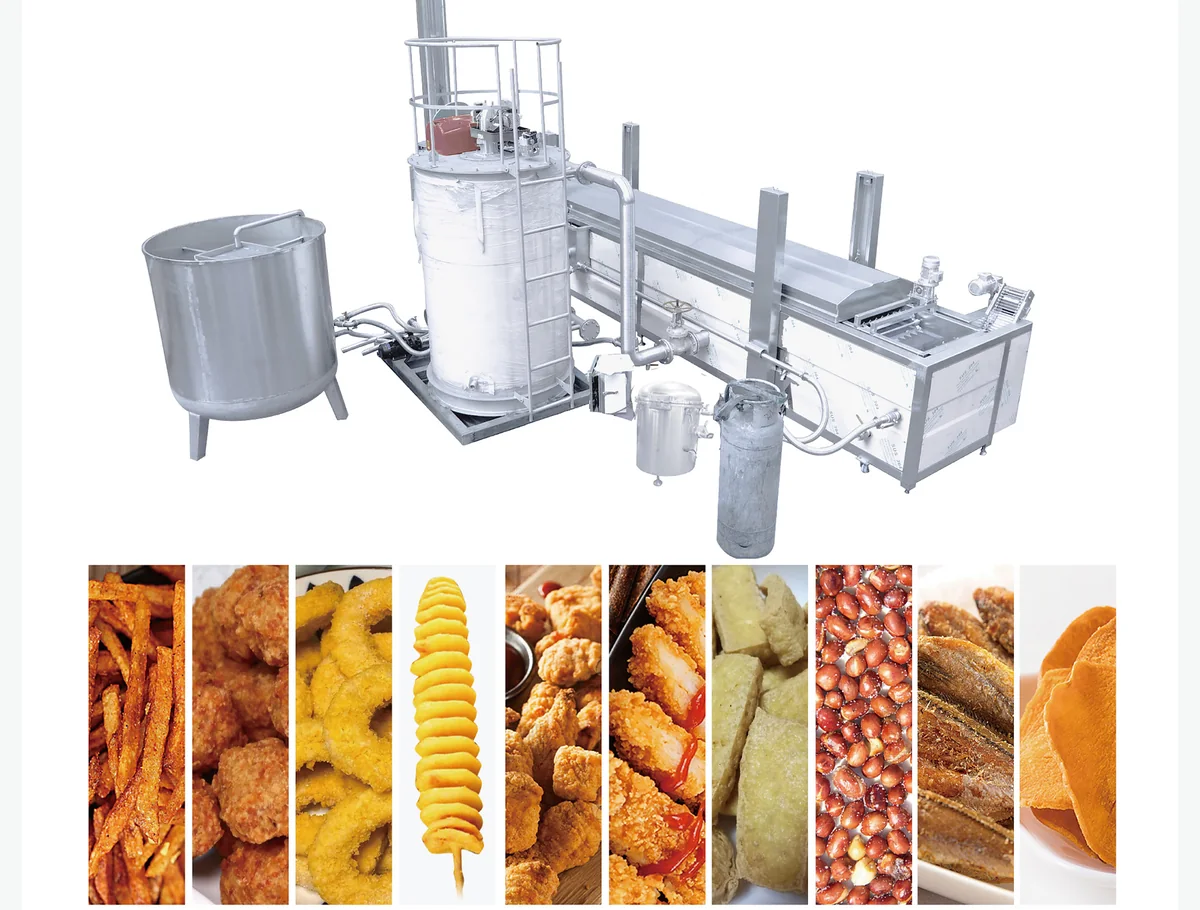
At 1000 kg/h the limiting factor is usually no longer the fryer alone but the balance between frying, de-oiling, cooling, freezing and packing. Published indicative continuous fryer ranges extend to 300–800 kg/h. A project above the top of a published range has to be reviewed as a configuration rather than read from a table, so figures in that band are to be confirmed for the specific project. Parallel lines, a wider belt or a different freezing approach all change the building requirement as well as the investment.
3. The bottleneck moves as capacity grows
Capacity planning fails most often because only the main machine is upsized. In a fries line the constraint moves along the route:
- Washing and peeling — scale with soil load, potato size and peeling target; a washer sized on average supply becomes the limit on peak days.
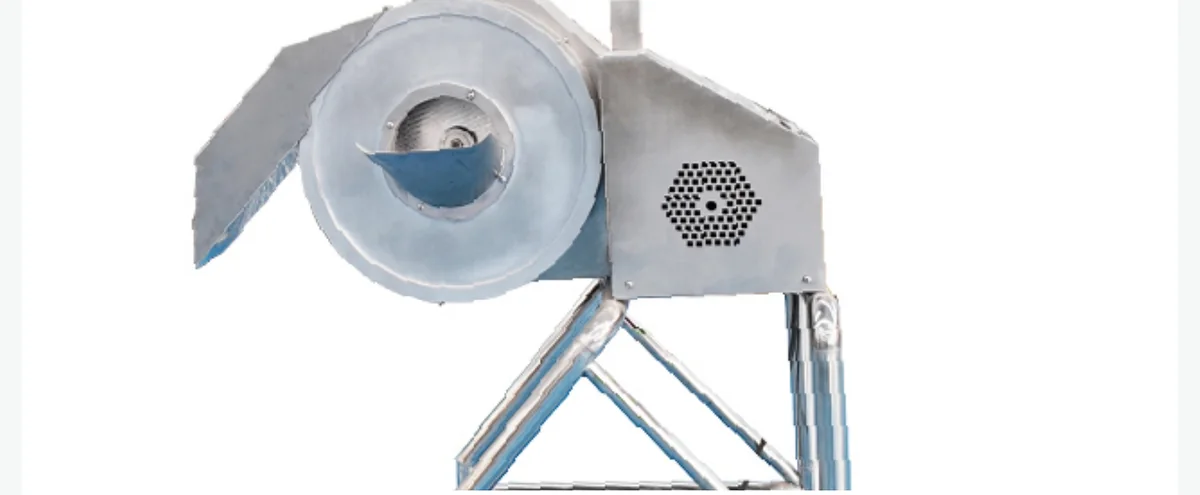
- Cutting — blade set, feed speed and breakage allowance decide usable strips, not gross tonnage.
- Blanching — residence time is set by product and recipe, so capacity is added through belt width or additional passes, not by shortening the time.
- Dewatering — surface moisture before frying changes both fryer loading and oil behaviour.
- Frying — belt area, loading density and residence time set the real figure, and the same fryer performs differently on different products.
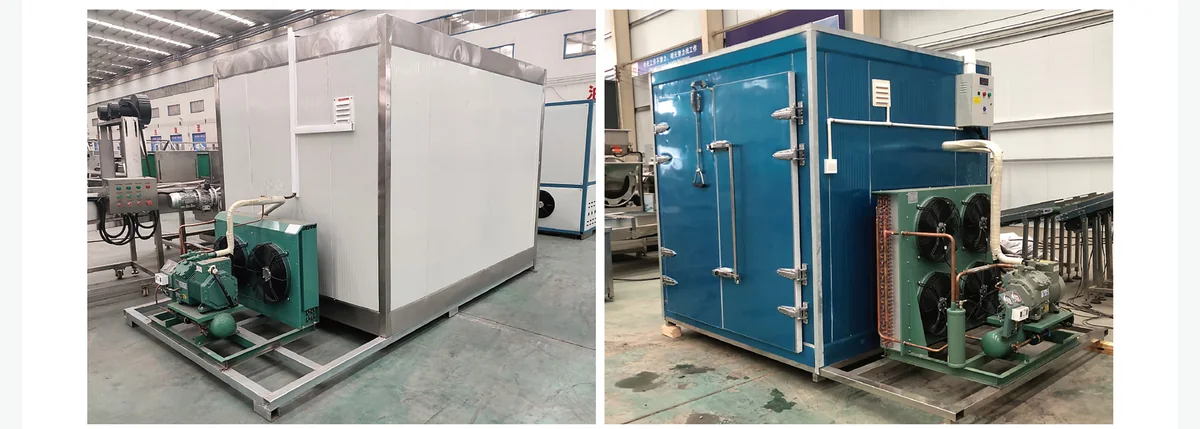
- Freezing — must absorb the fried output at the required rate, or the line has to run slower than its machines can.
- Packing — weigher and packer speed becomes the practical ceiling between 500 and 1000 kg/h more often than buyers expect.
Walk the route stage by stage and write the required figure at each point. The lowest confirmed figure is the capacity of the line — not the highest.
4. Power, heating and utilities scale with the tier
Electrical demand grows with throughput, and it is one of the facts buyers most often discover late. On the published indicative models of the continuous belt fryer, electric heating power steps from 120 kW on the smallest model through 140 kW and 180 kW to 200 kW on the largest, alongside indicative capacities of 100–200, 150–300, 200–500 and 300–800 kg/h. Gas and electromagnetic heating directions can also be reviewed against the utilities available at the site.
Voltage, phase and frequency are not fixed by the machine alone — they are matched to the destination electrical standard after the site supply is confirmed. A factory that cannot provide the required load, or that operates on a different frequency from the quoted motors and controls, changes the electrical scope and the delivery plan. The utility planning guide lists the power, water, heating and drainage items to settle before delivery, and the same discipline applies to the cutting stage and every other motor-driven module in the route.
5. Floor space and layout follow the tier
A longer route needs a longer building. Published indicative fryer dimensions run from 4000 × 1200 × 2400 mm to 8000 × 1200 × 2400 mm across the model range, but the fryer is only one footprint: blanching, dewatering, cooling, freezing and packing each add length, and maintenance access adds width on both sides of the route.
At 300 kg/h a modular layout with buffer space between stages can still work. At 500 kg/h and above the route usually becomes one continuous flow, so clear height, door width, drain positions, column spacing and the direction of material flow have to be checked before machines are selected. Send a dimensioned drawing rather than a description — the drawing is what confirms whether a configuration can be installed at all.
6. Four questions that settle your tier
- What can I actually supply? Peak potato intake per day, not the annual average. A line sized on average supply is short on exactly the days that matter commercially.
- What must I ship? Finished packs per day and their format. Packing speed is a genuine ceiling, not a detail.
- How many hours can I run? One shift and two shifts can reach the same daily output from two very different investments, and they imply different labour and maintenance plans.
- How will I grow? If a second phase is planned, reserve space, electrical load and drainage for the stages you intend to add. Planning for expansion costs far less than relocating a commissioned line.
Capacity also sits at the centre of pricing, because the same line name covers very different scopes at different tiers. The cost factor guide shows why two quotations for 'the same' line are not comparable until the capacity basis is stated in writing, and it lists the scope items that should be fixed before suppliers are contacted.
Comparing the three tiers at a glance
| Target tier | Route character | Indicative fryer range published | Main planning risk |
|---|---|---|---|
| Around 300 kg/h | Modular, stage-by-stage operation, some manual transfer | 100–200 kg/h and 150–300 kg/h | Peak-day raw supply and manual handling cost |
| Around 500 kg/h | Connected flow with automatic transfer between stages | 200–500 kg/h | Freezing and packing balance behind the fryer |
| Around 1000 kg/h | Connected flow, wider or parallel process modules | 300–800 kg/h; higher figures to be confirmed | Building length, clear height and electrical load |
The ranges above are the indicative figures already published for the corresponding models. They are planning references, not a commitment that a given configuration will reach a given output on your product.
Capacity planning checklist
- Raw potato input per hour at peak supply, in writing
- Finished product output per hour and pack format
- Yield basis: measured on your potato, not assumed
- Working hours, shifts and production days per year
- Required figure at every stage, not only at the fryer
- Electrical load, voltage, phase and frequency available on site
- Heating direction: electric, gas or electromagnetic
- Cold storage and freezer capacity behind the line
- Dimensioned factory drawing with drains, columns and clear height
- Expansion plan for the second phase, if any
Frequently asked questions
Is line capacity quoted as raw potato input or finished fries output?
Both are used, and this is the most common source of confusion. State which basis you mean and record the yield assumption, working hours and finished pack format alongside it. Finished output is always lower than raw input because peeling, cutting, starch removal and frying all involve losses.
Can a 300 kg/h line be expanded to 500 kg/h later?
Sometimes — and that decision is made during planning rather than after installation. Available building length, structural clear height, drain and column positions, reserved electrical load, and freezing and packing capacity all have to allow the expansion. A phased layout costs far less than relocating a line.
Does a larger fryer automatically raise the line capacity?
No. A line runs at its slowest stage. Washing, cutting, blanching, dewatering, freezing and packing can each become the limiting step, so practical capacity is the lowest confirmed figure along the route, not the fryer rating.
How do I confirm the real output of a specific configuration?
Through technical review and an agreed acceptance test on your own product and recipe. Published figures are indicative ranges. Any output above a published indicative range, or measured on a different product, has to be confirmed for the project instead of read from a table.