Buyers tend to treat spare parts and warranty as the same topic, because both appear in the same short section near the end of a machinery offer. They are not the same topic and they do not protect against the same risk. Spare parts protect against downtime. The warranty protects against a defect. A project can have a generous warranty and still stop for three weeks because a wear part was never on the packing list.
This guide separates the two, sets out what a usable parts list and a usable warranty clause actually contain, and marks the points where the answer is a commercial term rather than an engineering fact — because those are the points a buyer is most likely to read as a promise when nothing has been promised.
1. Three kinds of part, and why the distinction matters
Almost every dispute about parts begins with a list that mixes three categories without labelling them. The categories behave differently in three ways: who pays for them, whether the warranty covers them, and how their replacement interval is decided.
Spare parts
A spare is a part that is not expected to be consumed in normal operation but can fail. A drive component, a sensor, a solenoid valve, a control module, a pump seal housing — items that should last the life of the machine in principle, and that stop the line when one of them does not. Spares are held against the possibility of failure, not against the certainty of wear.
Wear parts
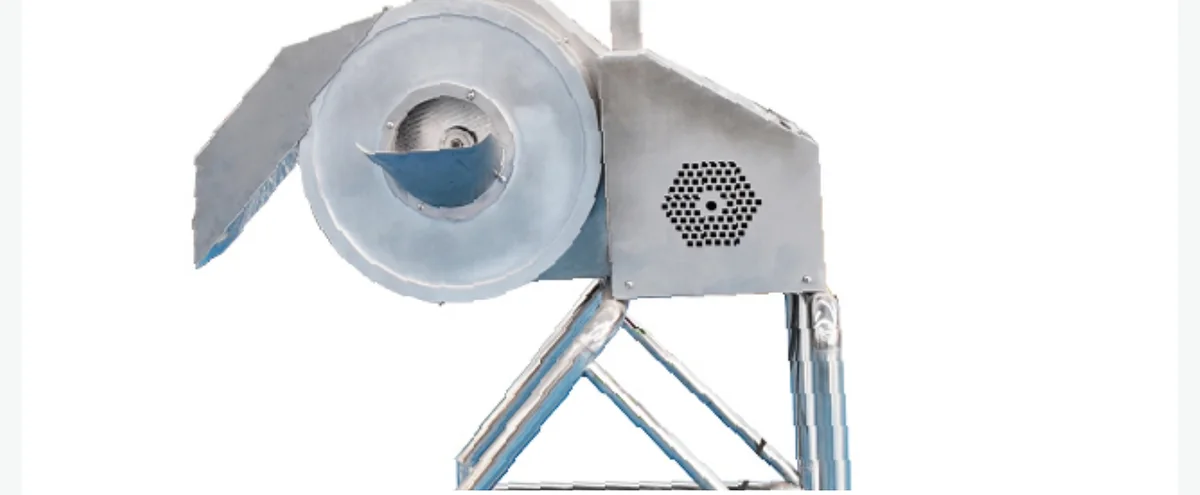
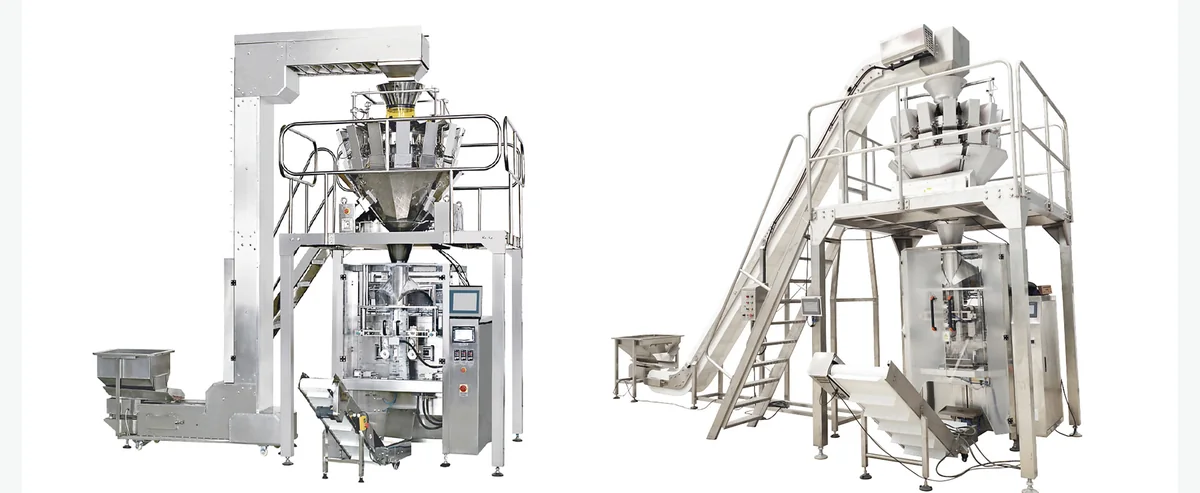
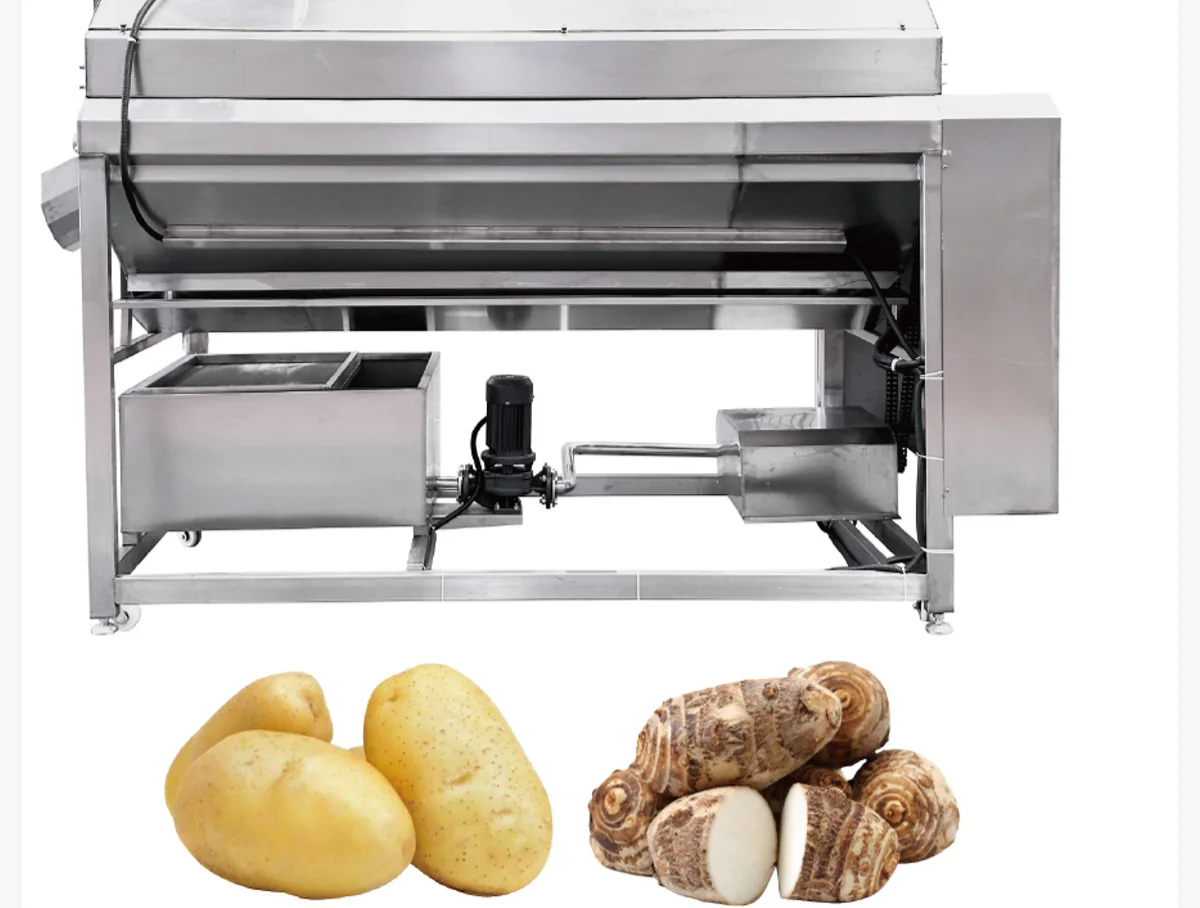
A wear part is consumed by doing its job. It is designed to be replaced, and the only real questions are how often and on what evidence. The cutting blades that produce an agreed fry cross-section on a French fries cutter wear by design; so do the brush rollers on a spiral brush roller peeler, the belts that carry product through a fryer, and the forming and sealing parts on a packaging machine. Wear is not a defect and it is normally outside warranty cover — which is exactly why wear parts need their own line on the list rather than being folded into the general spare set.
Consumables
A consumable is bought continuously rather than held as stock: filtration media, lubricants, cleaning chemicals, packaging film. Consumables are usually excluded from warranty cover and are usually not part of the spare parts list at all. The reason to name them anyway is that the boundary between a consumable and a wear part is not always obvious. A filter element is a consumable in one plant's language and a wear part in another's, and the difference matters when a claim is made.
The practical instruction is simple: ask for the list in three labelled blocks, and ask which block each line item belongs to. A list that does not separate them cannot be turned into an inventory, a budget or a warranty argument.
2. What a usable spare parts list actually contains
A list of part names is not a purchasing document. Six fields make the difference between a list you can use and a list you can only read.
- Identification. A part number or drawing reference that matches the machine as built, not a description such as "bearing" or "seal". Where the machine has a revision, the parts list has to carry the same revision, otherwise the numbers refer to a version of the equipment that was not shipped.
- Quantity per machine. How many of that part exist on the line, so that a replacement quantity can be calculated rather than guessed.
- Category. Spare, wear or consumable, as above.
- Replacement basis. The evidence that says a part is due — running hours, tonnes processed, cycles, or a visual criterion such as blade condition or belt tracking.
- Source. Whether the item is specific to this machine or a standard industrial part available in common sizes.
- Price basis and shipping responsibility. Whether the price is quoted with the machine, separately, or at the time of order; and who arranges and pays for the shipment of a replacement. This is a commercial term and it is set per project in the offer, not by default.
The deposit-stage review of the document set already asks for the spare parts list alongside the manuals and drawings. What is worth adding is the revision check: the list should be issued with the same drawing revision as the machine, and the revision number should appear on the list itself. Without it, a parts list becomes unreliable the first time the machine design changes for any reason.
3. Wear parts: an interval needs a basis, not a number
The least useful sentence in a machinery offer is a replacement interval expressed as a single figure with no unit of work attached. "Replace every six months" describes a calendar, not a machine. Six months of one shift on soft potatoes and six months of three shifts on stored, cold, high-solid material are not the same duty, and the wear part does not know what month it is.
Three bases are used in practice, and a good list states which one applies to each item:
- Running hours. Appropriate where wear follows contact time — belts, chains, bearings under continuous load, drive components with a rated life.
- Throughput. Appropriate where wear follows the amount of material that has passed — cutting edges, brush rollers, anything whose job is to act on the product.
- Condition. Appropriate where the failure mode is visible before it is functional — blade edge condition, belt tracking and surface condition, seal leakage, product quality drift.
For a buyer, condition-based items are the valuable ones, because they can be inspected and replaced before they cost a production day. Ask what the inspection criterion is, who performs the inspection, and how often. An item that is only replaced after it fails is not a wear part under control; it is an unplanned stoppage with a part number.
Why the interval is not a warranty item
Wear parts reaching the end of their life is normal operation, not a defect, and no warranty is designed to cover normal operation. The consequence is worth stating plainly: the wear parts list is your maintenance plan, and the warranty is not a substitute for it. A line run for a year on the original blade set and then claimed under warranty is a claim that will be examined against the duty the machine was specified for.
4. What should be on the first shipment
The interesting question is not which parts to buy — it is which parts cannot wait for a second shipment. That question has an answer that can be reasoned about, and it is not "as many as possible".
Sort the list on two axes
First axis: what happens if this part fails and there is no replacement on the shelf. Some failures stop the whole line. Some degrade output and can be run to the next maintenance window. Second axis: how long a replacement takes to arrive. Parts that are locally available in common sizes are a short lead time even if they are critical. Parts specific to the machine are a long lead time by definition, because they have to be produced and shipped.
The parts that sit in the corner of critical and slow — machine-specific, line-stopping — are the ones that justify being on the first shipment. Everything else can be handled by a local purchase or a later order.
Where that corner usually lands
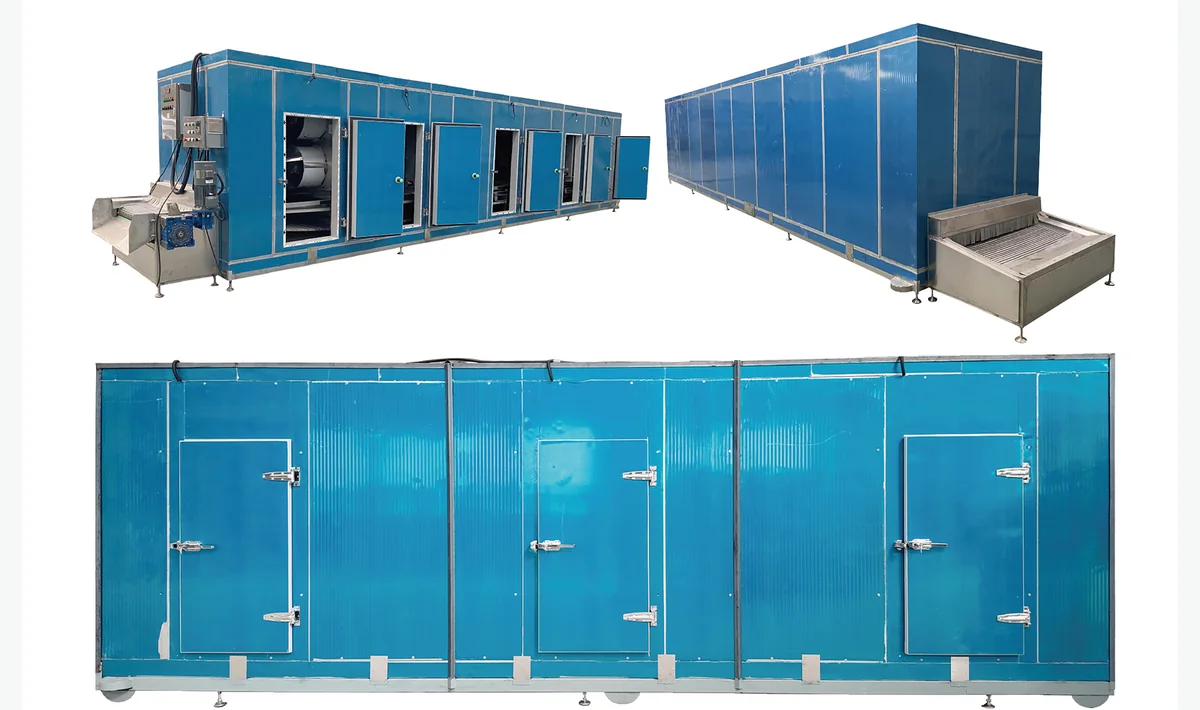
In a fries or chips line the corner tends to fill with a small number of predictable items: the cutting set behind the fries cutter, a spare mesh belt for the continuous belt fryer if the belt is a machine-specific weave, sealing and forming parts matched to the pack format on the vertical packaging machine, and any control module that the line cannot start without. The exact set follows the configuration, and the configuration is what has to be reviewed — a fries and chips line with frying, freezing and packing interfaces has more machine-specific parts than a short set of independent modules.
A first-year set as a separate line
Asking for a recommended first-year set quoted as its own line, separate from the machine offer, is a cheap way to have the conversation. It puts a number against the risk without forcing a decision at the same moment as the main purchase, and it makes the list reviewable by whoever will actually hold the inventory. Whether such a set is offered, what it contains and what it costs are confirmed per project on request.
5. Consumables, and where cover stops
The consumable boundary is the most contested line in a warranty discussion, and it is contested because it is rarely written as a list. A clause that excludes "consumables" leaves the definition to whoever is arguing. A clause that excludes twelve named items leaves nothing to argue about.
Two habits reduce the argument. The first is to ask for the exclusion as an itemised annex rather than a phrase. The second is to check the annex against the parts list from section 2: every item marked consumable or wear should appear in the exclusion annex, and every item marked spare should not. If the two documents disagree, one of them was written by somebody who had not read the other.
Note also that filtration media and cleaning chemicals are consumed by maintenance rather than by production, and that a line's oil management practice changes how quickly some of them are used. The oil filtration guide covers that side of the routine; the point here is that consumption rates are site data, not catalogue data.
6. The four things a warranty clause has to state
Warranty wording varies enormously between suppliers, and comparing two of them side by side is close to impossible unless both answer the same four questions. These are the questions, not the answers.
One — what period, and measured how
A duration is meaningless without its start date and its unit. Months from a defined event is the usual construction; running hours is the alternative used when the equipment is expected to work hard. Some contracts state both and apply whichever comes first, which is worth noticing because it changes the effective cover for a plant that runs two shifts from the day it starts.
Two — which components are covered
"The equipment" is not a scope. Covered means: which machines, which sub-assemblies, whether bought-in components such as drives, instruments and control hardware are covered by the equipment supplier or by their own manufacturer, and whether the coverage follows the component when it is replaced. A replaced part inheriting the remainder of the original period is normal; a replaced part starting a new period is a concession and should be read as one.
Three — what is excluded
The exclusion list is where the cover actually lives. Wear parts and consumables, damage from abnormal operation, incorrect utilities, water or product outside the agreed specification, unauthorised modification, and freight and labour in some contracts. Each exclusion is defensible on its own; the problem is never the exclusion, it is discovering it after a failure.
Four — what proves a claim
A claim needs evidence, and the contract should say what evidence. Photographs of the failed part in place, the operating record around the failure, the part identification, and the machine's running history are typical. The practical consequence is that record-keeping has to start on day one, because a claim made in month seven depends on data collected in month one.
Where the responsibility for a claim sits, and who performs the work, follows the same pattern as installation: it is coordinated with the equipment partner for the specific project and identified in the offer, including scope, availability and cost. The support and service page sets out that structure; the numbers are per project.
7. The start-date problem
Three start dates appear in real contracts, and each one protects a different party. This is the single most consequential line in the whole clause, and it is usually one sentence long.
- Shipment date. Simple and easy to verify, but the clock runs while the equipment is in a container. On a route with a long sea leg and a slow clearance, a meaningful part of the period can be spent before the machine is even unpacked.
- Arrival at destination. Better, but still starts the clock before the line has run. If site works are late, the period can expire while the equipment is still in storage.
- Commissioning or handover. The fairest of the three from the buyer's side, because it starts when the line actually produced. It requires a dated handover record that both sides signed, which is the same milestone the shipping timeline calls the only date both parties witness at the same time.
The clause should also say what happens when handover is delayed for a reason that belongs to the buyer — late site works, missing utilities, no raw material for the trial run. Most contracts resolve this with a backstop: cover begins at handover or at a defined date after arrival, whichever comes first. That construction is reasonable, but it has to be read before signing rather than after a claim, because it converts a buyer-caused delay into a real cost.
Two dates make the clause work: the start event and the handover record. Agree both in writing, and keep the signed handover document with the machine file, not in an email thread.
8. Holding stock across a sea freight cycle
For an imported line, the parts question is a supply chain question. A part that takes weeks to arrive has to be held locally, or the line waits. That is the whole logic, and it produces a simple rule: stock cover should be driven by the lead time you cannot compress, not by the quantity that feels comfortable.
Three numbers to establish
- Consumption rate. How fast the part is actually used at your duty — from the replacement basis in section 3, measured on your own line rather than assumed from a table.
- Replacement lead time. From order to part in hand, including production, packing, freight, clearance and inland delivery. This is the figure most often underestimated, because it is usually quoted as production time only.
- Holding cost. Capital tied up in a part that may never be used, against the cost of a stopped line. The comparison is not subtle, but it is worth writing down for the parts that are both expensive and unlikely to fail.
What to do with the parts you decide not to hold
For each part not held, record how it would be obtained: local equivalent with a specification, an order placed at the next scheduled maintenance, or an emergency order with the fastest available freight. A parts plan that says "we will order it if it breaks" is a plan to discover the lead time at the worst possible moment.
The same logic applies to the cost side of the project. Parts consumption and downtime belong in the operating cost line of a payback model, and the payback and ROI framework treats them as such: a line that stops for want of a part has a different payback from the same line that does not.
9. The parts record in the handover pack
The handover pack is where all of this becomes usable or does not. It should contain four things about parts, and they should be the version that matches the machine as installed rather than as ordered.
- The parts list at the as-built revision, with the categories and replacement bases from section 2.
- The wear parts record, showing what was installed, when commissioning finished, and therefore what the first inspection interval runs from.
- The warranty clause as signed, with the start event written on the front page and the handover date filled in, not left as a blank.
- The claim route: who to contact, what evidence to send, and which language the correspondence will be in. One route, not several.
The handover date is also the point at which the support relationship becomes concrete, and the installation and training guide treats it the same way — the pack is finished when the settings are recorded, the wear parts are listed and one contact route exists. The shipping and installation timeline places the same milestone at the end of stage eight, which is the reason the two documents should never be prepared by different people on different days.
Spare parts and warranty, on one page
- The parts list is delivered in three labelled blocks: spare, wear and consumable
- Every line carries a part number that matches the as-built drawing revision, and the revision appears on the list
- Quantity per machine is stated for every item, so a replacement quantity can be calculated
- Each wear part states its replacement basis: running hours, throughput or a visual condition criterion
- Each item is marked machine-specific or standard industrial, so local sourcing can be assessed
- The parts that are both line-stopping and slow to arrive are on the first shipment
- Price basis and shipping responsibility for replacements are stated in the offer, not left to the future
- The warranty clause states the period and the event that starts it
- The clause names covered components, including whether bought-in parts are covered and by whom
- Exclusions are an itemised annex, and every item on it appears as wear or consumable on the parts list
- The claim evidence is described, and the operating records that produce it start on day one
- The handover record is signed by both sides and filed with the machine, not left in an email
Frequently asked questions
How many spare parts should be ordered with a new food processing line?
There is no standard quantity, because the right number follows the wear rate of your raw material, the hours the line runs and how long a replacement takes to reach you. A practical method is to sort every part on the list by consequence of failure and by supply lead time, then hold cover for the parts that are both critical and slow. Quantities, prices and shipping responsibility are confirmed per project in the offer on request.
When does the warranty period start?
Three start dates are used in practice: the shipment date, the arrival date at the destination port, and the date of commissioning or handover. Each protects a different party. A start date tied to shipment runs while the machine is still on the water; a start date tied to handover begins once the line has actually run. The date is a commercial term agreed in the contract, and it is confirmed per project on request.
Are consumables covered by the warranty?
Consumables and wear parts are normally excluded from warranty cover, because they are expected to be consumed in normal operation. What matters is that the exclusion is written as a named list rather than a general phrase, so that a disputed claim does not turn on whether a part counts as a consumable. The covered items, the excluded items and the evidence required for a claim are set out in the contract.
Can spare parts be sourced locally instead of imported?
Some can and some cannot, and the difference should be established before the order rather than after a failure. Standard items such as fasteners, seals, bearings and belts in common sizes may be available locally. Parts that carry the machine design — cutting blades in a specific profile, brush rollers, mesh belts, forming and sealing parts matched to a pack format — usually have to come from the equipment source. Ask which is which, item by item, and record the answer.