By the time a deposit is being discussed, the technical conversation is usually over and the pressure to move quickly is at its highest. That is exactly the moment when a short written checklist pays for itself, because the terms agreed at this point decide what is built, what is verified, and what happens if something does not go to plan.
This guide sets out twelve checks to complete before a deposit leaves your account. None of them need engineering expertise beyond what a buyer already has, and all of them are far easier to settle before payment than after it.
1. Why the deposit stage decides the rest of the project
Up to the point of payment, the two sides of a machinery project are still negotiating. After the first instalment, they are performing. That shift changes the balance of the conversation: drawings, inspection points, spare part lists, training days and documentation language are all cheap to agree while the offer is still open, and considerably harder to add once the build has started and the schedule has its own momentum.
The deposit itself is a commercial term, not a technical one. Its amount, currency and trigger are set in the offer and the contract, and confirmed per project. What the twelve checks below do is make sure that the instalment is attached to something you can observe — a scope, a drawing, an inspection, a shipment — rather than to a date on a calendar.
One habit is worth adopting before reading further: keep every answer in a single sheet, one row per check. A blank row is not a saving, it is an open question that will be answered later by whoever is least under pressure.
2. Checks 1 to 3: who you are paying, and what for
Check 1 — the contracting entity and the bank account match
The company name on the offer, on the contract, on the invoice and on the receiving bank account should describe the same legal entity. Ask for the registered company details as they appear on the business licence, and confirm that the account holder name matches exactly. Payment to an account held by an individual, or by a company with a different name, breaks the paper trail that export documentation, warranty claims and any later dispute depend on.
Two smaller things belong in this check. Confirm who is authorised to sign for the supplier, and confirm the channel you will use for instructions so that a last-minute change of bank details arrives through a route you already trust. Requests to redirect a payment are the single most common way funds are lost in equipment trade.
Check 2 — the scope the deposit covers
A deposit should be paid against a scope written machine by machine, not against a line name. Ask for the stage-by-stage equipment list with the boundary of supply marked on it: what is included, such as conveyors, control panels and inter-machine wiring, and what is excluded, such as civil works, site power supply, water and drainage.
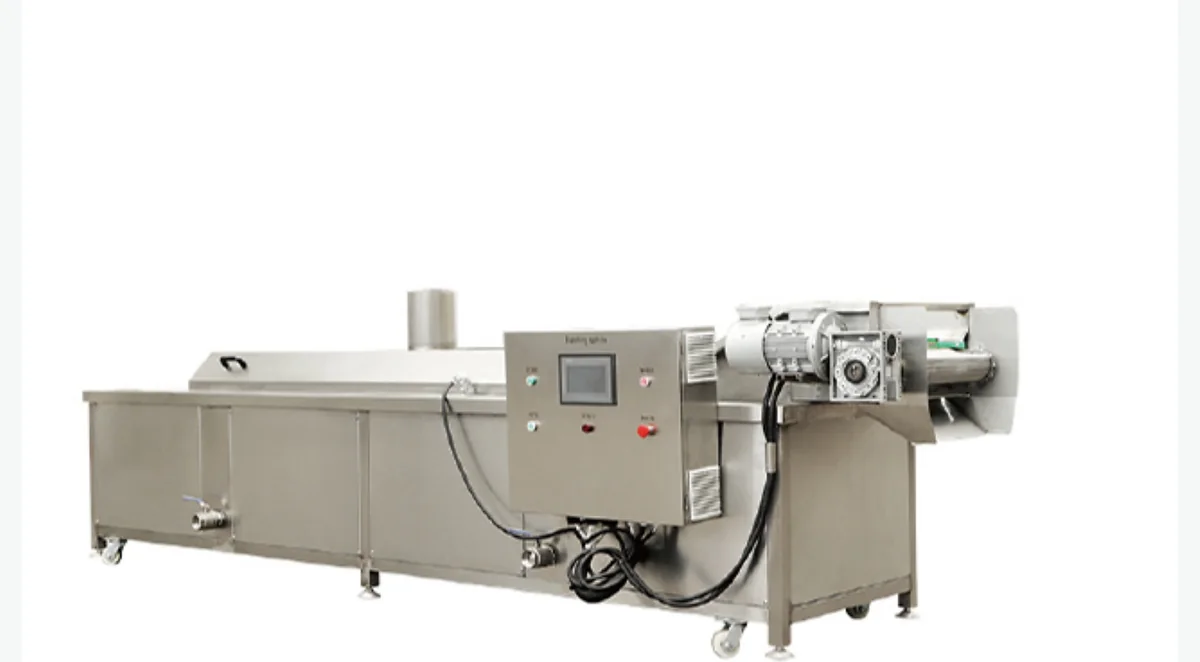
This boundary is the same one you will use at acceptance, which is why it has to be settled now. Two offers for what sounds like the same product can differ entirely at this level — an automatic French fries and potato chips line and a semi-automatic configuration are different scopes long before any price is attached to either of them. The same applies inside a single stage: a continuous belt fryer quoted with oil filtration, exhaust and controls is a different scope from the same fryer quoted as a bare unit, and the deposit is paid against one of those two, not against the name.
Check 3 — what is still open inside the offer
Read the exclusions as carefully as the price. Look for items marked optional, by buyer, on request or to be confirmed, and make sure each one has an owner and a date. An offer with no exclusions at all is more often an unfinished scope than a generous one.
The commercial questions that decide the rest of the project belong in one place. The equipment RFQ checklist lists the project information a serious quotation is built on, and it is worth re-reading it in reverse at this stage: anything the supplier never asked about is something the offer cannot really have priced.
3. Checks 4 to 6: evidence, acceptance and the payment schedule
Check 4 — evidence you can verify before payment
Ask for the documents that describe the actual machine rather than the category it belongs to: a dimensioned general arrangement drawing, the electrical diagram, the materials of construction, the control and safety description, and the utility demand for the line as configured. These are the documents that make a technical review possible, and they should exist before a deposit is requested rather than after.
Factory evidence is a separate layer. A video walkthrough, a live video call during build, or an agreed inspection visit each answer a different question. If an inspection matters to you, agree the point in the build at which it happens and the notice period the supplier needs, and write both into the contract. More on how inspection is normally structured sits on the quality and inspection page.
One caution applies to every document: read it for scope. A certificate covering a component is not a certificate covering a finished line, and a test report covering one machine is not evidence about the machine in your order.
Check 5 — acceptance criteria written before payment
Define what the word accepted means: what will be measured, on which product, at what rate, by whom, and with what tolerance. A typical protocol covers mechanical completion, a no-load run, a trial run on your product or an agreed substitute, an output check, finished product quality, safety interlocks, cleaning and changeover, and documentation handover.
Be precise about the output basis. Raw intake and finished output are different numbers, and an acceptance test written against the wrong one will be argued about at the worst possible moment. A performance figure that never appears in an acceptance protocol is a marketing figure.
Check 6 — payment milestones tied to delivery milestones
Each instalment should have a trigger that is observable. Common triggers include order confirmation, drawing approval, pre-shipment inspection, the bill of lading date, arrival, and completion of commissioning. What matters is that the trigger describes completed work, so that both sides can point at the same event.
Keep the payment schedule and the delivery schedule on one page. The number of instalments and their proportions are confirmed in the contract and the offer on request, and they are not a fixed industry convention; they only make sense next to the milestones they are tied to. Where the two schedules are drawn on separate pages, mismatches survive unnoticed until the first due date.
4. Checks 7 to 9: shipping, spares and documents
Check 7 — the delivery term, packing standard and insurance clause
Four items decide whether two offers are comparable at all: the delivery term, the named port or place, the packing standard and the insurance cover level. Confirm all four in writing before comparing numbers, along with who books the main carriage, who pays destination port charges, and what happens if the vessel or the clearance is delayed.
The FOB, CIF and landed cost guide walks through how each term divides cost, task and risk, and why a delivered price and a port price are not two prices for one thing.
Check 8 — spare parts, wear parts and consumables
Ask for the list of parts supplied with the machine and, separately, the list of wear parts with the basis on which their replacement interval is estimated — hours of operation, tonnes processed, or a visual inspection criterion. Then ask which of those parts can be sourced locally and which are specific to the machine, because that answer decides your first-year inventory.
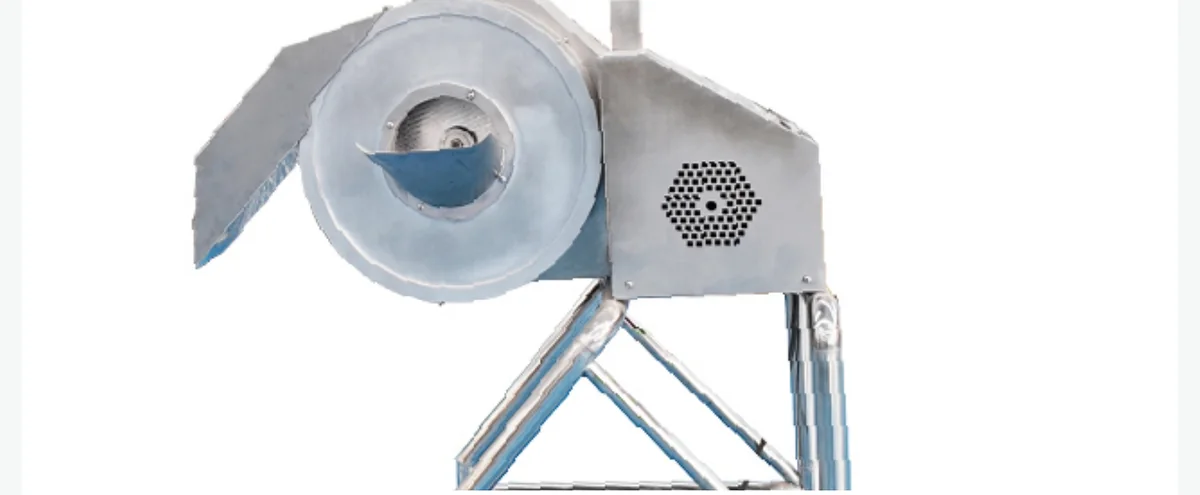
A recommended first-year spare set quoted as a separate line is usually the cheapest way to hold the conversation, since it lets you decide later without reopening the main offer. Cutting tools are a good example: the blade set behind a French fries cutter is a wear item, and whether a spare set is in the offer or on your first purchase order is a scope question rather than a price question.
Check 9 — the document set and its language
The document set is part of the scope, not a courtesy. It normally includes the operation manual, the maintenance manual, electrical drawings, the spare parts list and the packing list, and in many projects a certificate of origin and specific customs documents. Agree the list item by item, and agree the language of each one.
If operators will be trained in a language other than the manual, or if your maintenance team reads drawings in a different language from the labels on the panel, say so now. Retrofitting translated documentation to a shipped machine is slow, expensive and avoidable.
5. Checks 10 to 12: support, control and the file you keep
Check 10 — the installation, commissioning and training boundary
Write down who does what, item by item: foundations and civil work, offloading and positioning, mechanical assembly, electrical connection, utility connection, commissioning, trial run, operator training and handover. Then write down what the buyer provides at the site — local labour, lifting equipment, power, water, raw material and, where needed, interpretation.
If a service engineer is expected to travel, the division of travel, accommodation, insurance and site safety responsibilities belongs in the contract rather than in an email thread. The project support page describes how that scope is normally split between remote guidance and an on-site visit.
Check 11 — change, delay, warranty and claim terms
Three situations should be answered on paper while everyone is still friendly. First, what happens when you change the scope mid-build: how the change is priced, how it is recorded, and what it does to the schedule. Second, what happens when a milestone slips: the notice period, the revised date, and any agreed remedy. Third, how a defect claim is notified, assessed and resolved.
On warranty, three details matter more than the headline duration. What is covered — parts only, parts and labour, or parts, labour and travel. When the period starts — shipment, arrival or commissioning are three different dates. And what voids it, which is usually unauthorised modification, incorrect utilities, or maintenance outside the manual.
Check 12 — the file you keep after payment
After the deposit is paid, documents are what settle arguments. Keep the signed contract with its annexes, the approved drawing revision set, the acceptance protocol, the packing list, the bill of lading, the insurance certificate, any inspection report, the change log and the spare parts list.
Store one copy in one place, with a simple version list. Two revisions of the same drawing living in two inboxes is how a machine ends up built to the version that nobody agreed to.
The 12 checks, on one page
- Contracting entity, licence details, authorised signatory and bank account holder all match
- Scope written stage by stage, with included and excluded items marked on the equipment list
- Every optional, by buyer or to be confirmed item has an owner and a date
- General arrangement drawing, electrical diagram and utility demand supplied for review
- Acceptance protocol defines what is measured, on which product and at what rate
- Each payment instalment has an observable trigger tied to a delivery milestone
- Delivery term, named port or place, packing standard and insurance cover all stated
- Wear parts identified, with the basis of the replacement interval and local sourcing checked
- Document set listed item by item, with the language of each document agreed
- Installation, commissioning and training split written down, including buyer-side provisions
- Change, delay, warranty start event and claim procedure agreed in the contract
- Document retention list agreed, with one controlled revision set in one place
6. How to run the twelve checks without slowing the project down
The list looks long, but it collapses into three passes, and each pass is a single conversation rather than a new document.
- Document pass. Checks 1, 2, 3, 8 and 9 are answered by the offer itself and the annexes behind it. If they are not answered, that is the answer.
- Engineering pass. Checks 4, 5 and 11 sit with your technical and quality reviewers: drawings, the acceptance protocol, the warranty definition and the change procedure.
- Logistics and schedule pass. Checks 6, 7, 10 and 12 belong with whoever will handle freight, site works and the payment schedule.
Put the results into one comparison sheet, one column per supplier and one row per check. Then read the two remaining guides in this cluster together: the supplier selection guide covers how to compare configuration clarity and service boundaries between candidates, and this checklist covers the point at which a candidate becomes a counterparty.
Nothing here is unusual for an equipment purchase, and that is the point. The checks are the routine part of the process; what causes trouble is skipping them because the machine looks right and the schedule is tight.
Frequently asked questions
Should a deposit be paid before the drawings are approved?
It depends on how the contract is structured, and both orders exist in machinery projects. Some contracts attach the first instalment to order confirmation and a later one to approved drawings; others make drawing approval the trigger for the first payment. What matters is not the order but that each instalment has an observable trigger, so you know exactly what has to be complete before the money moves. Which structure applies to your project is stated in the offer and the contract.
How much deposit is normal for food processing machinery?
There is no single normal figure. A deposit is a point on a payment schedule, and schedules differ with the scope, the build time, the delivery term and the buyer's own financing. The proportion, the currency and the trigger for each instalment are set in the contract and confirmed per project, and they should be read together with the delivery milestones rather than compared as standalone numbers.
What if the supplier will not put acceptance criteria in writing?
Treat that as information about the supplier rather than a technical obstacle. Writing down what will be measured, on which product, at what rate and with what tolerance costs nothing and protects both sides. If acceptance has to be inferred after the machine is built, there is no agreed standard to test against, and the discussion moves from engineering to opinion.
Does a certificate prove the machine is compliant in my country?
No. Compliance is assessed in the importing country against its own rules and by its own authorities, so a document issued elsewhere does not by itself settle it. Read every certificate for what it actually covers: a component, a material, a process or a finished machine are four different scopes. Where a certification or test report is claimed, ask for the document itself and check its scope against your own import requirements.
Can the payment schedule be changed after the deposit is paid?
It can be renegotiated, but it is a contract change and should be recorded the same way as any other change, with the commercial effect written down on both sides. Changing a schedule after work has started usually reopens the delivery plan as well, because the supplier's build sequence and cash flow are tied to it. This is one more reason to fix the milestones and their triggers before the first instalment.