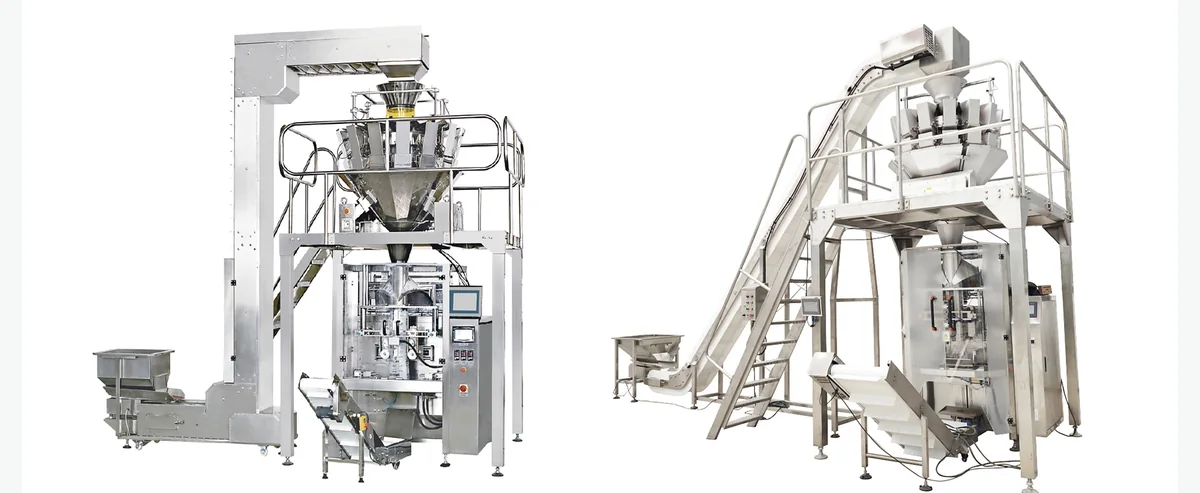
Two suppliers quote what looks like the same French fries line, and the numbers are far apart. Often the machines are not the reason. One price stops at the factory gate, one stops on board at the port of loading, and one follows the cargo to a named destination port. Behind each three-letter term sits a different set of costs, tasks and risks, and none of them is the whole cost of getting a line into production.
This guide explains what FOB, CIF, CFR, DAP and the neighbouring terms actually put on each side of a machinery contract, what belongs in a landed cost figure once the equipment leaves the factory, and how to rebuild a comparison so that two quotations are finally measuring the same thing.
1. Why the same line arrives at two different prices
The delivery term is not a discount and not a favour. It is an agreed division of tasks, costs and risks between the seller and the buyer, and it is written as a three-letter code followed by a named place. The codes come from the Incoterms rules published by the International Chamber of Commerce, and their purpose is to remove the argument about who does what along the route.
Three things follow from that, and all three matter when a food processing line is being priced. First, cost and risk do not travel together: under several of the terms the seller pays the freight while the risk of loss has already passed to the buyer. Second, the named place is part of the term, not a detail — a term naming a seaport and a term naming an inland site are different arrangements wearing similar names. Third, the rules allocate delivery tasks and costs only; they say nothing about payment terms, transfer of ownership, warranty or product liability, which belong in the contract itself.
One pattern is worth knowing before reading the sections below. In machinery exports from Chinese ports the most common basis is FOB, with CFR and CIF used where the buyer prefers to leave the main carriage with the supplier. Which term applies to a particular line, and the price of it, is stated in the quotation on request — it is never assumed from the term used in an earlier enquiry.
2. The delivery terms that appear in machinery projects
Most machine and line contracts land on a small set of terms. The table below shows where the seller's cost and risk end, what the term is normally used for, and the point buyers most often misread.
| Term | Where the seller's cost and risk end | Usually used for | Most misread point |
|---|---|---|---|
| EXW — ex works | At the seller's premises, not loaded | Buyers who collect with their own forwarder | The buyer also handles export clearance in the seller's country, which is rarely practical for machinery |
| FCA — free carrier | Handed to the buyer's carrier, export cleared | Containerised cargo and multimodal routes | Often the more precise rule when the cargo is containerised rather than break-bulk |
| FOB — free on board | On board the vessel at the named port of shipment | Sea and inland waterway shipments, common for machinery | Written for sea transport; for containerised cargo the handover in practice happens at a terminal before loading |
| CFR — cost and freight | Seller pays the main carriage to the destination port; risk passes on board at origin | Buyers who want the freight arranged by the supplier | The buyer still carries the risk during the voyage, and still pays insurance, port charges and clearance |
| CIF — cost, insurance and freight | As CFR, plus marine insurance to the named destination port | Buyers who prefer fewer contracts to manage | The cover required by the rule is a minimum, not an all-risk cover |
| DAP — delivered at place | At the named place, ready for unloading, import not cleared | Deliveries that must reach an inland site | Unloading, import clearance, duty and taxes remain on the buyer |
| DDP — delivered duty paid | At the named place, import cleared and duty paid | Buyers who want one number to the door | The seller must be able to act as importer of record, which is not possible or permitted everywhere |
Two practical rules follow. Inside a container terminal, the physical handover happens before the vessel is loaded, which is why FCA is often the cleaner rule for containerised cargo and FOB for cargo that is lifted on board as a unit. And whenever a term names a port, the port's own charges at the destination end stay with the buyer under FOB, CFR and CIF alike — they are not part of the seller's leg under any of them.
3. What landed cost is actually made of
Landed cost is the total cash required before the line can run, spread across the whole route rather than the machine invoice. Grouping it into blocks makes it easier to see which term carries which block, and which ones are on your side under every term.
| Block | What it contains | Usually on whose side |
|---|---|---|
| Equipment and scope | The machines from the first to the last stage in the approved scope, with conveyors, controls and inter-machine wiring | Seller, priced in the offer |
| Export packing | Crates, moisture protection, bracing and the loading plan for the voyage | Seller, but the standard is agreed in writing |
| Inland movement and lifting | Factory to port, plus handling at both ends | Seller under FOB and above; buyer under EXW and FCA |
| Export clearance and documents | Export declaration and the document set the destination needs | Seller from FCA upwards |
| Main carriage | Ocean freight or air freight, including any transhipment | Buyer under FOB and FCA; seller under CFR and CIF |
| Insurance | Marine cover for the voyage at the agreed cover level | Buyer under FOB, FCA and CFR; seller at minimum cover under CIF |
| Destination port charges | Terminal handling, documentation, agency and storage at the port | Buyer under every term that stops at a port |
| Import clearance, duty and taxes | Customs entry and the duty and taxes assessed in the importing country | Buyer under FOB, CFR, CIF and DAP; seller only under DDP |
| Inland delivery and unloading | Port to site, plus crane or forklift at the site, and any road permit for oversized pieces | Buyer, unless a delivered term is agreed |
| Installation and commissioning | Supervision, mechanical and electrical connection, commissioning and operator training | Agreed in the offer — remote guidance or on site |
| Site works | Civil work, power connection, water, drainage and the cold-room shell | Buyer in every case |
| Working capital | Cash tied up while the line is in transit, being installed and ramping up | Buyer in every case |
The last two blocks are the ones no delivery term will move, and they are the ones buyers most often leave out of a project budget. The cost factor guide explains why two quotations for the same line name are not comparable until the scope behind them is written down, and the payback and ROI guide shows where transit time, port storage and the commissioning ramp belong in the investment side of a model.
4. Where the surprises sit at the destination end
Almost every cost overrun on a delivered line happens after the vessel arrives, and almost all of it is charged to whoever holds the goods at that moment. Knowing the sequence is enough to keep it small.
- Free time, then demurrage or detention. Containers are released against a free period for collection and return. Once it runs out, the charges accrue daily and belong to whoever holds the equipment — which is normally the buyer, under every term.
- Port storage. If the import entry is not ready when the cargo lands, the boxes sit in the terminal and storage starts. Machinery is often waited on by documents, not by ships.
- Terminal handling, documentation and agency. These are destination-side charges and stay with the buyer under FOB, CFR and CIF, because under all three the seller's contract ends at the named port.
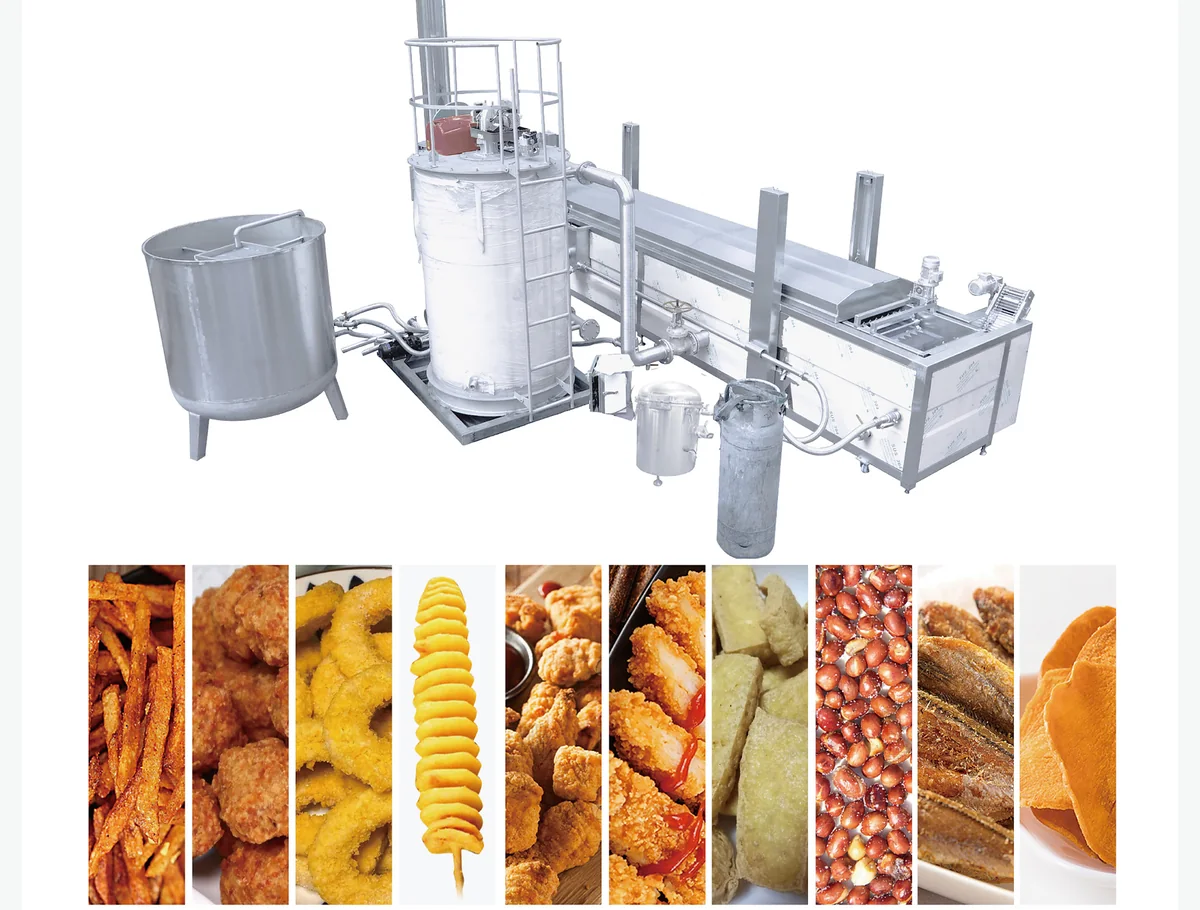
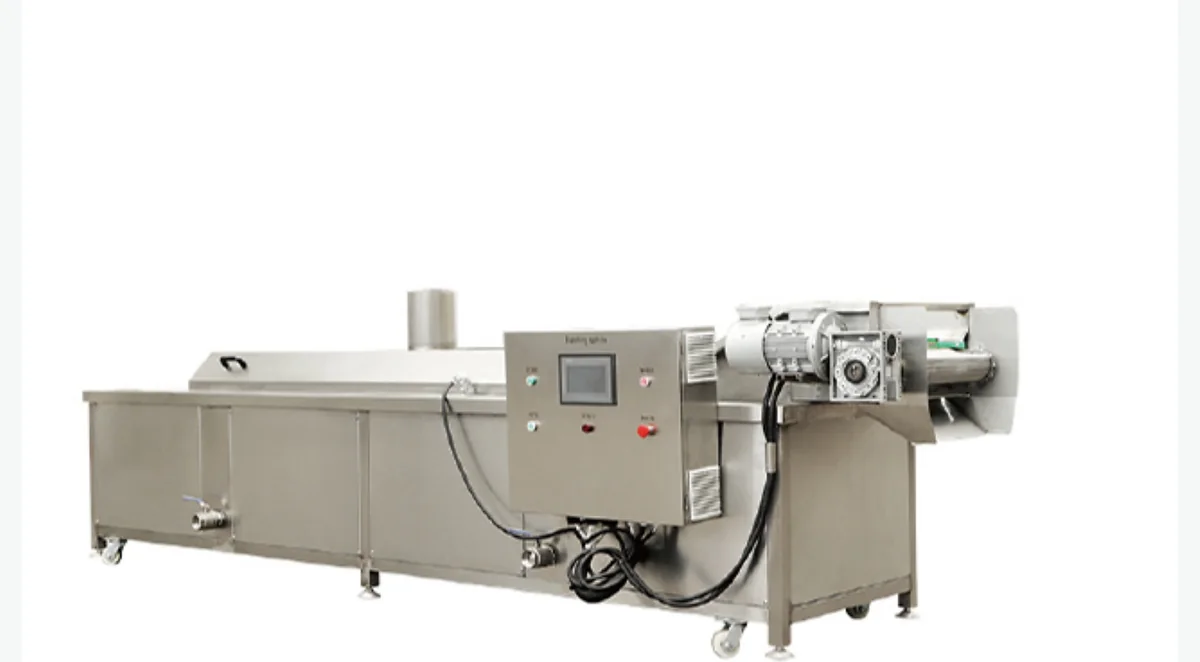
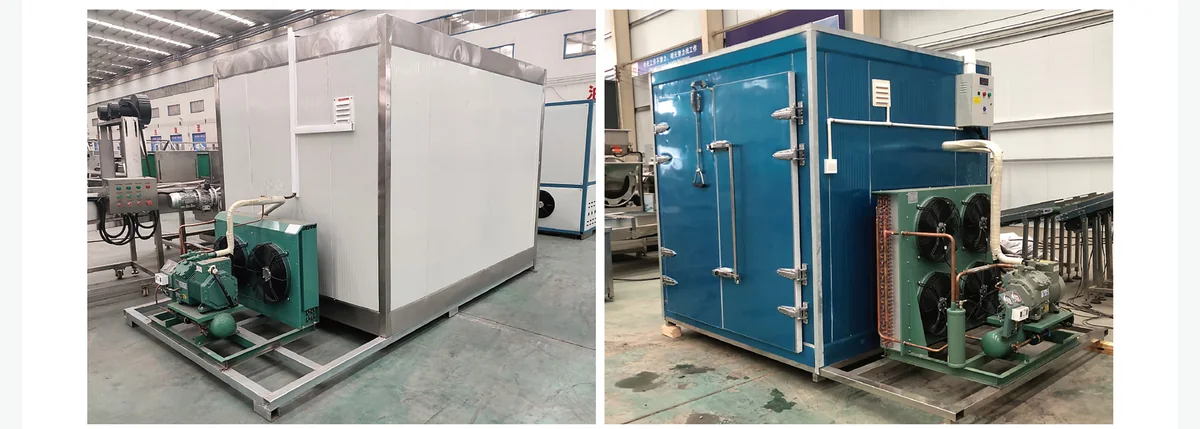
- Unloading the oversized pieces. A fryer, a blanching unit or a freezing tunnel does not come out of a container on manpower alone. Crane or forklift capacity at the site, and the route to reach it, need to exist before the delivery date, not on the day.
- Insurance cover that is narrower than assumed. A minimum-cover CIF policy is not the same as an all-risk policy, and the difference shows up exactly when it is needed.
- Classification and duty. Duty depends on how the goods are classified and valued in the importing country, which is a matter for your customs broker under your own regulations.
The habit that prevents most of these is one sentence per block: for each cost, identify the exact point where the task moves from the seller to the buyer, and check that the price you were quoted covers everything up to that point and nothing beyond it.
5. Comparing quotations: fix the term, then read the scope
Three offers on three different terms are not three prices for one thing. They are one price for three different things. Put them on one page in one format before any of them is judged cheap or expensive.
- One column per offer, one row per block from the table in section three. Any row left blank is an open question for that supplier, not a saving.
- Convert everything to one basis. Either bring every offer back to ex works using the buyer's own freight and insurance estimates, or bring every offer forward to a delivered price using the supplier's stated freight and insurance. Choose one direction and stay in it.
- Read the packing standard, not just the packing cost. A cheaper sea-freight price can simply mean lighter crating or less moisture protection for a voyage of several weeks.
- Read the insurance cover level. Cover at the minimum required by the rule and cover for the full value with wider perils are different products at different prices.
- Read the line boundary again. Delivery term and scope are separate axes; a quotation can be correctly priced on the wrong scope.
- Ask what happens on delay. Who pays if clearance takes longer than planned, and who pays if the vessel is delayed and the site team is already waiting.
Two questions resolve most confusion in one exchange: "which point of the route does this price cover, and which costs are on my side from that point?" and "if we agree the same term and the same scope, what would this quotation be?" The answers, side by side, are the comparison.
6. Choosing between FOB, CIF and a delivered term for a line project
There is no universally best term, only a best fit for who can do what. The decision usually comes down to three capabilities on your side.
Do you already have a forwarder and a customs broker?
If yes, FOB or FCA puts the sea leg and the destination work in the hands of the people you already work with, and keeps the machine price free of freight assumptions that change between quotation and shipment. If no, CFR or CIF removes two contracts from your desk, at the price of the freight the supplier can secure.
Is the cargo containerised or oversized?
A line that fits into standard containers moves on ordinary schedules and ordinary rates. A line with oversized pieces needs out-of-gauge or break-bulk arrangements, and the practical questions move to crane capacity, road permits and the physical access to your site. In that situation a delivered term is often worth its premium, because the same supplier is then responsible for the whole journey of a piece that cannot be quietly re-handled.
How important is one number to the door?
Delivered terms are attractive for budgeting, because they give a single figure to carry into a project plan. They also concentrate risk on one party, which is why availability varies: some routes and some destinations make certain terms impractical, and the seller of a delivered term has to be able to complete the import formalities in your country. Whether a given term can be offered for your project is confirmed in the quotation on request, together with the destination charges it does and does not include.
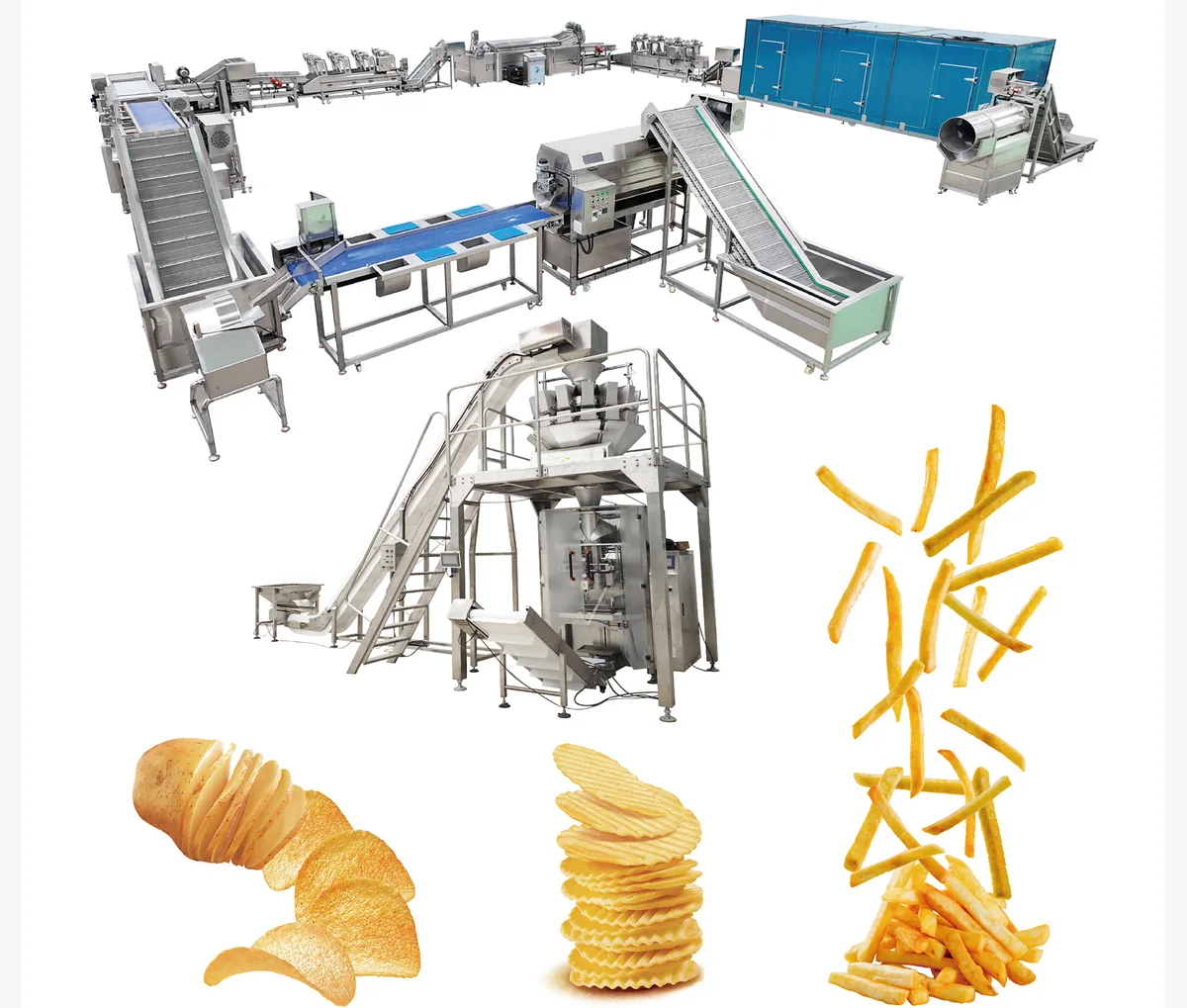
One more comparison point is easy to overlook: under any term, the machines themselves are still quoted from the same technical scope. The automatic French fries and potato chips line and the semi-automatic configuration are two different scopes before a single freight term is applied, and a large share of the equipment is common to both routes.
7. Packing, containers and the route back to the site plan
Delivery terms sit at the end of a chain that starts on your factory floor. The modules that must be split for transport are the same modules whose position, clear height and access route are fixed in the layout plan, so the two documents should be read together. A continuous belt fryer or a quick freezing cabinet that arrives as a single piece has to be able to reach its position with the lifting equipment available and the door opening that exists.
Ask two questions at layout stage rather than at delivery stage: which pieces arrive assembled, and which need to be joined on site. The answer affects the aisle width reserved for installation, the need for a crane, and the number of working days the commissioning team needs before the line runs.
8. What to send with your RFQ so a delivered price can be quoted
Freight cannot be estimated against an unnamed destination. Including the following in the enquiry is what makes a delivered price possible and comparable.
- The delivery term you intend to contract on, and whether it is flexible if a route makes another term impractical
- The named destination port, or the named inland place for a delivered term, written exactly as it should appear in the contract
- Whether you have a customs broker and an import registration, and who will act as importer of record
- Site address, road access, ground conditions, and the largest single piece your access route can accept
- The lifting equipment available at the site and at the nearest unloading point
- The arrival window you actually want, and whether the site will be ready to receive and store the equipment
- The insurance cover level you require, if it differs from the minimum
- The document set your own customs authority asks for, so it can be prepared before shipment rather than after arrival
- Whether the goods will be containerised or moved as oversized cargo
Items one to three decide which price basis is even open to you, and items four to six decide whether the cheapest basis is in fact the cheapest route into production. The buyer-side preparation behind these items is set out in the RFQ checklist on the buyer education site, Fries Line Guide, which covers the product route, capacity, utilities and scope information a supplier needs before pricing a project.
The commercial structure of the offer sits on top of that technical scope: what is included, what is excluded, and how the delivery term divides the rest. The equipment RFQ checklist lists the project information a serious quotation is built on, and the layout planning guide covers the building-side checks that decide how the equipment actually gets to its position.
Landed cost checklist
- Delivery term written as a three-letter code plus the named port or place
- Point where cost and risk pass from seller to buyer identified in one sentence
- Line boundary agreed machine by machine, before the term is compared
- Export packing standard stated for the actual voyage length
- Main carriage, transhipment and any port of transhipment identified
- Insurance cover level agreed in writing, not assumed
- Destination port charges understood as buyer-side under FOB, CFR and CIF
- Import clearance, duty and taxes assigned, with your customs broker consulted
- Free time, storage and demurrage exposure estimated and budgeted
- Inland delivery, unloading equipment and permits arranged before arrival
- Installation and commissioning scope agreed as remote or on site
- Buyer-side site works listed and funded: civil, power, water, drainage
- Working capital for the transit and commissioning period included in the budget
- All offers at the destination end of your schedule converted to one single basis
Frequently asked questions
Is FOB or CIF better for a food processing line?
Neither is better in general. FOB leaves the main carriage, insurance and destination costs with the buyer, which suits a buyer who already has a freight forwarder and a customs broker. CIF leaves the main carriage and the minimum insurance cover with the seller, which suits a buyer who wants fewer contracts to manage. The two are only comparable once the packing standard, the insurance cover, the destination charges and the point where cost and risk cross are stated on both sides.
Does a CIF price include everything up to my factory?
No. Under CIF the seller arranges and pays the main carriage and the insurance to the named destination port, and the risk passes when the goods are on board at the port of shipment. Destination port charges, import clearance, duty and taxes, and the inland movement to your site are normally on the buyer side unless the contract says otherwise. A delivered-to-site price is a different term, usually DAP or DDP.
Who pays import duty and taxes on processing equipment?
It depends on the term and on the importing country. Under FOB, CFR and CIF the buyer clears the goods for import and pays the duty and taxes assessed there. Under DAP the buyer still handles import clearance and duty. Under DDP the seller does. The rates and the classification are set by the importing country and are confirmed with your own customs broker, not by the machine supplier.
Can the delivery term be changed after the quotation?
Yes, but the price changes with it, because the term moves real costs and real tasks between the two sides. Changing the term later also re-opens the packing standard, the insurance cover and the documentation list. It is cheaper to fix the intended term, the named port or place, and the destination charges you expect, before the scope is priced.
Why can two offers for the same machine differ so much?
Because the offers usually stop at different points along the route. One may be ex works, another on board at the port of loading, another delivered to the destination port. Packing class, insurance cover, the line boundary and the service scope all move the number as well. Compare offers only after the term, the named place and the scope have been written the same way on all of them.