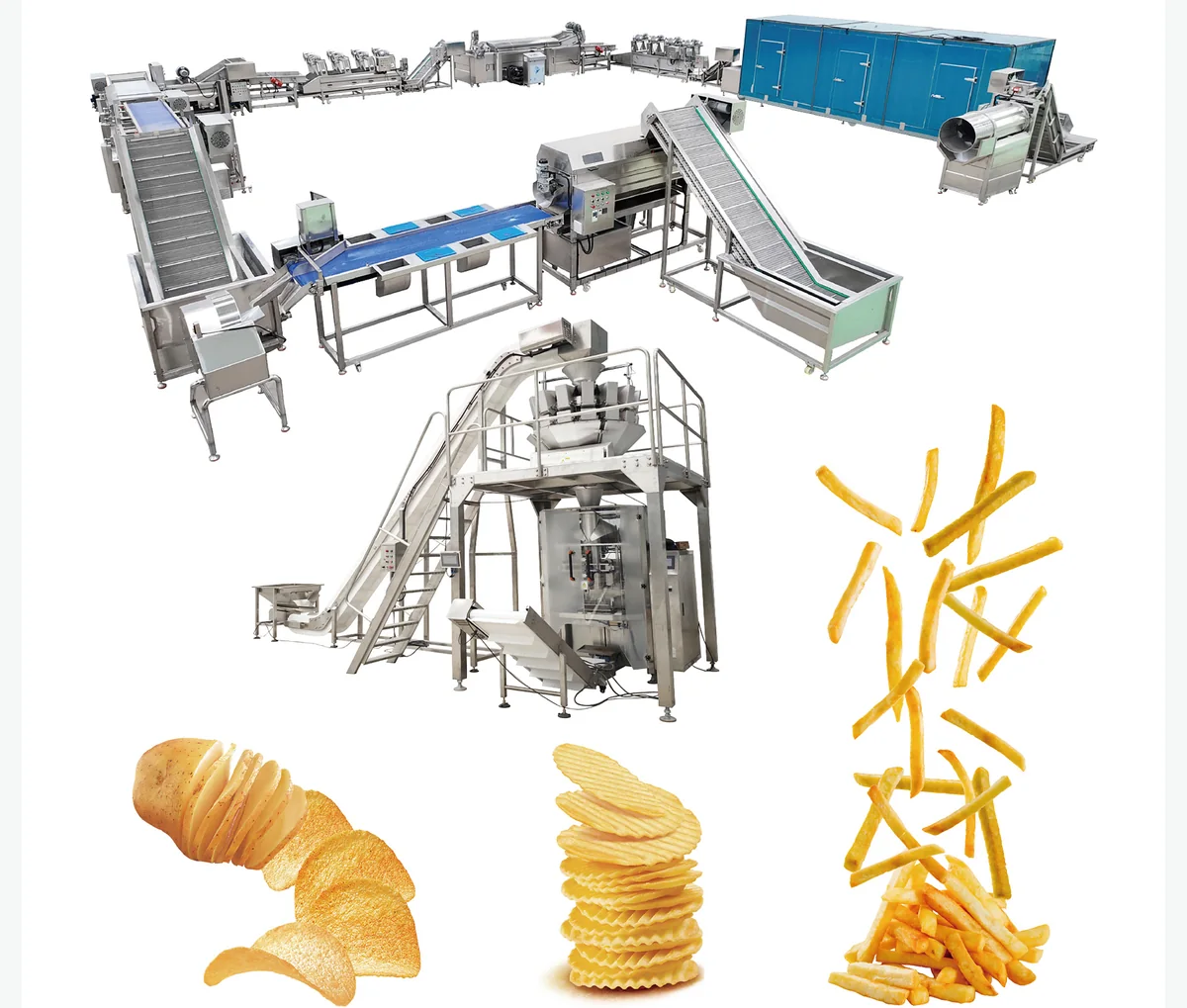
The two questions a buyer asks first are the price and the delivery date. The price can be answered from a configuration. The delivery date cannot be answered from a calendar, because nothing as large as a production line travels as a single event. It travels as a sequence of stages with different owners, different triggers and very different amounts of friction.
This guide walks that sequence from order confirmation to the first saleable output. It marks what the buyer controls, what the supplier controls and what neither side controls — and it explains what changes in the middle of the timeline when the destination is in Africa.
1. Why the timeline is a list, not a date
A delivery date is the end of an argument rather than a plan. It compresses production, packing, a sea leg, two sets of paperwork and a commissioning team into a single number, and then it hides which part of that number the supplier is actually committing to. When something slips, nobody can point at the segment that slipped, because there are no segments on paper.
The alternative is duller and much more useful. Write the timeline as rows. Each row gets a stage name, the event that triggers it, what determines how long it takes, who owns it, and what evidence shows it finished. Once the rows exist, the delivery date becomes what it always should have been: the last row on a list rather than the whole document.
It also makes the commercial conversation honest. Some rows can be committed to. Some rows are the buyer's to complete. And some rows — the sea leg, the terminal, the customs desk — belong to third parties, where the realistic promise is not a date but a prepared file and a nominated agent.
2. The eight stages, in the order they happen
Stage 1 — Order confirmation and the technical freeze
The clock starts when the specification stops moving. Machine list, drawing revision, voltage and utility basis, packing standard and delivery term need one version that both sides have accepted in writing. Almost every later delay can be traced back to this stage: a change requested after the drawings were released does not only change one machine, it pushes every stage behind it, because production slots, packing lists and shipping bookings are all built on the frozen version.
Stage 2 — Production, inspection and packing
Supplier side. How long it takes follows the configuration rather than a standard table: the number of process modules, whether any item is non-standard, and the lead time of bought-in components. Two questions are worth asking before the order, because they change what the number means. Does the lead time run from order confirmation or from drawing approval? And what happens to the schedule if the approved drawing set is revised in the middle of production?
Before the equipment is packed, settle the pre-shipment inspection: who attends, what is checked, on what basis the output is judged, and what record the inspection leaves. A fries and chips line with frying, freezing and packing interfaces has far more connections to prove than a short set of independent modules, and the inspection scope should name the interfaces rather than describe the line in general.
Stage 3 — Export clearance and loading at the port of departure
Supplier side, usually through a freight forwarder. The export declaration is filed, the goods are trucked to the terminal, and the containers or break-bulk pieces are loaded before a cut-off time set by the carrier. This stage has hard deadlines that belong to nobody in the transaction — miss the cut-off and the shipment waits for the next service, whatever the contract says.
Stage 4 — Ocean transit
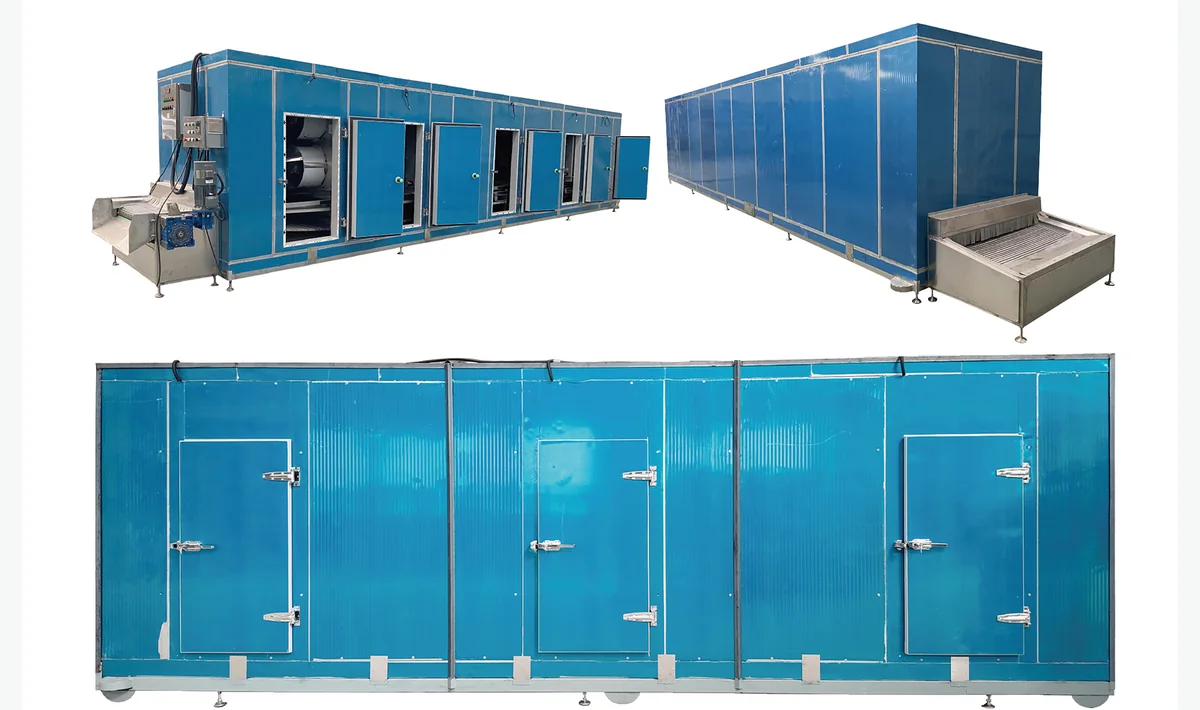
Owned by neither side. Transit time follows the carrier, the routing and the service actually booked, and the two ends of the industry behave differently: containers offer frequent sailings with fixed box sizes, while oversized or heavy pieces move as break-bulk on a schedule that is much thinner. Which module drives that decision is worth knowing early — a continuous belt fryer or a freezing tunnel is usually the largest single item on the packing list, so it decides how the shipment is packed and how the site route has to be checked. The useful question about the sea leg is not what a generic route typically takes, but what the forwarder has booked, on which service, with which transhipment. That is a specific answer for a specific order, and it is confirmed on request.
Stage 5 — Destination clearance and inland transport
Buyer side, normally with a licensed local broker acting for the importer of record. Duties and taxes, any permits or approvals the product category requires, then release and the inland leg. This is the stage where a landlocked destination differs structurally from a port city, because it contains a second border and a transit procedure that a coastal destination does not have.
Stage 6 — Unloading, positioning and utility hookup
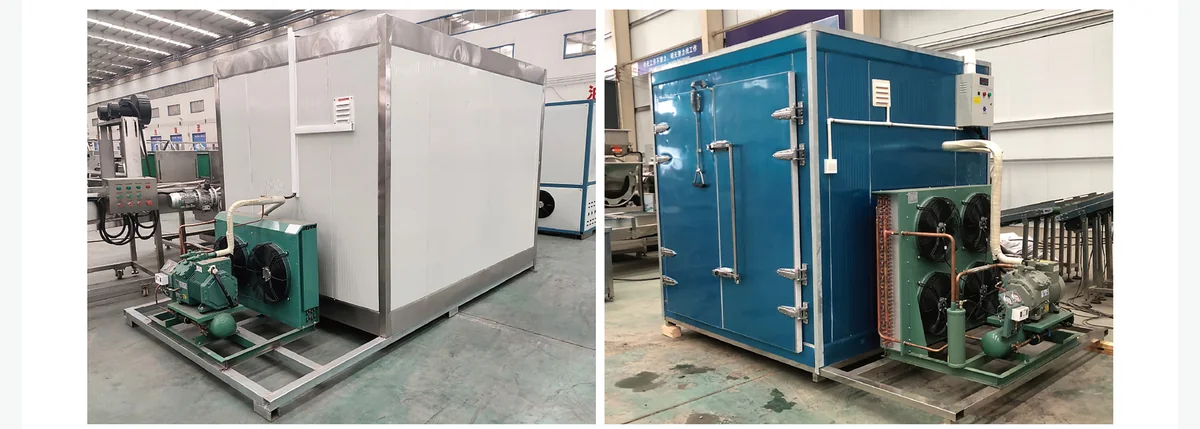
Offloading at site, moving each item to its final position on the agreed centreline, levelling and aligning modules, and connecting utilities to the machine's connection point. The route from the gate to the final position should be checked against the largest single packing item long before the truck arrives — the check belongs with the building, and the layout and space guide covers door openings, clear height and turning space from the same side. On the freezing end it is worth confirming the position of the quick freezing cabinet or tunnel against the drainage and clear height actually available, because moving a unit after it has been levelled and connected is a second installation, not a correction.
Stage 7 — Commissioning and the trial run
No-load checks first: rotation, sensors, interlocks, sequence, set points, alarms. Then the line runs on real product at a stated condition and rate, which is what acceptance is measured on. Who performs this stage, and how much of it can be guided remotely rather than attended on site, is a scope decision rather than a preference, and it is covered in detail in the installation and training guide.
Stage 8 — Handover and the start of the support period
The timeline does not end when product comes off the line. It ends when the handover pack is complete: the manual marked up with the settings as commissioned, a parameter record, the cleaning and changeover routine in the order it is actually performed, a wear-part list, and one contact route for the months that follow. The handover date is the milestone worth naming in the support terms, because it is the only date in the project that both sides witness at the same time.
3. Three owners, and why the middle belongs to neither side
The value of writing the stages down is that the owners become visible, and they are not evenly distributed.
- Buyer-controlled. How fast drawings are approved, site works and utility readiness, the destination file and the broker, the receiving plan and unloading equipment, raw material for the trial run, and how quickly questions are answered during commissioning.
- Supplier-controlled. Drawing issue, the production slot, pre-shipment inspection, packing and marking, export documentation, loading before cut-off, and the availability of the commissioning team.
- Third-party. Vessel schedules and transhipment, terminal dwell at both ends, customs processing at the destination, inland haulage availability, and anything the weather does to a berth window.
Most schedule disputes are really disagreements about which column a row sits in. A supplier that commits to the third column is overpromising; a buyer who treats the second column as an entitlement rather than a dependency is building a plan on sand. The rows that matter most are the ones where the two columns meet, because that is where a handover of responsibility has to be dated.
4. What a destination in Africa changes
Coastal destination or landlocked destination
The single largest structural difference is whether the site sits at a port or inland. A coastal destination has one clearance event and then an inland leg that may be short. A landlocked destination has the sea leg, then a clearance and a transit procedure through a neighbouring coastal country, then a border post, then a long inland haul. In that structure the inland leg can take as long as or longer than the sea leg, and it involves two sets of officials rather than one.
Port dwell and clearance are the two most variable segments
Neither is unpredictable so much as variable. Both depend on the port, the season, the volume of traffic and — more than anything else — the completeness and consistency of the file that arrives with the shipment. A document set where the invoice, the packing list and the equipment as loaded tell three slightly different stories will be stopped, and the time it takes to resolve is not the supplier's or the buyer's to control.
Documentation is the part most often underestimated
Every consignment travels with a commercial invoice, a packing list and a transport document issued by the carrier. Beyond that, the certificates and approvals that apply depend on the destination country and the product category, and the correct list is confirmed per project rather than assumed. The failure mode is always the same: the required list is settled after arrival instead of before sailing, and the equipment waits at the terminal while paperwork is assembled locally. Settling it with the buyer's broker before loading costs nothing; settling it afterwards costs storage.
5. Shortening the timeline: what works and what only looks like it works
Move work in parallel, not earlier
The stages are sequential only where they have to be. Civil works, floor and drainage, the electrical run to the machine's terminal, the installation route and the destination broker can all be prepared while the line is still in production, alongside each other. That is where real weeks are recovered: not by asking production to hurry, but by not starting the site on the day the equipment lands.
Freeze the inputs that other stages depend on
A drawing revision during production, a late change to the voltage basis, or an unloading plan that assumes equipment that is not in the packing list will each cost more time than the change itself appears to. Issuing the final dimensions of the largest item early is what lets the building side check the route; the utility planning guide makes the same argument for services that have to arrive at the machine rather than at the factory gate.
What does not help
- Pressing the production stage below the time the configuration actually needs, which moves the compression to the inspection and commissioning stages where faults are more expensive.
- Shipping before the site works are finished, so that the machine is stored instead of installed.
- Treating a booked sailing as a firm arrival date through a transhipment port.
- Adding people to the commissioning stage; it is a sequence, not a headcount.
The trade is always between planning time and storage time, and planning time is the cheaper of the two.
6. Tying milestones and payments to the timeline
Milestones should point at events that can be verified from a document or a visit, not at calendar dates. Drawing approval, pre-shipment inspection, loading before cut-off, arrival at the destination port, release from clearance, completion of commissioning, and handover each produce evidence, which is what makes them usable as payment points.
Where the supplier's responsibility ends, and therefore which of those events the supplier carries, is set by the delivery term agreed in the offer rather than by a default. The delivery terms and landed cost guide sets out what each term covers and where the boundary falls between the two sides. The proportions attached to each milestone, and the schedule they follow, are commercial terms agreed per project and stated in the contract; they are not standard across line configurations or destinations. The buyer-side view of what a machinery price does and does not include is set out on Fries Line Guide.
It is worth reviewing the milestone list together with the pre-deposit checklist, because the two documents have to agree: a payment milestone with no evidence behind it is really just a date with a number attached.
7. What to finish while the line is on the water
The transit stage looks like waiting. It is the most productive part of the project if it is used, because everything on the buyer's side can be completed during it without holding anything else up.
- The building and the route. Floor level and loading, drainage that takes the flow the line produces, and a path from the gate to the final position checked against the largest packing item.
- The utilities to the connection point. Power at the correct basis with functioning earthing, water at the required pressure and quality, drainage, exhaust and ventilation routes, and compressed air where the design calls for it — each measured at the machine, not assumed from the incoming supply.
- The people. Name the operators, the maintenance team and the supervisors who will attend commissioning and training, and settle the language of the session against the language of the manual.
- The receiving plan. Who unloads, with which lifting equipment, to which position, and who signs for what.
- The customs file and the broker. Nominated before sailing rather than after arrival.
- The trial material. Raw material in a condition and quantity that allows the acceptance test to be repeated, not just attempted once.
None of these depends on the shipment. All of them sit on the critical path the moment the equipment arrives.
The shipping and installation timeline, on one page
- The timeline is written as stages with a trigger, an owner and an evidence item against each row
- The technical freeze — drawings, machine list, voltage and utility basis, packing standard, delivery term — is signed by both sides
- The production lead time states explicitly whether it runs from order confirmation or from drawing approval
- The pre-shipment inspection names the interfaces checked, not only the machines
- The delivery term is agreed before production, so the point where the supplier's leg ends is in writing
- The forwarder has stated the service and routing actually booked, including any transhipment
- The required certificate and permit list is settled with the destination broker before the vessel sails
- Invoice, packing list and the equipment as loaded agree with one another package by package
- The route from the gate to the final position is checked against the largest packing item
- Every utility is measured at the machine's connection point before the equipment arrives
- Trial material, receiving crew and lifting equipment are confirmed before arrival, not after
- Payment milestones point at verifiable events, and the handover pack is named as the final one
Frequently asked questions
How long does it take to ship and install a food processing line to Africa?
There is no single figure, and any guide that gives one is describing a different project. The total is the sum of eight stages that behave differently: production and packing, export loading, ocean transit, destination clearance, inland transport, positioning, commissioning and handover. Production time follows the configuration, transit time follows the carrier and the routing, and clearance time follows the destination port and the completeness of the file. The schedule for a specific order is set out in the offer and the contract, and confirmed on request once the configuration and the destination are fixed.
Who is responsible for customs clearance at the destination?
Assign destination customs clearance using the agreed delivery term and local importer requirements. FOB, CFR, CIF and DAP normally leave import clearance with the buyer; DDP places it with the seller. Confirm the importer, broker and document list before shipment. 目的地清关按贸易条款及当地进口要求确定。FOB、CFR、CIF 和 DAP 通常由买方负责进口清关,DDP 则由卖方负责。出运前确认进口主体、报关代理及单证清单。
What happens if the equipment arrives before the site is ready?
The equipment has to be stored, insured and protected somewhere, and it has to stay accessible for the commissioning crew. Allocate storage, re-handling, demurrage and detention against the agreed terms, transport arrangements and cause of delay; do not assume one party pays every arrival charge. 仓储、倒运、滞期及滞箱费应按约定条款、运输安排及延误原因分配,不能假定到货后的全部费用均由一方承担。 The cheaper answer is to finish the compatible work while the line is still in production: the floor, the foundations, the drainage, the electrical connection to the machine's terminal, and the route from the gate to the final position.
Which documents travel with the shipment?
Every consignment travels with a commercial invoice, a packing list describing what is in each package, and a transport document issued by the carrier. Beyond that set, the certificates and permits that apply depend on the destination country, the product and its category, and they are confirmed per project rather than assumed. The practical rule is to settle the required list with the buyer's broker before the vessel sails, because the alternative is a file assembled after arrival, with the equipment already sitting at the port.
Can a delivery date be guaranteed at the quotation stage?
Only the segments inside the supplier's control can be committed to, and even those depend on drawings being approved on time. Production, inspection and packing are the supplier's; the sea leg, port dwell and destination clearance are not. A serious offer states which parts of the schedule it is committing to, which parts are estimates, and what triggers the clock. That is a more useful document than a single date that has to be renegotiated later, and it is the form the schedule takes in the contract.