Ask a supplier for a blanching machine and you will be asked for a temperature and a residence time. Those two numbers are the whole project, and most buyers do not have them — which is how a machine gets bought with a placeholder recipe and then blamed for inconsistent colour three months later.
This guide treats the hot-water step as a process decision rather than an equipment line item: what it changes, where it sits in the route, why the recipe cannot be copied from another factory, what it leaves behind downstream, and how to prove it on your own material before the order. Every temperature, time, capacity and price figure below is deliberately written as on request or to be confirmed, because those numbers belong to your raw material and your trial.
1. Blanching is a treatment step, not a washing step
The two steps look similar from the factory floor — product enters wet, product leaves wet — and they are routinely confused in a project brief. They are not the same purchase.
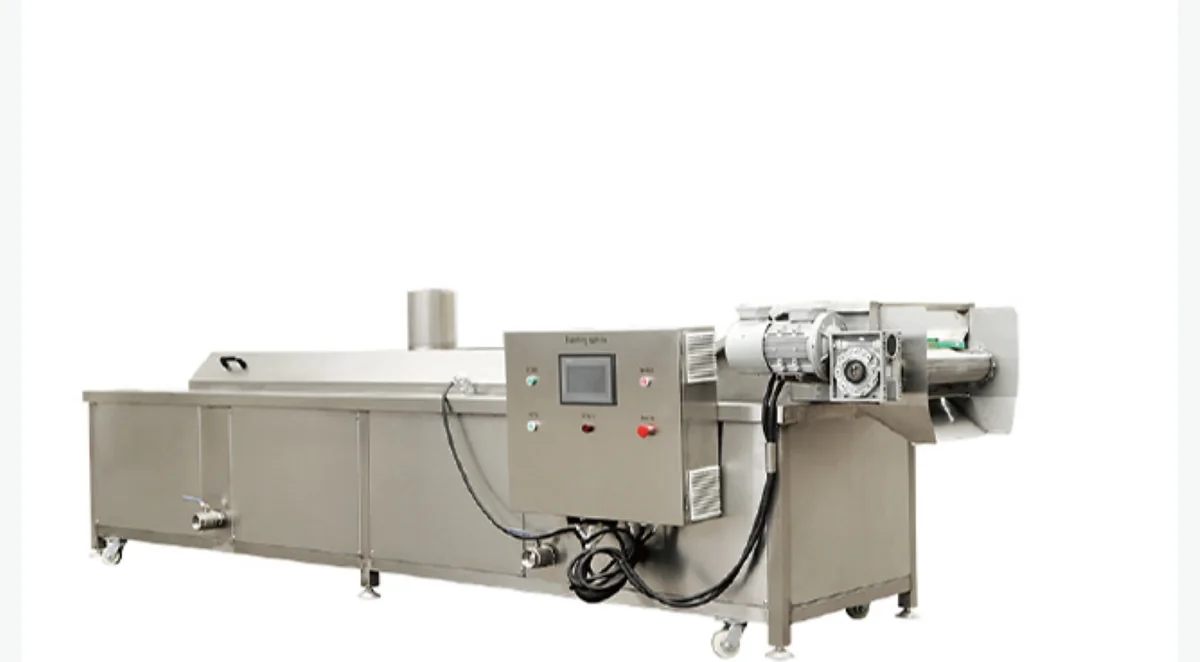
Washing removes what should not be in the product: soil, stones, surface starch, foreign matter. Its performance is judged by what came off. Blanching applies controlled heat to the product itself, with the intention of changing it. The food blanching machine documentation describes it as a controlled hot-water or steam-assisted hot-water treatment used to prepare product before frying, freezing, drying, cooling or packing, and lists the intended effects as stabilising colour, reducing enzyme activity, improving texture and preparing the surface condition for the next process.
That difference has a practical consequence for the layout. A washer is sized on soil load and water management. A blancher is sized on product size, loading depth, residence time and heating capacity, and it produces a heat and moisture load that the machines behind it have to absorb. Put them in the same scope line of a quotation and you will eventually discover that nobody costed the cooling step.
Why the confusion is expensive
- A warm rinse is specified as blanching, the enzyme effect never happens, and the colour complaint appears after freezing rather than at the fryer.
- The blancher is costed but the cooling and dewatering behind it are not, so the surface water arrives at the fryer and the oil gives the first visible sign of trouble.
- The cleaning requirement is written for a washer, while the blancher's starch, vegetable solids and process water need their own access, drain points and water replacement routine.
2. What the hot water actually changes
The blanching page names four effects, and it is worth taking them one at a time, because a buyer usually needs only two of them and pays for all four.
Enzyme activity
Cut plant tissue keeps reacting after harvest. Enzyme activity is what drives the colour drift, the off-flavour and the texture change that appear during frozen storage rather than at the moment of cutting. Heat deactivates it. This is the effect that matters most when the product is frozen and held, and it is the one a buyer usually means when they say "we need to blanch".
Colour
For french fries the documentation links the blanching condition directly to final colour. Colour is set by more than the blancher — potato variety, sugar level, storage history and the fry itself all move it — but the hot-water step is where the process gets its first chance to control it, and where a change in raw material supply usually shows up first.
Texture, inside and at the surface
Blanching changes how the piece behaves when it is later fried or frozen. Interior texture and surface condition are separate outcomes, and a recipe that fixes one does not automatically fix the other. This is why "blanch until soft" is not a specification: softness is an interior observation, while the surface condition is what the fryer and the freezer actually respond to.
Surface condition before frying
The fourth effect is the handover to the next machine. The blanching page states that for french fries the blanching condition can influence final colour, internal texture, surface moisture and frying consistency. Surface moisture is the item that crosses into the fryer's scope, and section 6 deals with it on its own.
Note what is not on the list: cleaning. Blanching is not a sanitation step and a machine description is not evidence of a validated microbial reduction. If the product or the market requires one, that is a separate validation project on the actual product with its own parameters, testing and documentation.
3. Where the step sits in the route
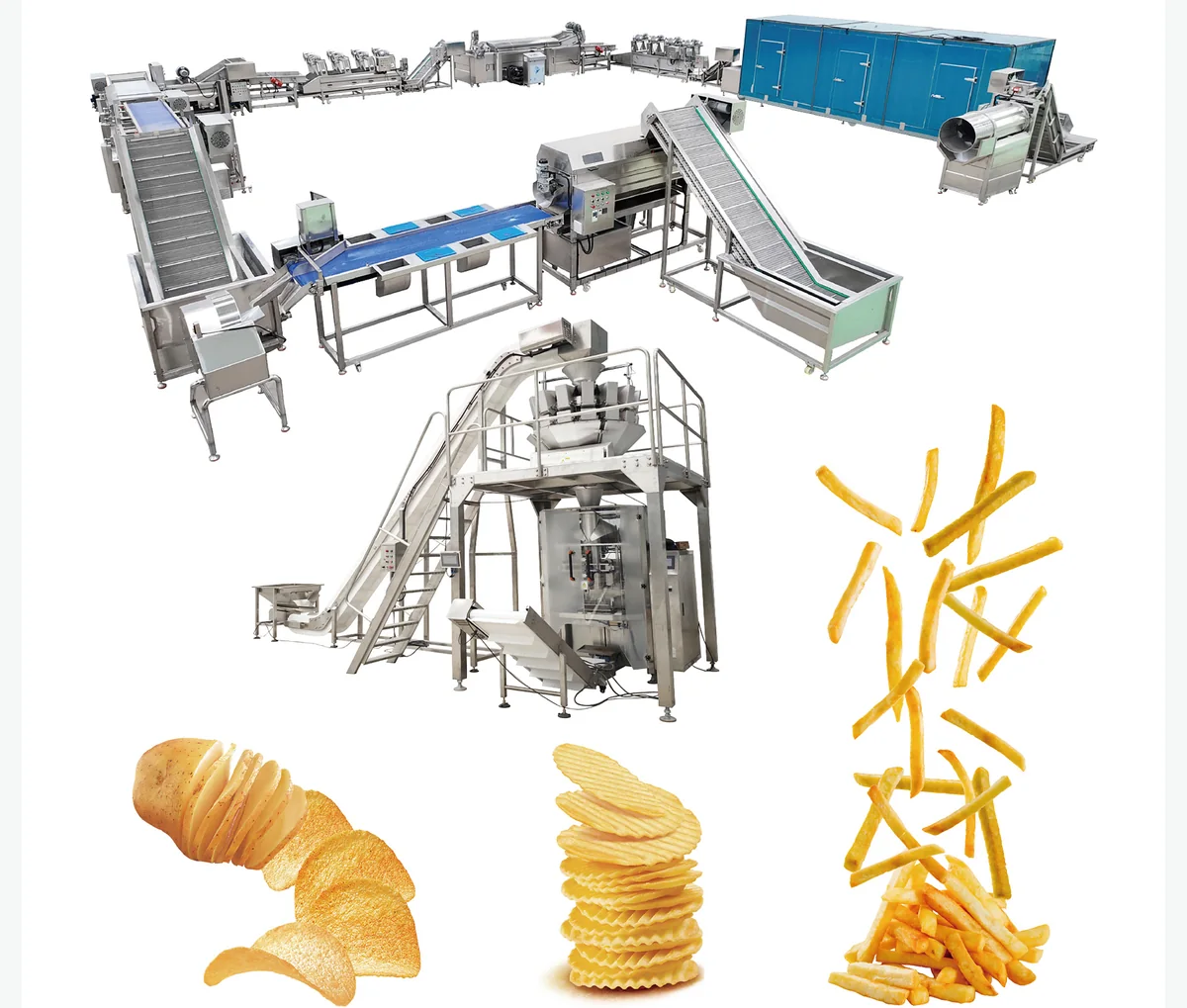
The french fries production line planning guide lists the stage sequence: receiving and inspection, washing and peeling where required, strip cutting and size checking, rinsing or starch removal, blanching and controlled cooling, surface-water removal, par-frying and de-oiling, cooling and quick freezing, then weighing, packing and storage.
Two things about that position matter more than the rest.
It comes after starch removal, not instead of it
Rinsing or starch removal is a separate stage in front of the blancher. Free surface starch on a cut strip goes into the blanching water, raises the solids load, and shortens the useful life of the water before replacement. A line that skips the rinse and expects the blancher to handle it is trading a cheap step for a more frequent and more expensive one.
It hands over to cooling, not directly to frying
The sequence in the line guide is "blanching and controlled cooling" — one stage, two machines. The blanching page is explicit that blanching normally creates a downstream heat and moisture load and that cooling and dewatering should be reviewed as part of the same process. On the french fries application page the same pairing appears as "blanching and dewatering".
So the honest scope question at quotation stage is not "how long is the blancher" but "what sits between the blancher and the fryer, and who supplies it". That gap is where most first-time fries projects acquire an unplanned tank, an unplanned conveyor and an unplanned pump.
4. A recipe is four settings, not one temperature
Buyers ask for "the blanching temperature". The blanching machine documentation answers that the same machine can produce different results under different recipes, and lists four things that decide the result.
Target temperature and the tolerance around it
A setpoint without a tolerance is not a specification. What matters operationally is how far the water temperature is allowed to drift while product is running, and how quickly the system recovers when a cold load enters. Ask for both, in writing, for the selected model.
Residence time
Set by tank length and belt speed together. This is also the number that quietly changes when a buyer increases output: run the belt faster to move more product and the residence time shortens, unless the tank was sized for it. Belt speed and residence time should be quoted as a pair, with the throughput they correspond to.
Loading depth and product size
Product size and shape control belt loading, water flow, residence time and breakage risk. A bed of 9 mm strips and a bed of whole small potatoes are different hydraulic problems in the same tank, and loading depth is the variable that most often gets lost between the trial and the production shift.
Water condition
Circulation, make-up, replacement rate and sanitation. Starch and vegetable solids accumulate, and the water that blanched the first hour of a shift is not the water that blanches the sixth. The blanching page lists water circulation, make-up, sanitation, cooling and downstream dewatering as items to review as one process — which is a polite way of saying that a blancher without a water plan becomes a cleaning problem with a heating bill.
Four settings, and all four have to be recorded for a batch to be repeatable. A recipe that lives in one operator's memory is a single point of failure, and it walks out of the gate at the end of the shift.
5. Is it always needed? Follow the finished product
Not every potato product needs the same route, and the decision is made by the finished product and its distribution method rather than by habit.
- Frozen par-fried fries. The blanching condition sets colour, texture and surface condition that the freezing stage then has to protect. It is normally part of the route, and it is planned together with surface drying, par-frying, cooling and quick freezing.
- Fresh-cut chilled fries. A different downstream process and a different shelf-life argument. The blanching question is still worth asking, but the answer is not inherited from the frozen route.
- Potato chips and slices. The blanching product page notes that for slices the project has to confirm slice thickness, starch removal target, breakage risk and whether the process requires rinsing, blanching, dewatering or direct frying. That list is a set of alternatives, not a mandatory sequence.
- Vegetables. Here the driver is usually enzyme control and colour before cooling, drying, freezing or packing, with product shape and cooling speed as the deciding variables.
The french fries application page makes the same point from the other direction: frozen par-fried fries need a confirmed freezing, packing, storage and cold-chain plan, and the route is chosen from the intended product and distribution method. A line built for one route and then asked to run the other is a line with a mismatched middle.
The question to answer in the brief
Write one sentence: "the hot-water step must deliver ____ to the next machine." If the blank cannot be filled with something the next machine or the customer actually notices, the step is probably being copied from another project rather than planned for this one.
6. What it leaves behind: heat and surface water
This is the part of blanching that gets least attention at quotation stage and most attention in the first week of production.
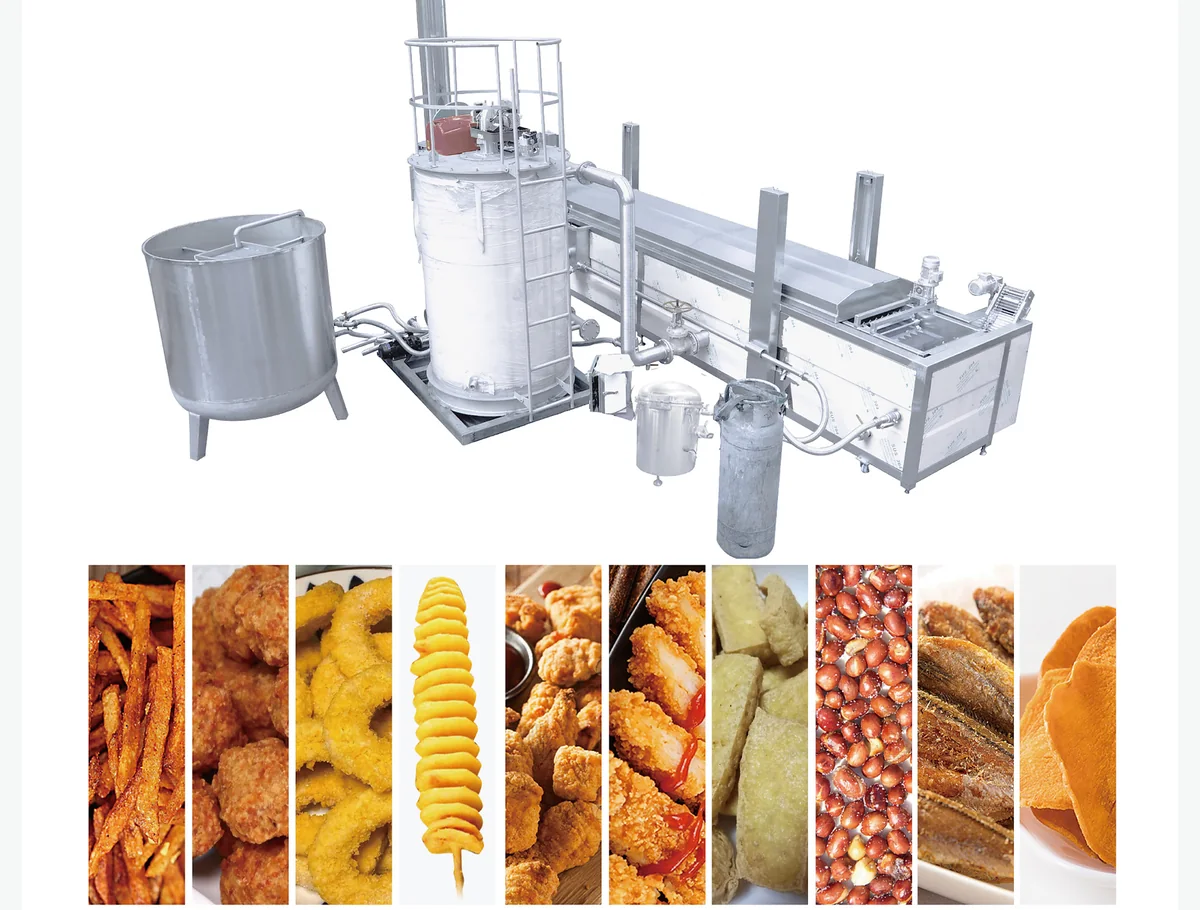
Product leaving hot water is hot and wet. The heat is a load on the cooling step. The water is a load on the fryer: surface water entering hot oil has to be evaporated before the surface can begin to fry, which is a direct draw on the oil's energy and a direct contributor to foaming, spatter and oil breakdown. The oil filtration guide approaches the same problem from the oil side — filtration and residue handling keep the oil serviceable, but no filtration routine fixes a fryer that is being fed wet product.
Dewatering and air drying are separate purchases
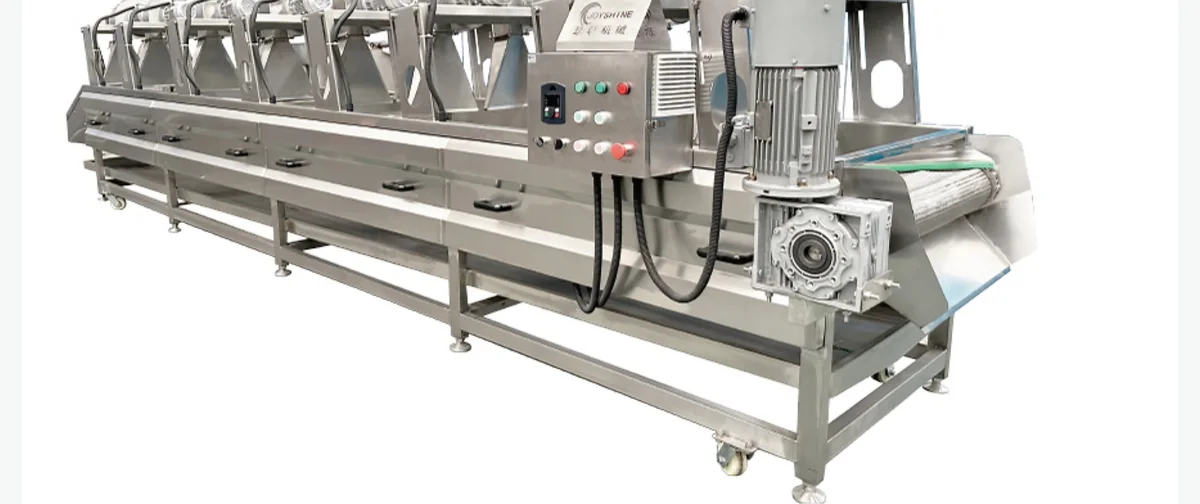
The air-drying conveyor is the module that normally sits here, and its own documentation is careful about what it is: it removes surface water, and it is not a thermal drying guarantee. That distinction matters, because a buyer who expects an air knife to dry the product will specify it against the wrong target and then judge it against a moisture figure it never claimed.
Two configuration decisions belong on the drawing at this point. First, air-knife or fan blow-off: a concentrated directional stream suits steady shapes, a wider fan pattern suits light irregular produce, and the choice follows product shape and the residual-water target. Second, belt speed and exposure: faster is not better if the product leaves wet.
Measure it where the fryer will feel it
The air-drying page's method is the one to copy: judge residual surface water at the discharge end, by weighing or by visual check against an agreed condition, and confirm in the same trial that the air pressure and belt handling did not damage the product. Then hand that condition to the fryer trial, so the frying result is measured on the surface condition production will actually deliver.
The transfer between the two machines deserves a line of its own in the layout review. The air-drying page warns about re-wetting at the handover: discharge height, belt direction and transfer method have to be matched to the neighbouring equipment, or the water you just removed comes back on the next conveyor.
7. Water, solids and the cleaning day
Blanching is a wet process with an organic load, and the cleaning requirement is a design input rather than a maintenance habit.
The blanching page lists starch, vegetable solids and process water as the things that affect the daily cleaning workload, and names drain points, access covers, water replacement and the cleaning routine as the items to confirm. Those are four specific answers a buyer should get before the order, not after.
What to ask
- Where the drain points are, and whether the tank can be emptied and cleaned without dismantling the belt.
- What has to be opened for access to the interior, and how long that takes with two people.
- How water replacement is decided — by time, by batch, by solids observation — and who records it.
- Whether the belt, the guards and the discharge chute can all be reached with the cleaning tools the site actually owns.
A blancher that takes an unplanned extra hour to clean every day is not a machine problem; it is a capacity problem that shows up as a shortfall at the end of the month, and it is far cheaper to design out than to live with.
The wider version of this question — fresh water, circulation, sediment and drainage across a washing line — is covered in the vegetable washing line water management guide, and the logic carries over to any wet stage in front of a fryer.
8. Heat source, utilities and the connection scope
The blanching page lists electric, gas or steam heating, selected after local utilities, target temperature and process rhythm are confirmed. Three practical consequences follow.
The heating load is a figure, not a range
Ask for the selected model's electrical load, or its steam or gas demand, as a number in the technical proposal. Your electrical works, your boiler or your gas supply are designed against that number, and a range in a brochure cannot be designed against. The line utility planning guide lists what has to be settled before a layout is approved: supply capacity, connection point, earthing, ventilation and access space.
Heating method changes the operating cost structure
Electric heating converts at the machine; gas and steam move the cost and the risk to a plant utility that may or may not be reliable where you are. Which is cheaper is a site question and it cannot be answered from a page. What can be asked from a page is that the quotation states the method, the demand and the boundary — what the supplier supplies and what the site provides.
Connection is part of the machine
Inlet height, discharge direction, conveyor speed, water circulation, cooling step and controls all have to be reviewed with the complete process, which is what the blanching documentation says about connecting to a line. On a real project these are the items where a machine that works on the supplier's floor fails to fit on yours: a discharge that is too high for the next conveyor, a control panel on the wrong side for the walkway, a drain that misses the trench.
The automatic fries and chips line page treats the line as a connection of stages for exactly this reason; buying the middle of the line on its own means owning the interfaces on both sides of it.
9. Capacity basis: where the blancher becomes the constraint
State capacity on one basis and keep it: raw material in per hour, or finished product out per hour, at a stated product condition and a stated operating pattern. The blanching documentation warns that capacity is reviewed together with feeding method, operating hours and downstream speed, and that website figures are reference information rather than a guarantee.
A blancher is a residence-time machine, which makes it behave differently from a machine you can simply speed up. Output is the product of belt loading and belt speed; increase the speed and you shorten the time in the water. So the honest capacity question is not "what is its hourly rate" but "at the recipe we need, what hourly rate does this tank length support".
Three numbers to put side by side
- The residence time your recipe requires, from the trial.
- The belt speed and loading depth that delivers it at the required output.
- The tank length and heating capacity that makes that combination possible.
If those three cannot be reconciled, the line has found its bottleneck, and it is cheaper to find it on paper than in the second shift. The same logic applied to the whole line — peak supply, finished output and working hours — is set out in the french fries line capacity guide.
Peak matters more than average here for a second reason: a blancher that is short of heating capacity recovers slowly after a cold load, so a line that runs at average load all week and peak load on Friday produces its worst product on the day it sells the most.
10. How to prove it before you pay
The blanching documentation's own instruction is to define the sample material, the test condition, the finished product standard, the inspection point and the service boundary before order confirmation. That is the acceptance test, and it can be written in an afternoon.
What the test has to record
- The material. Variety or type, size, inlet condition, and the lot. A trial on unknown material proves nothing repeatable.
- The recipe used. Temperature, residence time, loading depth and water condition — all four, not just the first two.
- The downstream condition. The surface-water state after dewatering, measured the way the air-drying page describes, because that is what the fryer will receive.
- The judged product. Colour against a retained reference, texture described in words, and the condition in which it is judged — after cooling, or after freezing and re-heating, whichever matches how the customer meets it.
- Who judges, and how often. A named person and a stated sampling point turn a one-off trial into a control.
What the trial cannot prove
One trial on one lot does not fix a recipe for the year. Raw material changes with season, supplier and storage history, and the blanching page is clear that the correct selection depends on the product recipe rather than the machine length. Plan for the recipe to be reviewed when the raw material supply changes, and record what it was before it changes.
Equally, a trial does not validate food safety. If a validated microbial reduction is required, it is a separate project with its own parameters and documentation, and it does not come from a machine specification.
Accept on the finished product at the agreed condition, not on the setpoint on the panel. The setpoint is an operating parameter; the contract is about output.
Blanching step planning checklist
- Finished product route named: frozen par-fried, fresh-cut chilled, chips or vegetable
- One sentence written: what the hot-water step must deliver to the next machine
- Rinsing or starch removal confirmed as a separate stage in front of the blancher
- Cooling stage identified, with supplier and interface defined
- Dewatering or air-drying method chosen, with the residual-water target and how it is measured
- Recipe recorded as four settings: temperature with tolerance, residence time, loading depth, water condition
- Belt speed and residence time quoted as a pair, with the throughput they correspond to
- Water make-up, replacement basis and sanitation routine agreed in writing
- Drain points, access covers and cleaning time confirmed with the layout
- Heating method and selected load stated as a figure in the technical proposal
- Inlet height, discharge direction, control position and trench position checked against the drawing
- Capacity stated on one basis, with peak and working hours noted
- Acceptance test written: material and lot, recipe, downstream surface condition, judged product, named judge
- Food-safety validation treated as a separate project if the market requires one
Frequently asked questions
Is blanching the same as washing the product?
No. Washing removes soil, starch and foreign matter from the surface. Blanching applies controlled heat to the product itself, with the intention of changing it: enzyme activity, colour, texture and surface condition. A washer that runs warm is still a washer. The two steps are bought for different reasons and have different acceptance criteria, which is why they belong in separate lines of the process list.
Can one blanching temperature be used for every potato lot?
It should not be promised. The blanching machine documentation states that the same machine produces different results under different recipes, and the french fries application page declines to specify a single setting for all material. Potato condition, strip size, sugar level, required texture and the following frying step all move the answer, so the recipe is confirmed by trial with representative raw material and an agreed acceptance method.
Does blanching reduce oil absorption during frying?
Surface condition before frying is one of the factors that affects how a product behaves in the oil, and blanching is part of how that surface condition is set. It is not a guaranteed oil-saving measure on its own. Oil pickup is also moved by frying temperature and time, loading, de-oiling and filtration. Ask for the oil figure to be measured on your product, under your frying conditions, rather than accepting a general claim.
Does the blanching step replace the air-drying or dewatering stage?
No, it usually creates the need for one. The blanching documentation notes that blanching normally produces a downstream heat and moisture load, and lists cooling and dewatering as the following question. The air-drying module is explicit that it removes surface water and is not a thermal drying guarantee. Plan the two as a pair, and check the handover between them for re-wetting.
Is blanching required before freezing french fries?
For frozen par-fried fries the blanching condition influences the result that the freezing stage then has to protect, so it is normally part of the route — see the quick freezing line planning guide for the stage behind it. For fresh-cut chilled product the route may be different. The decision follows the finished product and its distribution method, not a general rule, and it should be settled before the line list is fixed.