A quick freezing line does not simply cool product down. It prepares the raw material so that it can be frozen well, removes heat fast enough to protect texture, and then hands the product to packaging and cold storage without breaking the chain. Each of those three jobs has its own equipment, and each one can limit the others.
This guide covers the stage sequence, the choice between a conveyor freezing line and a batch cabinet, the preparation steps that decide frozen quality, and the capacity calculation worth settling before a quotation is requested.
1. What a quick freezing line includes
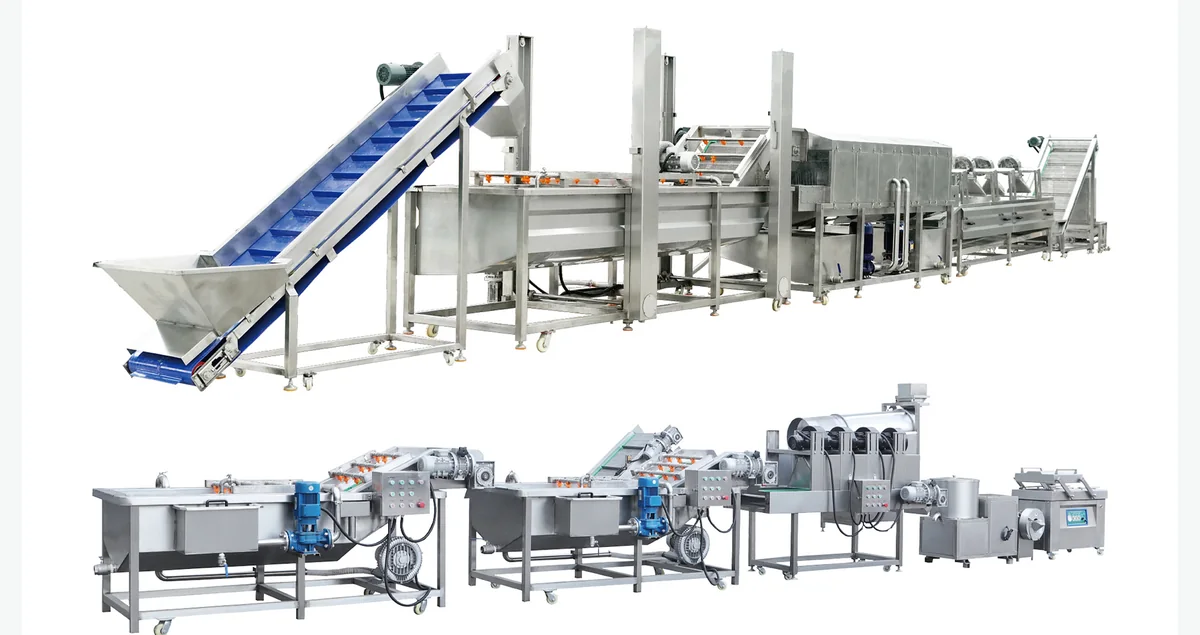
Frozen fruit and vegetable production follows a fixed sequence. Some stages are optional for particular products, but the order rarely changes, because each stage prepares the condition the next one needs.
| Stage | Typical equipment | What it does | Points to confirm |
|---|---|---|---|
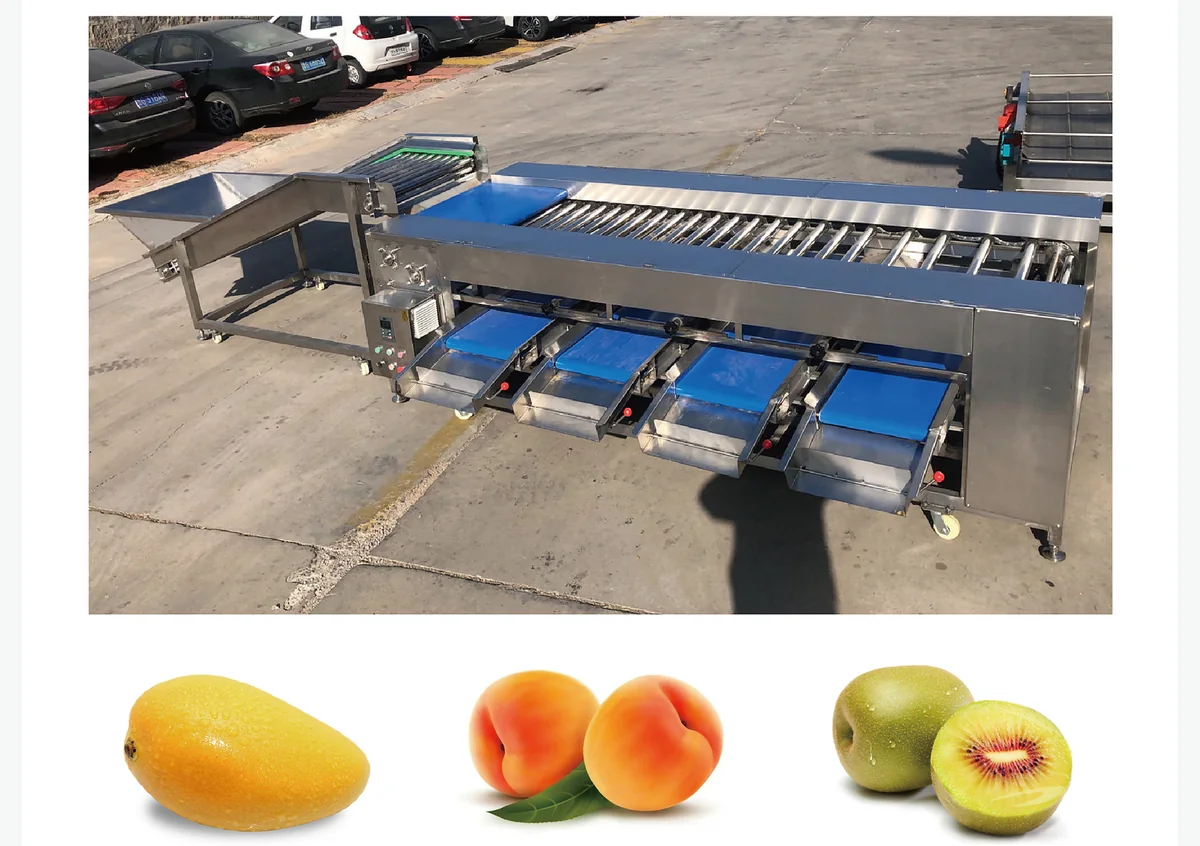
| Receiving and grading | Roller grading machine, inspection belt | Removes soil, stones, damaged and unripe pieces | Size grades required by the buyer, reject handling |
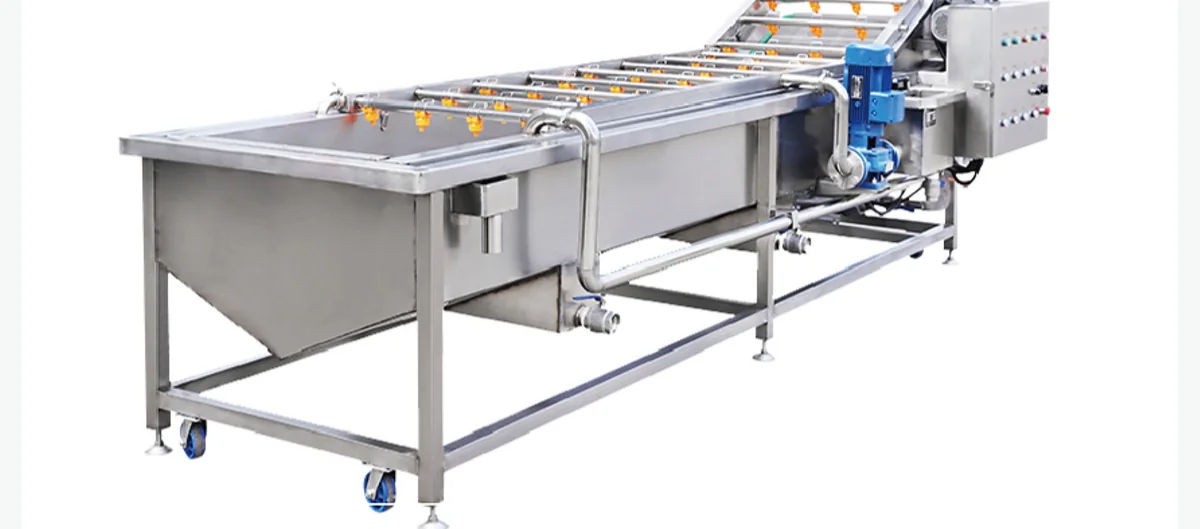
| Washing | Bubble washer or a full produce washing line | Lifts soil and surface residues away with agitation and water flow | Water consumption and recycling, soil load of the crop |
| Cutting or dicing | Slicing machine, dicing machine, vegetable cutter | Brings product to the size the buyer specified | Size tolerance, shape damage, throughput vs freezer capacity |
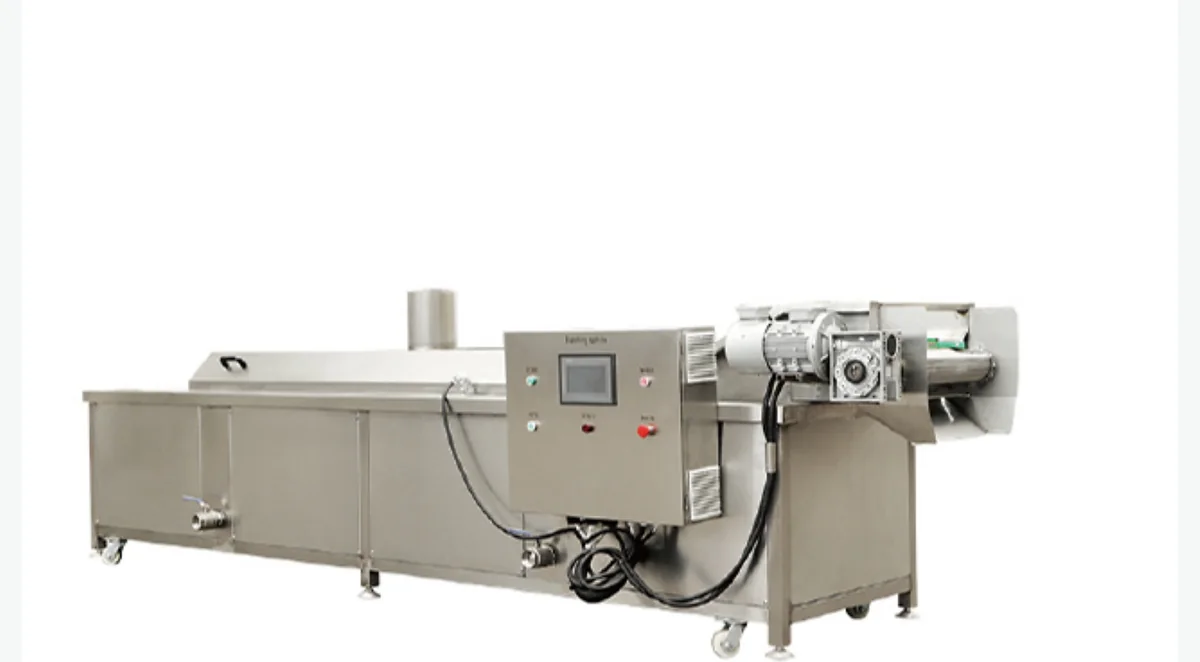
| Blanching (optional) | Blanching machine with hot water or steam | Inactivates enzymes and reduces surface microbial load | Per-product time and temperature, cooling step after blanching |
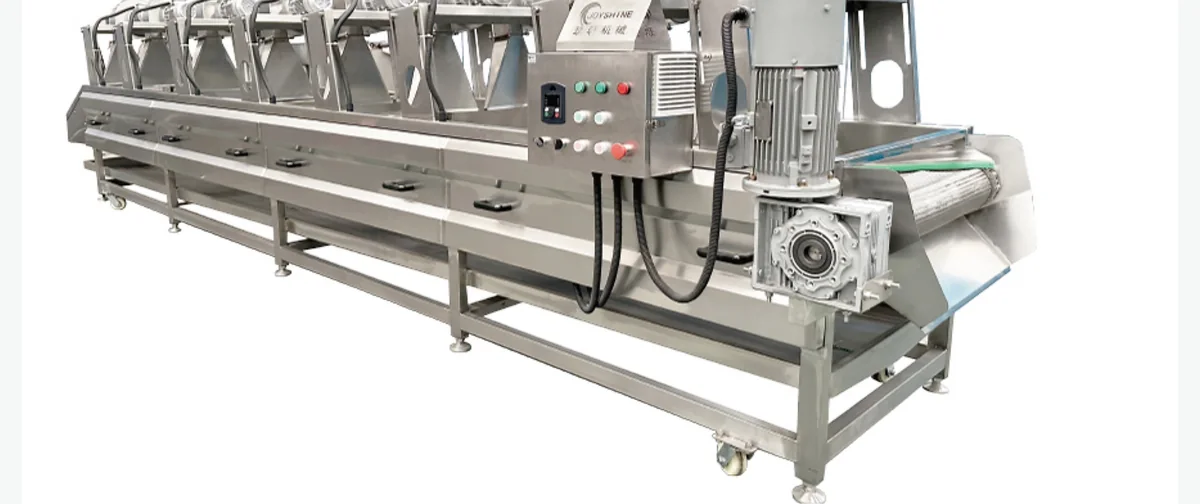
| Dewatering | Vibrating screen, air knives, air-drying conveyor | Removes free surface water before freezing | Residual surface moisture, product damage at high air speed |
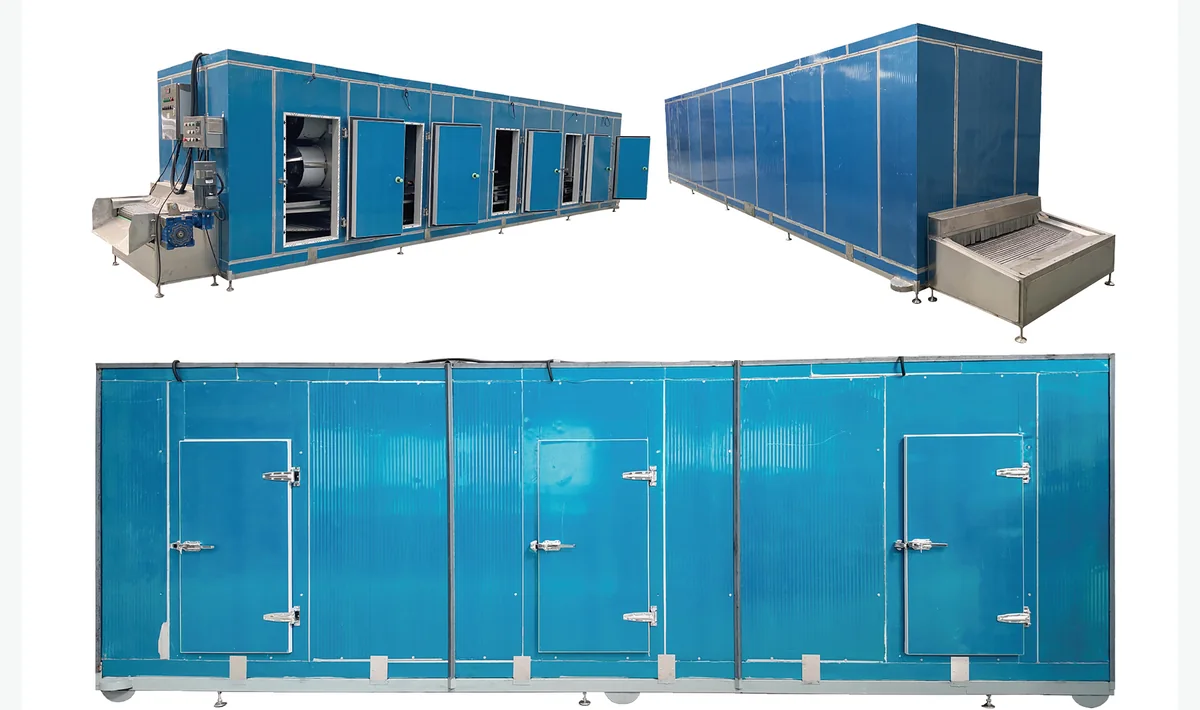
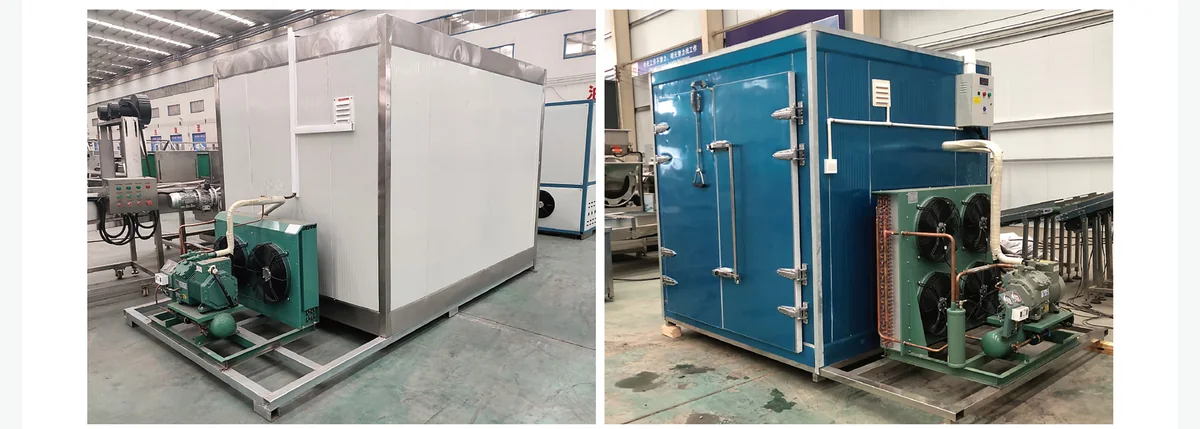
| Freezing | Quick freezing conveyor line or quick freezing cabinet | Removes heat quickly to the target core temperature | Inlet temperature, residence time, belt loading, defrost interval |
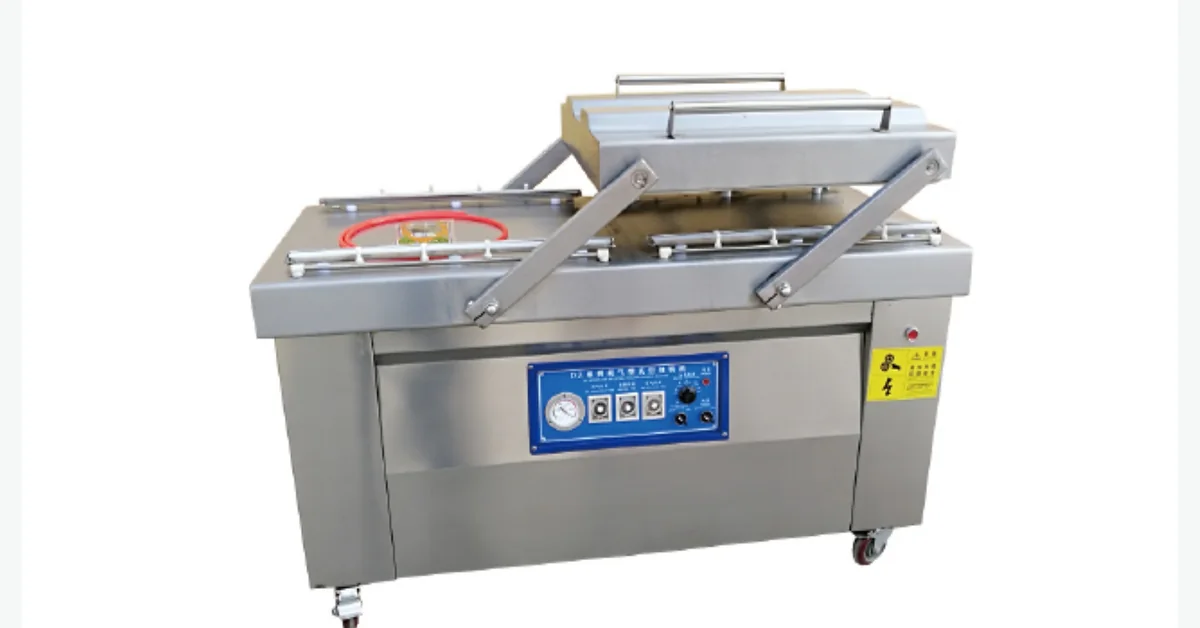
| Packing | Weighing and sorting plus packing equipment | Weighs, bags or cartons the frozen product | Pack size, pack temperature, ice or glaze allowance |
| Cold storage | Insulated cold room with its own refrigeration | Holds the product at storage temperature until shipment | Room temperature, door traffic, loading density, recording |
The line is only as fast as its slowest stage. A freezer sized for ten tonnes per hour is wasted behind a blancher that can only prepare six, and the same is true in reverse. Stage capacities should be written down in one row before any quotation is compared.
2. Cabinet, conveyor or fluidised freezing
Frozen produce is made with several freezing principles, and the right one depends on product size, shape, volume and how uniform the freezing has to be. The table below summarises the practical differences.
| Method | How it works | Best suited to | Trade-offs to consider |
|---|---|---|---|
| Batch cabinet freezer | Trays or baskets loaded into a freezing cabinet, product freezes as a batch | Small and medium volumes, wide product range, seasonal crops | Labour per batch, product may freeze into blocks unless separated |
| Conveyor tunnel freezing | Product travels through a freezing tunnel on a mesh belt, continuously | One or two products running steadily at higher volume | Needs steady supply to stay efficient, higher starting investment |
| Fluidised bed freezing (IQF) | Cold air lifts small uniform pieces so they freeze individually as they move | Diced vegetables, peas, corn, berries and other small pieces | Product size and shape must suit fluidisation, delicate items can be damaged |
| Plate or contact freezing | Product sits between refrigerated plates and is frozen by direct contact | Flat, block-packed products such as some fish and pastes | Not suited to loose pieces or irregular shapes |
For most fruit and vegetable projects the real decision is between a batch cabinet and a conveyor line, and the deciding factor is usually how steady the volume is. Cabinets tolerate mixed products and stop-start schedules; conveyor lines reward continuous output with lower labour per kilogram. Many plants start with a cabinet and add a conveyor line when one product reaches a stable daily volume, which is why floor space and refrigeration capacity should be planned with that second step in mind.
Individually quick frozen (IQF) products are a market requirement rather than a machine choice: buyers of diced vegetables and berries usually expect free-flowing pieces. Achieving that depends on the whole line — uniform piece size from the cutter, low surface moisture from dewatering, and a freezer whose air flow can separate the pieces — not on the freezer alone.
3. Preparation before the freezer decides final quality
Freezing preserves the quality that reaches the freezer. It does not improve it, and it does not stop every process: enzyme activity that starts before freezing continues slowly even in cold storage, which is why preparation and handling before freezing carry so much weight.
| Preparation step | Why it matters for frozen quality | What to confirm |
|---|---|---|
| Washing and inspection | Freezing suspends microbial activity rather than removing it, so hygiene before freezing sets the starting point for shelf life | Water quality and exchange rate, drainage, inspection lighting |
| Uniform cutting | Piece size controls freezing speed; mixed sizes leave small pieces over-frozen and large pieces under-frozen | Cut size tolerance, blade condition, reject rate |
| Blanching | Inactivates enzymes that cause browning, off-flavours and texture loss during frozen storage; also reduces surface load | Per-product time and temperature, immediate cooling afterwards |
| Cooling after blanching | The freezer must remove any heat left in the product, so blanched product should be cooled before it enters | Outlet temperature from the cooling step, water quality |
| Dewatering | Surface water becomes ice and glaze, makes pieces stick and adds load to the freezer | Residual surface moisture, product damage from air knives |
Blanching is the step most often treated too casually. Many vegetables — green beans, peas, spinach, broccoli and diced root vegetables among them — are routinely blanched before freezing, while some fruits and ready-to-cook items are not. The decision belongs per product, and it is worth confirming with a sample test rather than assuming that one setting will serve a whole product range.
4. Capacity planning from raw intake to frozen output
Freezing capacity is normally quoted as kilograms or tonnes per hour, but that figure is incomplete on its own. It only becomes comparable between suppliers when the product, inlet temperature and target core temperature are stated with it.
| Planning factor | How to estimate it | Why it matters |
|---|---|---|
| Peak raw intake | Peak daily raw material supply divided by the number of working hours per day | Lines are sized on peak arrival, not on annual average sales |
| Preparation yield | Finished weight after trimming, cutting and peeling divided by raw weight | Determines how much product actually reaches the freezer |
| Freezer throughput | Prepared product per hour that must be frozen during the peak window | Sets the main machine size on the line |
| Inlet temperature | Measured temperature of the product as it enters the freezer | Warm or hot product needs more refrigeration and longer residence time |
| Target core temperature | Required product core temperature at the freezer outlet | Defines the duty the freezer must achieve, not just a chamber temperature |
| Residence time | Freezer length divided by belt speed, judged against the required freezing time for that piece size | Links the physical size of the freezer to its actual output |
| Cold store sizing | Daily frozen output multiplied by the days held before shipment, at a realistic loading density | Prevents the cold room becoming the bottleneck |
A simple check exposes most sizing errors: take the finished frozen output the business expects to sell in a peak day, work backwards through preparation yield to the raw material required, and compare that number with the line quoted. If the two do not meet, the gap is usually in preparation capacity, freezer residence time or cold store space rather than in the freezer's headline rating.
5. Freezing rate, texture and the cold chain
The reason freezing speed matters is physical. Water inside plant tissue turns to ice over a temperature range, and if it turns slowly the crystals grow large enough to puncture cell walls. On thawing, the damaged cells release liquid as drip loss, and texture suffers. Faster heat removal produces smaller crystals and generally better structure, which is why the rate matters more than the final storage temperature on its own.
- Freezing rate: driven by piece size and thickness, the temperature difference between product and refrigerant, air speed and how evenly the product is exposed
- Piece uniformity: mixed sizes freeze unevenly, so cutting tolerance is a freezing parameter, not just a cutting parameter
- Surface water: freezes into glaze and lumps, adds refrigeration load and makes IQF products stick
- Hygiene before freezing: freezing suspends microbial activity rather than eliminating it, so packing-time hygiene sets the shelf-life baseline
- Storage: commercial frozen storage is commonly held at about −18 °C or colder; the cold store maintains temperature while the freezer creates it
- Chain continuity: temperature records, product core temperature at packing and conditions during transport belong to the same quality plan
A supplier can only confirm freezing performance honestly with a sample test on the buyer's own product. Nominal figures quoted from a catalogue assume a specific product form and inlet condition, and they should be treated as an indication to verify, not as a guarantee that transfers automatically to a different crop.
6. Utilities, cold storage and site conditions
Freezing is the most power-intensive stage in most fruit and vegetable plants, and the utilities plan has to be settled before the machine list is finalised. The general planning questions are covered in more depth in our guide to utility planning for food processing lines.
- Electrical load: total installed load of freezer, condensers, pumps, conveyors and cold room, with the supply voltage and phase standard available on site
- Refrigeration arrangement: air-cooled or water-cooled condensers, and whether cooling water is available in the required quantity and quality
- Machine room ventilation: compressor rooms need airflow and heat rejection planning; condensate and defrost water need safe drainage
- Floor space: freezer footprint plus access for cleaning and service, with a straight path from preparation through freezing to packing and the cold store door
- Insulation and doors: cold room panels, door sizes to suit pallets or crates, and door traffic control to limit temperature loss
- Staffing: loading, inspection and packing labour, plus the technical skill needed for refrigeration maintenance
One layout decision pays back more than any other: keep the distance short and the route straight. Product that waits on a trolley between the blancher, the dewatering step and the freezer is losing quality and adding load, and every extra handling step costs both labour and temperature.
7. Common planning mistakes
- Buying a freezer on its headline hourly rating without stating product size, inlet temperature and target core temperature
- Sizing the line on average daily sales instead of peak raw material arrival, then watching fresh product wait while the freezer runs at capacity
- Skipping dewatering, so surface water freezes into glaze, pieces stick together and the freezer carries an avoidable load
- Treating blanching as a single universal setting instead of a per-product decision confirmed by sample test
- Forgetting the cooling step after blanching, so warm product arrives at the freezer and effective capacity drops
- Planning the cold store as an afterthought, so the room fills faster than it can turn over
- Ignoring cold room door sizes, loading density and traffic, which are often the real constraint on throughput
None of these mistakes is exotic. They are planning gaps, and each one is closed by settling the numbers before the equipment is quoted.
8. What to send the supplier before asking for a quotation
- Product and final form — whole, sliced, diced or puréed, and the piece size the market requires
- Peak raw material supply per day and the target working hours, so the line is sized on peak
- Required finished frozen output and the packaging format, including the ice or glaze allowance
- Temperature of the product entering the freezer and the core temperature required at the outlet
- Whether individually frozen pieces or block freezing is required by the buyer
- Site conditions: floor area, ceiling height, door positions, power supply and cooling water availability
- Sample test request, so freezing performance is confirmed on your own product before commitment
A quotation built on these facts will state stage-by-stage capacity, installed power, freezing duty, cold store sizing and what is excluded — which is exactly the document worth comparing between suppliers. Our RFQ checklist covers the wider set of project facts that speed up technical review.
Frequently asked questions
What is the difference between quick freezing and slow freezing?
The difference is how fast the product passes through the temperature range in which most of its water turns to ice. Slow freezing forms larger ice crystals that damage cell walls, so more liquid leaks out when the product is thawed. Quick freezing removes heat faster and produces smaller crystals, which generally means better texture and lower drip loss. The practical result depends on product size and thickness, which is why sample freezing tests matter more than a nominal temperature figure.
Does every vegetable need blanching before freezing?
Not every product, but many vegetables do. Blanching inactivates the enzymes that cause browning, off-flavours and texture loss during frozen storage, and it also helps remove surface air and reduce microbial load. It is commonly applied to products such as green beans, peas, spinach, broccoli and diced root vegetables. Some fruits and some ready-to-cook items are frozen without blanching. The decision should be made per product and confirmed with a sample test.
Why is surface water a problem before freezing?
Freezing has to remove the heat held in surface water as well as in the product, so excess water increases the load on the freezer and the refrigeration power it needs. It also freezes into glaze or lumps that make pieces stick together, which hurts the appearance of individually frozen products. Dewatering before the freezer — through draining, air knives, vibrating screens or an air-drying conveyor — is therefore a quality and energy decision, not just a housekeeping detail.
How is the capacity of a quick freezing line expressed?
Freezing capacity is normally stated as kilograms or tonnes of product per hour, and it only has meaning together with the product form, its incoming temperature and the target core temperature. A thin diced product freezes far faster than a thick whole piece, so the same freezer performs differently across products. When comparing quotations, confirm all four values: product, hourly throughput, inlet temperature and required outlet core temperature.
Can a quick freezing cabinet replace a conveyor freezing line?
For smaller volumes, batch production or a wide product range, a cabinet or batch freezer is often the practical choice and costs less to start. A conveyor line becomes preferable when one product runs continuously at higher volume, when labour per kilogram needs to fall, or when uniform individual freezing matters. Many plants start with a cabinet and add a conveyor line later, so the layout and the refrigeration capacity should be planned for that step.
What storage temperature should frozen products be held at?
Commercial frozen storage is commonly held at about minus 18 degrees Celsius or colder, and the storage room is a different system from the freezing stage itself. The freezer brings the product down quickly; the cold store keeps it there, with controlled door openings, defrost cycles and air movement. Temperature records, product core temperature at packing and the cold chain to the port all belong in the same quality plan.