Two projects can ask for 'one tonne an hour' and need dryers of very different size. One is drying a product from a high inlet moisture down to a modest target; the other is taking a partly dried material the last few points to a low final moisture. The tonnage is identical, the water to be removed is not, and the machine that has to do the work is not the same machine.
This guide sets out the planning sequence for a continuous hot-air drying line: the mass balance first, then the three numbers that turn that balance into belt area, then the choices that decide whether the line performs as planned — loading depth, layer count, air conditions, heat source, preparation, cooling and the acceptance test. Every performance figure in it is deliberately left as on request or to be confirmed, because those figures belong to your material and your trial, not to a generic page.
1. The duty is water removal, not tonnage
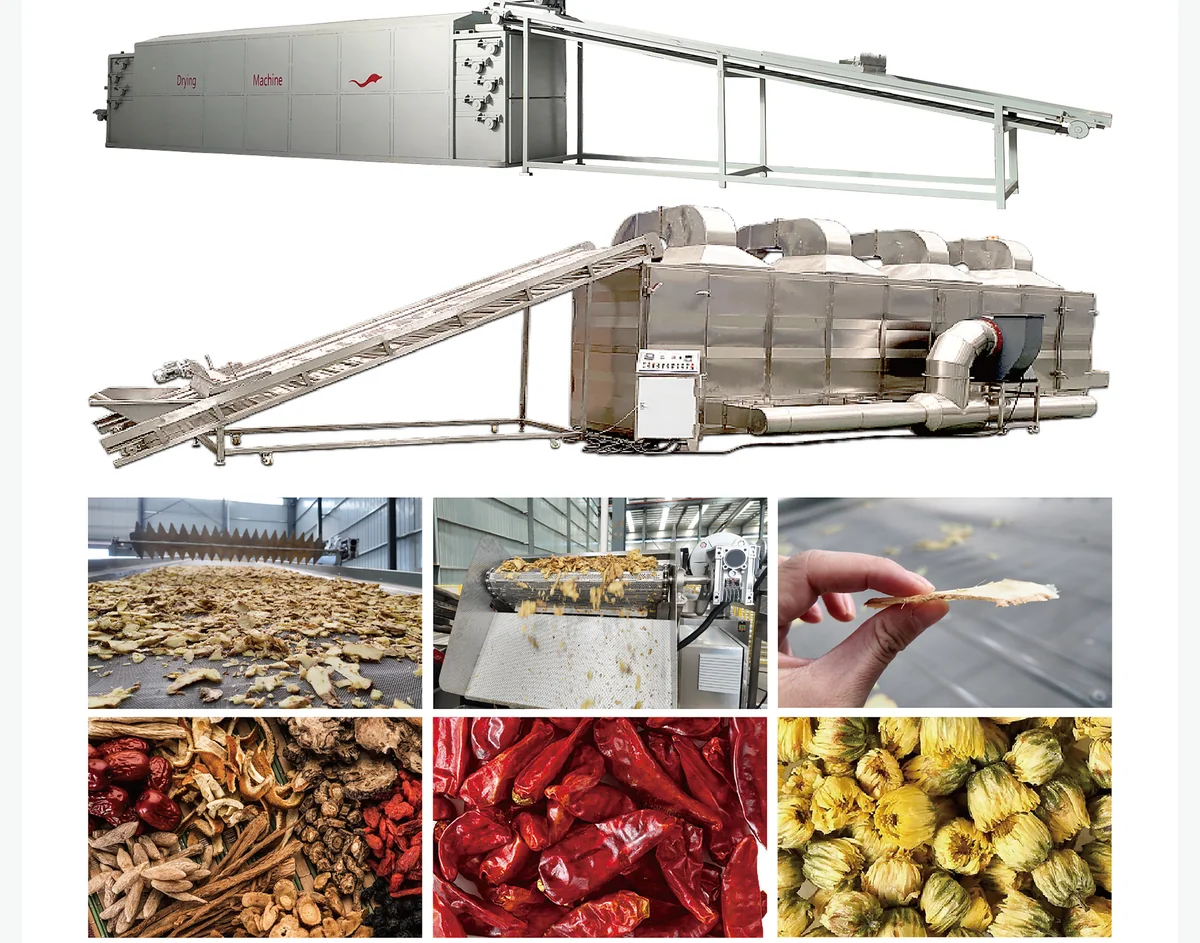
A drying line removes water. Everything else — belt width, number of layers, fan power, heat exchanger size, exhaust capacity — exists to serve that one job. The multi-layer drying production line is a continuous hot-air line, and the drying stage is the part that has to be matched to the material; the feeding, cooling and discharge stages are arranged around it.
Because the job is water, raw input and dried output are never the same figure. A buyer who states a capacity in raw material per hour and a supplier who states the same capacity in finished product per hour can both be telling the truth and still be describing machines that differ by a wide margin. Agree the basis before comparing anything.
The mass balance, written out
Work on a wet basis, which is the way moisture is normally quoted in food processing. The dry solids in the material do not change during drying, so they act as the anchor:
- Dried output = raw input × (100 − inlet moisture) ÷ (100 − target moisture)
- Water removed = raw input − dried output
Run your own numbers through that pair and two things usually become visible. First, the water load is a substantial mass flow in its own right, not a rounding error on the input figure. Second, the last points of moisture are the slowest to remove, because the drying rate falls as the material dries and the remaining water is held more tightly inside the piece. A target that looks like a small tightening of the specification can lengthen residence time noticeably. The dried food processing route states the same principle from the application side: raw input and dried output are not equivalent capacity figures.
2. Three numbers turn the water load into belt area
Once the hourly water load is known, belt area is set by three things that only a trial can settle for your material.
Loading depth
How many kilograms of prepared material sit on each square metre of belt. Deeper loading puts more material under the same air, which usually means a longer residence time; it also raises the resistance to airflow through the bed. Leafy or shredded material, sticky surfaces and products that mat together limit depth well before a bulk-density calculation would suggest. Loading depth is a per-product figure, agreed after a trial, and it is one of the first items to be written into the technical proposal.
Residence time under your air conditions
The time the material must spend in the tunnel to reach the target moisture at the temperature and humidity profile the dryer can hold. Residence time is a result, not a wish: it follows from the drying curve of the material under those conditions.
The evaporation rate the dryer can sustain
Water removal per square metre of belt per hour under the agreed air conditions, with the agreed loading depth. This is the number that converts the hourly water load into belt area — and the number that suppliers are most often asked to assume. Do not accept an assumed value silently: ask for it to be confirmed by trial on your material, and ask what the trial conditions were.
Belt area is then the water load divided by that rate. Belt width, layer count and tunnel length are the geometry used to deliver the area inside your building; they are consequences of the calculation, not inputs to it.
3. What the layer count really buys
Multi-layer conveying exists to fit a large belt area into a short building. A single-pass tunnel with the same area would run the length of the shed; folding the belt into several passes stacks that length vertically. That is the whole benefit, and it is a real one when floor space is the constraint.
The costs are equally real, and they are why layer count should be decided with the layout rather than before it.
- Every transfer between passes is a drop point — a place where light material can shift, fold or fall unevenly.
- Loading has to be distributed across the full width at the top pass, or the bed is uneven and the air finds the thin places.
- Air distribution at each level has to be reviewed; the bottom passes do not automatically see the same conditions as the top.
- Cleaning access, inspection points and the height needed to reach them all scale with the stack.
- Discharge height is set by the last pass, which constrains the cooling and packing stages behind it.
A taller stack also raises the building requirement: clear height, maintenance access above the machine and the route for the exhaust duct. Those are the items that turn a machine quotation into a construction problem, so settle them while the layout is still a drawing.
4. Temperature and humidity, zone by zone
The drying stage on a continuous line is described as temperature and humidity control for a reason. Neither works alone. Air that is hot but saturated cannot take up more water; air that is dry but cold takes it up slowly. What the material experiences is the combination, and the combination is what a zone is for.
Most profiles are staged rather than flat. An early zone can run hotter to drive off free surface water quickly; later zones usually step down to protect colour, texture and aroma as the material approaches its target. How many zones a line needs, and where the steps fall, depends on the product and is confirmed in the technical review.
Case hardening, and why fast is not always efficient
Drying too aggressively at the start can seal the surface of a piece while the centre is still wet. The surface case slows further moisture movement, so total drying time goes up rather than down, and the finished piece is uneven — dry outside, soft inside. It is one of the most common reasons a line that looked correctly sized in the quotation underperforms in the first week of production. Because it is a material behaviour rather than a machine fault, the fix belongs in the agreed profile and the trial, not in a larger fan.
Exhaust and recirculation are part of the same decision. Moisture leaving the product has to leave the tunnel; how much air is exhausted and how much is recirculated affects both the drying rate and the energy the line consumes. The route for that exhaust, and the height it needs, should be on the layout before the building work starts.
5. Heat source: what the site can actually run
A drying line can be built around electric, gas, steam or another approved heat source. The choice is a site decision as much as a process one, and it is usually settled by four questions.
- What energy is available, reliable and affordable at the factory — now, and on the days when demand peaks?
- Where does the combustion or exhaust route go, and what does the site permit?
- How quickly and how precisely does the heat source respond when a zone setpoint changes, and who maintains it locally?
- What is the buyer-side scope: boiler, gas line, electrical connection, flue, safety measures?
Compare options under the same conditions. Energy use depends on the material, the loading and the drying target, so a comparison made on different products or different test conditions tells you nothing — the same caution applies to roasting equipment, where the electromagnetic drum roaster page warns against relying on an unverified percentage-saving claim. Ask for the selected load and the control scope in writing, then compare. The utility questions that decide whether the site is ready are set out in the line utility planning guide.
6. Preparation decides the drying curve before drying starts
By the time material reaches the dryer, much of its behaviour has already been decided. Three preparation points move the drying result more than buyers expect.
Piece size and uniformity
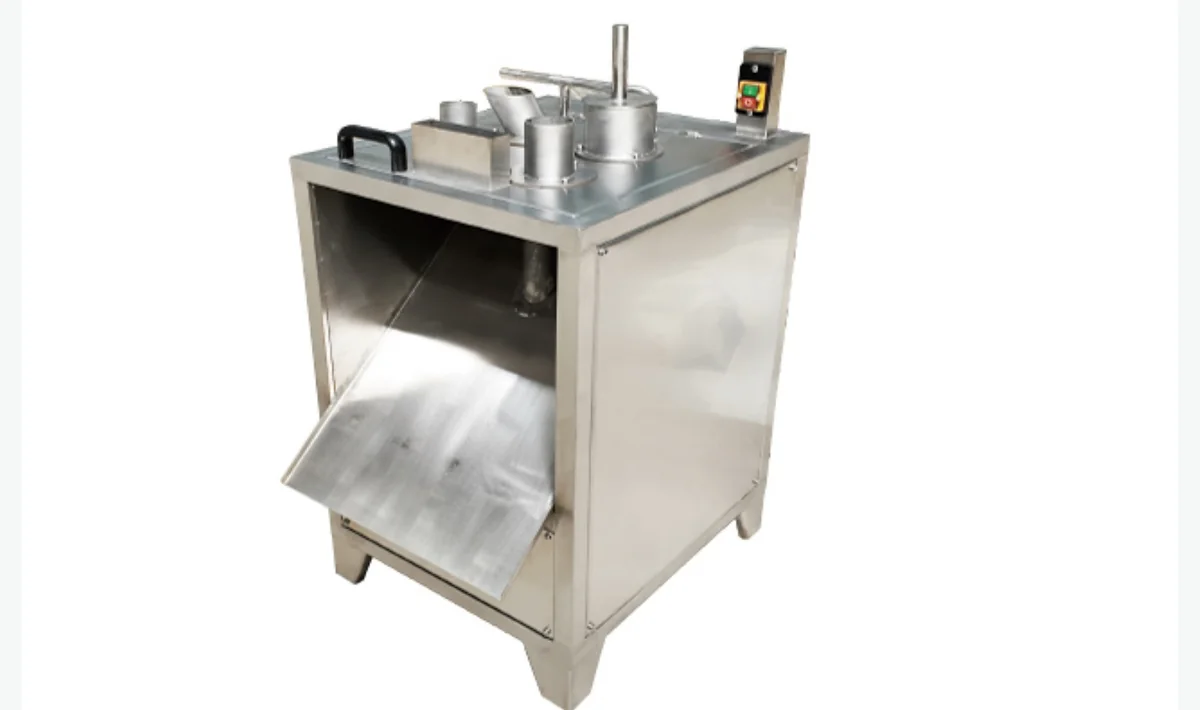
A bed of mixed thicknesses dries at the speed of its thickest piece. If the target moisture has to be met by every piece, the thin pieces are over-dried while the thick ones catch up — a yield and quality loss that no dryer setting recovers. Cutting and slicing consistency is therefore a drying issue, and the digital vegetable cutter and food slicing machine pages describe the size control that makes a uniform bed possible.
Surface water is not product moisture
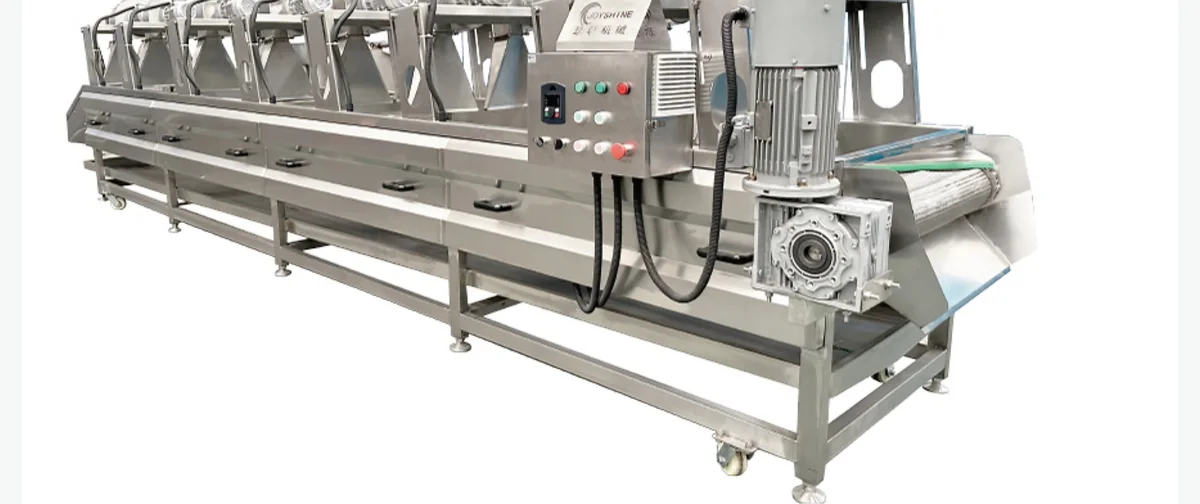
Free water left on the surface after washing is easy to remove and expensive to carry into the tunnel: it adds load without being part of the product. An air-drying conveyor removes that free surface water mechanically before drying begins. This is a separate step with a separate purpose — it does not dry the product, and it is not a substitute for the drying stage.
Blanching and other pre-treatments
Where the route includes blanching, the pre-treatment changes the structure of the material and therefore its drying behaviour, as well as its colour and texture. The blanching machine page covers the process questions; the point for line planning is that a pre-treatment added later is not a drop-in change to a dryer that was sized without it.
7. Cooling, conditioning and the packing interface
Material leaving a dryer is not finished material. It is hot, and the moisture inside each piece is still redistributing. Two things follow.
First, the line needs a cooling or conditioning stage between drying and packing, which is why it appears as its own step in the line sequence. Cooling on the belt also allows internal moisture to equalise across the piece, so the moisture measured at the end is representative rather than a reading of the dry surface.
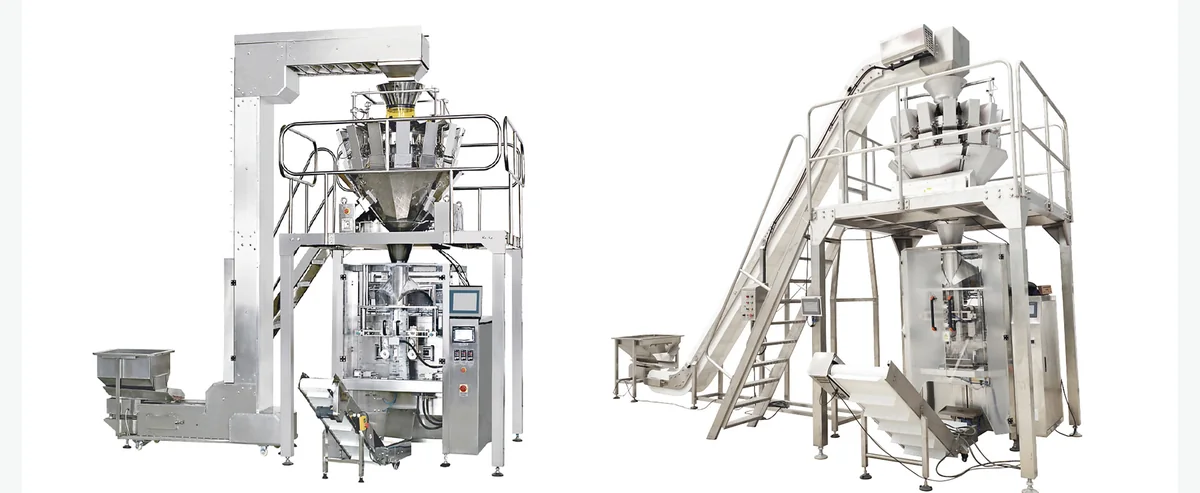
Second, packing warm product into a sealed bag puts that moisture into a closed space. Condensation inside the pack, and the quality loss that follows, are a packing-stage problem created by skipping the cooling step. The vertical packaging machine closes the line; the cooling and conditioning stage in front of it is what makes the closure safe to make. Where a moisture-resistant pack format is required, that requirement belongs in the project brief from the start, because it affects the packing choice rather than the dryer.
Any shelf-life statement is a product and packaging claim, not an equipment claim. It needs its own validation with the actual product in the actual pack.
8. When hot-air drying is the wrong route
Hot-air drying is the volume route: continuous, mechanically simple in principle, and able to handle a wide range of prepared food and agricultural material. It is not the only route, and two neighbours are often confused with it.
Vacuum low-temperature dehydration
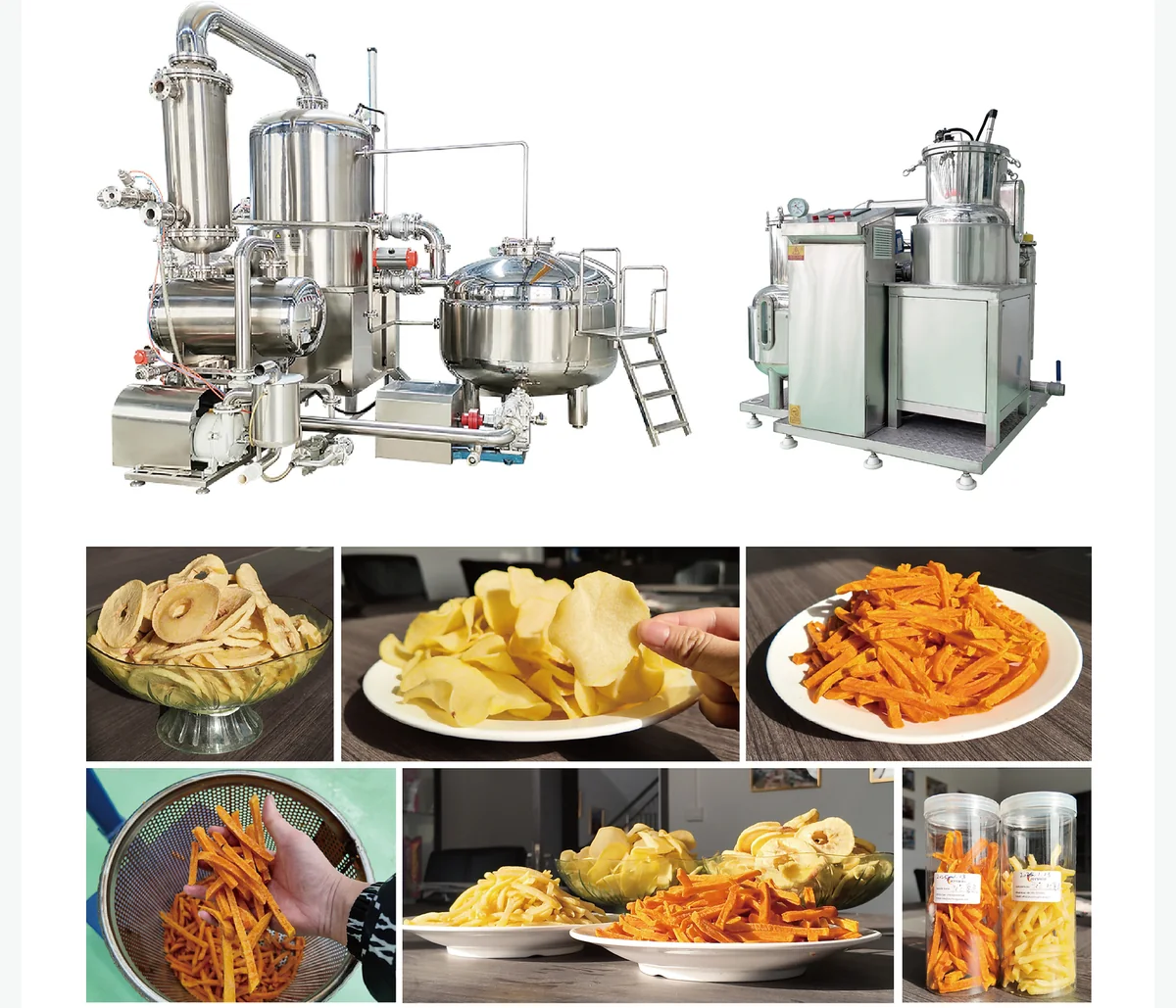
This removes moisture at low temperature under vacuum, which is chosen when limiting high-temperature colour and flavour change matters more than continuous throughput. It is a different process with its own trial requirements — raw material, sugar and moisture condition, pre-treatment, target texture, batch size and the vacuum process all have to be agreed, as the vacuum low-temperature dehydration page sets out. Water removal and texture still have to be proven on the actual material; low temperature alone does not guarantee them.
Roasting, which is not drying
A roasting line develops colour and aroma rather than removing water to a target. Materials, roast profiles and cooling differ, and each product needs its own trial — a roast profile confirmed for one seed is not transferable to another, as the roaster page states plainly. If the objective is flavour development, plan a sesame and nut roasting line; if it is moisture removal for stability, it is a drying question.
Freezing, which is preservation by temperature
Freezing preserves by temperature, not by moisture removal, and the two routes are sometimes evaluated against each other for the same harvest. The quick freezing line planning guide covers that route on its own terms — the preparation before the freezer decides quality there too.
9. Layout and utilities to settle before the quotation
A drying line is long, tall and hot, and it is the stage most likely to be squeezed into a building that was not planned for it. The items below should be answered with dimensions on a drawing, not with an assurance that there is space.
- Clear height above the stack, plus the access needed to reach the top pass and any inspection points.
- Door width and installation access along the whole route, including the heat source and the exhaust duct.
- Exhaust route to outside air, and the fan and duct position it implies.
- Heat source position, fuel or electrical connection, and the safety measures around it.
- Drainage and washdown near the loading and discharge ends.
- Floor loading and level tolerances where the tunnel and its supports stand.
- Space left for the expansion stage, if one is planned.
The building questions are the same family as those in the space and layout guide, and they are easier to answer before the layout is approved than after the machine is on the water.
10. The acceptance test is part of the design
Agree what the test has to prove before the configuration is finalised, and write it into the technical proposal. The multi-layer drying line page lists the items: sampling method, initial moisture, final moisture tolerance, colour or texture target, test duration and the energy-measurement boundary. Each one is a place where a project can succeed or fail later for reasons nobody wrote down.
Three practical points are worth adding to that list.
- State who measures moisture, with which method and instrument, and at which point in the product the sample is taken.
- Define acceptance on accepted finished product at the target moisture — not on belt speed, residence time or a nominal hourly rate.
- Record the test material and its condition, so a later batch that behaves differently can be compared against a known starting point.
The preparation behind a comparable quotation is set out in the equipment RFQ checklist. Capacity, dimensions, utilities, price, delivery and the service boundary all require technical and commercial confirmation, and none of them is settled by a page like this one.
Drying line planning checklist
- Product list, with piece size range and preparation level for each
- Inlet moisture and target moisture, with the measurement basis and sampling point
- Raw input and accepted dried output stated separately, in the same units and hours
- Hourly water load worked through the mass balance
- Loading depth and residence time, confirmed by trial on the actual material
- Belt area derived from the load and the trial rate, then arranged as width, length and layers
- Zone profile, exhaust and recirculation approach agreed
- Heat source chosen against site energy, exhaust route and local maintenance
- Upstream preparation and surface-water removal defined
- Cooling or conditioning stage and packing interface defined
- Clear height, access, exhaust route and expansion space on a drawing
- Acceptance test written: material, samples, moisture method, tolerances, duration, energy boundary
Frequently asked questions
How much does a drying line cost?
There is no price that applies to a drying line as a category, because the machine is bought as a water-removal duty. The price follows the hourly water load, the belt area that duty needs, the loading and unloading method, the heat source and its site works, the automation level, the cooling and packing connection and the installation scope. Any figure given before those items are fixed is a placeholder; a quotation on request is built from them.
Can one drying line handle several different products?
It may be possible, but each material needs its own trial before the configuration is fixed. Different products differ in piece size, bulk density, surface condition, initial moisture and the temperature profile they tolerate, and each of those changes loading depth and residence time. Where several products share one dryer, agree the changeover, cleaning and record-keeping method as part of the project, not as an afterthought.
Is a longer dryer always the safer choice?
No. Belt length is only one way to reach the required residence time, and past a point it adds heat loss, air-distribution problems and the risk of over-drying the outer layer while the centre is still wet. Residence time, air conditions, loading depth and the material itself have to be reviewed together; the belt area follows from that review rather than replacing it.
Can a drying line be bought small and extended later?
Often yes, provided the extension is designed in from the start: heat-source capacity, exhaust route, electrical margin, discharge space and building clear height all have to allow the addition. Confirm the intended expansion stage with the supplier before the first order, and put the boundary of the first phase in writing, so the second phase is an addition rather than a rebuild.
Which moisture figure should a buyer send to a supplier?
Send the inlet moisture and the target moisture together, state the basis on which they were measured, and say where the sample was taken. A target expressed as a wet-basis percentage without the measurement method is not a specification. Initial and final moisture, tolerance and testing method are confirmed per project on request.