'What voltage do you need?' sounds like a question with a short answer. On a food processing project it is usually one of the last questions that can be answered properly, because the equipment has to be matched to a supply that already exists - at a site that may not be built yet, in a market whose electrical standard has to be confirmed rather than assumed.
This guide sets out how supply voltage, phase, frequency and load are planned for a frying, freezing or washing line destined for Africa or the Middle East, which figures have to come from the buyer, and where the engineering responsibility boundary sits. It deliberately quotes no national supply values: the only reliable source for those is your own utility, your own transformer or your own generator, confirmed by the electrical engineer responsible for the installation.
1. Why the supply is decided by the site, not by the machine
The same machine family can be supplied for different electrical standards, and what changes is not the process but the electrical package behind it: motor windings, heater configuration, control transformer, protection devices, cable sizing, panel design and the documentation that goes with them. A process drawing can look identical for two projects while the equipment inside is not.
The supply belongs to the project
No supplier can decide the supply on the buyer's behalf. The utility connection, the transformer, the generator and the local installation rules belong to your site, and the machine has to be configured to match them. For that reason the supply is a project input exactly like the raw material or the building drawing - not a detail to be settled after the order.
Three separate items define the supply
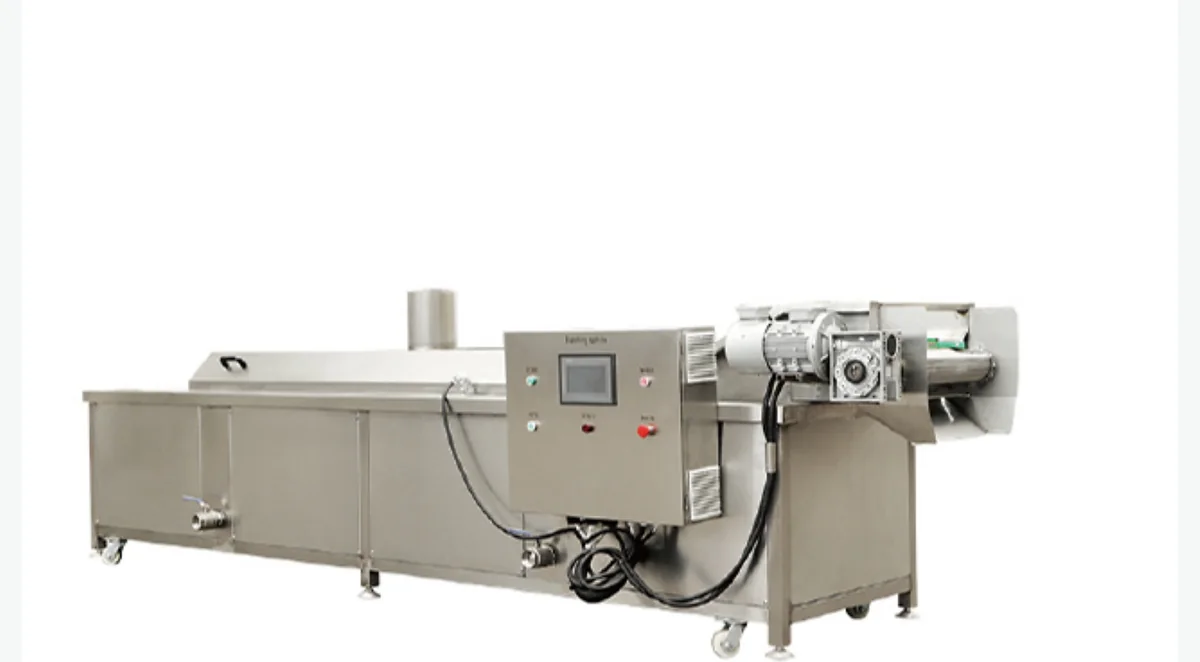
Voltage, phase configuration and frequency are three independent facts, and each of them has to be confirmed on its own. A site can be confirmed for voltage and phase and still leave frequency unstated, and frequency is not something that can be corrected by the supplier after the equipment is built. On our Continuous Belt Fryer page this is stated as it is applied in practice: voltage is matched to the destination electrical standard after voltage, phase and frequency are confirmed.
What a late change costs
If the destination supply changes after the machines are built, the change reaches motors, heaters, the control transformer and the protection arrangement. It becomes a project modification with a schedule attached, which is the practical reason this section is first in this guide rather than last.
2. kW on a datasheet is not the same as the load at your connection point
Once the supply type is fixed, the next question is how much of it the line actually takes. This is where two different numbers are routinely confused, and the confusion survives all the way to the utility application.
The nameplate power of individual machines is not the same as the confirmed site capacity for the complete line, and it is not a figure that can simply be added up and taken to the electricity company.
Connected load and operating load
The sum of all nameplate figures is the connected load: what the distribution board, the cabling and the protection devices have to survive in principle. What the supply actually carries during production is lower, because not every motor and heater draws full load at the same moment. Both figures are needed for different reasons. Connected load sizes the electrical infrastructure; operating load is what your utility connection or generator has to sustain hour after hour.
Starting current and the largest motor
A machine with a large drive motor can disturb the supply when it starts while the rest of the line is already running, particularly on a limited connection or a generator. The starting method and the start-up sequence of the line are therefore planning decisions, not installation details. They are made together with the equipment selection and recorded before delivery.
Where the electrical load actually sits in a frying line
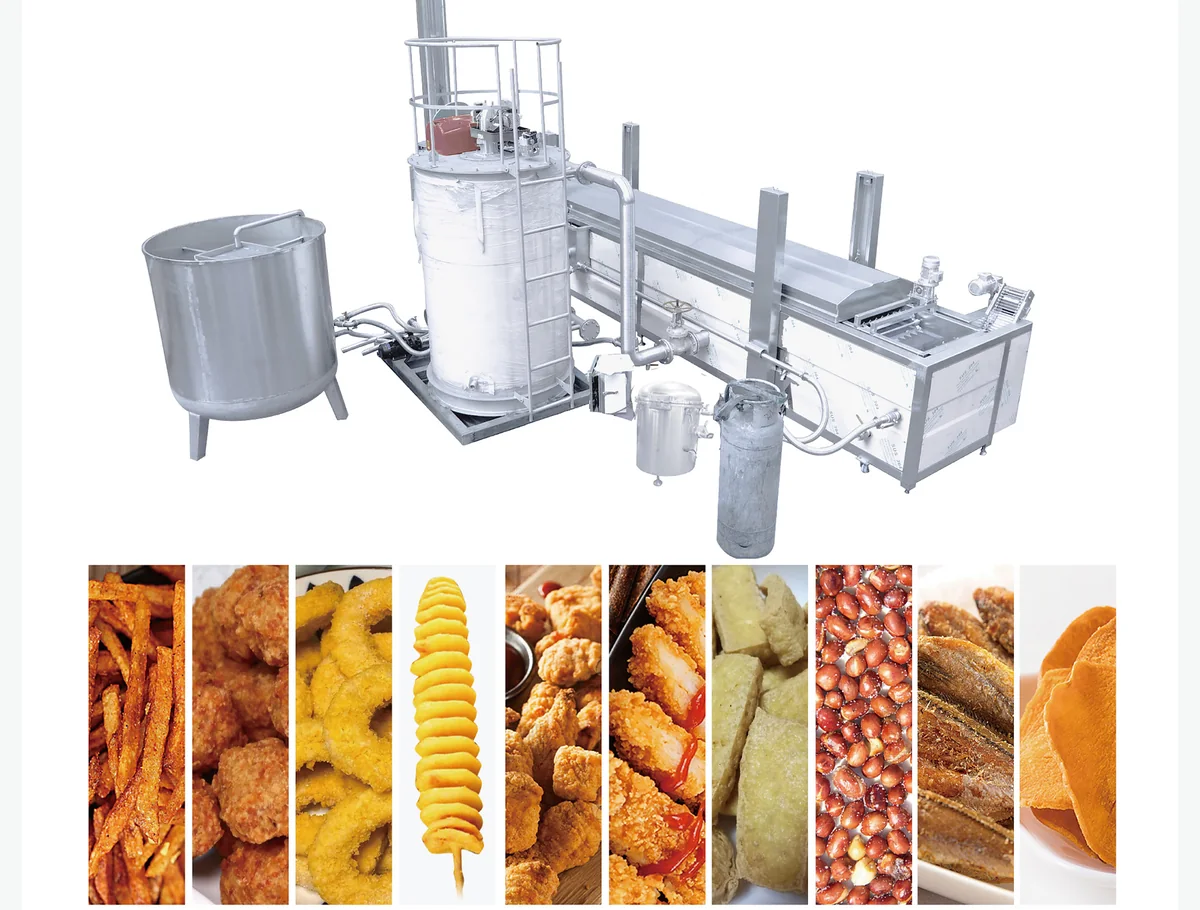
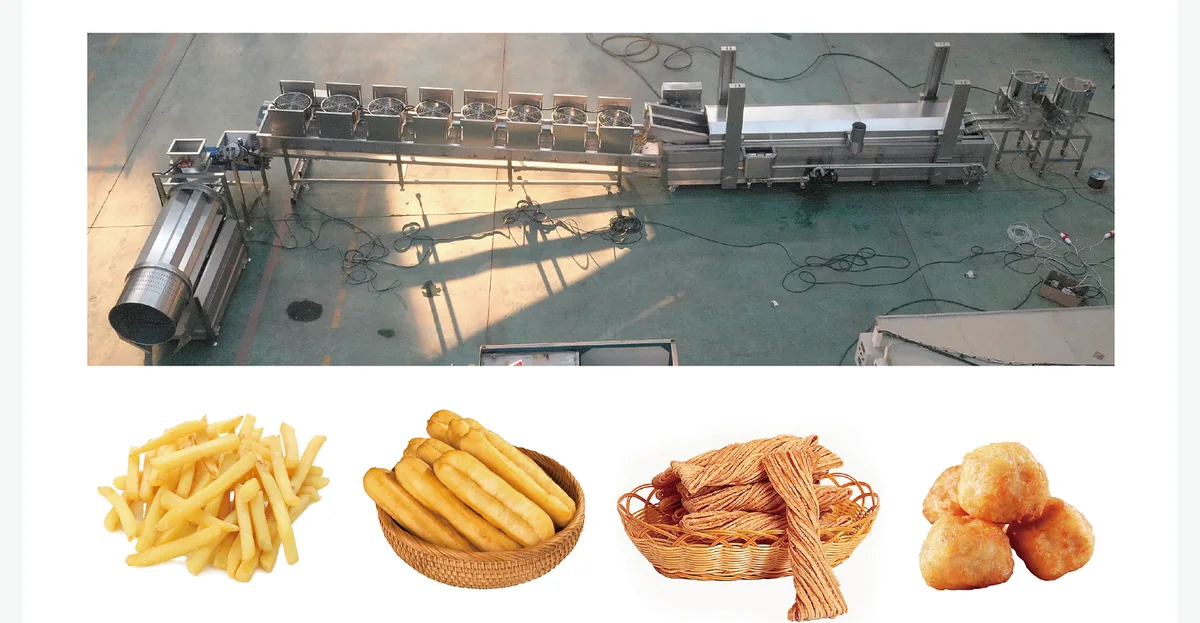
In a fried-product line the heating block dominates everything else. The indicative electric heating power published for the Continuous Belt Fryer models runs from 120 kW on the LY4000 through 140 kW on the LY5000 and 180 kW on the LY6000 to 200 kW on the LY8000, alongside indicative capacities of 100-200, 150-300, 200-500 and 300-800 kg/h respectively. These are indicative model figures that require review of the actual material, process target, utilities and layout - but they show clearly why the heating decision and the electrical decision are the same decision on this kind of line.
The heating source changes the question, not just the number
Electric, gas or electromagnetic heating can be reviewed against local utilities. If gas is available the electrical block becomes smaller, but the gas connection, burner arrangement, exhaust route and ventilation, and the local safety rules that apply to them, all enter the project in its place. As covered in our guide to food processing line utility planning, choosing a heating source is a utility decision before it is an equipment decision.
3. Utility connection, generator, or both
For projects in this region the single most useful sentence in a first enquiry is a plain statement of how the factory is actually powered today, and how that will change. A line sized against an assumption is a line that will be reworked.
State the supply basis at the start
Three cases are common and they lead to different engineering conversations: a utility connection on its own, a generator supplying the workshop, and a utility connection that is not sufficient by itself and is therefore backed up by a generator. Which one applies should be written in the enquiry, together with who owns the transformer and whether an upgrade is planned.
Questions a generator adds
A generator turns load planning into a set of questions that only the generator supplier and your local electrical engineer can answer: whether the largest motor can be started while the line is partly loaded; in which order the machines should come on line so that the generator is not hit with the whole load at once; how stable the voltage and frequency stay as heaters and drives switch in and out; and how the installation is earthed. The machinery supplier provides equipment electrical data; generator sizing and the site installation remain with the site side.
Record what the site can deliver today - and later
A planned transformer, a second generator or a new workshop changes the reserve that should be left in the panel and cable design now. The same principle applies to production capacity: reserve is designed into a line before installation, not added afterwards, which is why capacity planning and electrical planning are usually done in the same meeting.
4. Work through the line stage by stage
An electrical requirement that is discussed as one lump figure is difficult to verify. It becomes manageable when it is attached to the stage that creates it.
| Stage | What is electrically significant | What to confirm |
|---|---|---|
| Washing and peeling | Pumps, drive motors, sometimes heated wash water | Whether heated water is required at this stage |
| Cutting and slicing | Several drives on one route | Whether the drives start together or in sequence |
| Blanching | Heating plus water circulation | Which heating source serves this stage |
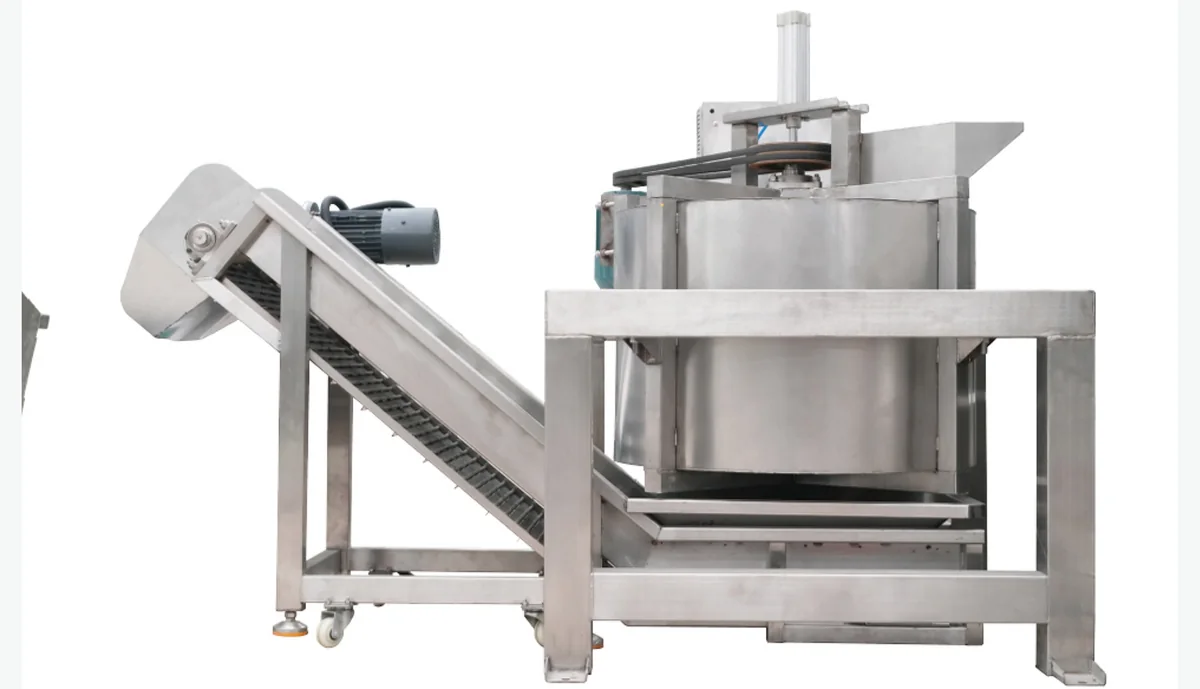
| Dewatering and de-oiling | Centrifugal drives with a high starting demand | Starting method against the available supply capacity |
| Frying | Usually the largest electrical block on the line | Heating source, installed heating power and control arrangement |
| Freezing and cooling | Refrigeration compressors, often the second largest block | Whether freezing is in scope and how it is supplied |
| Packing and controls | Smaller drives, sensitive to voltage quality | Control scope and the buyer-supplied connection point |
The frying stage sets the ceiling
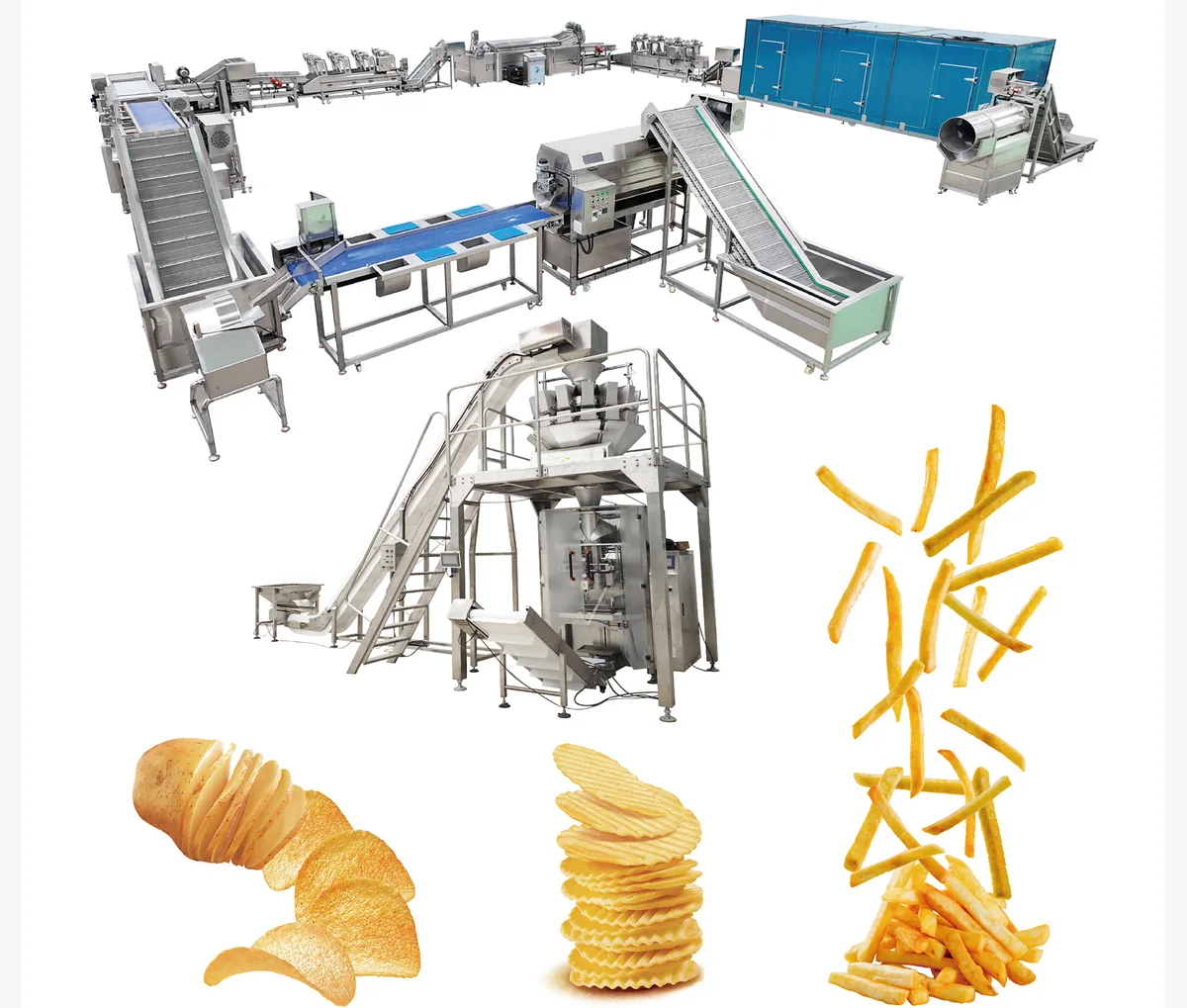
On an automatic French fries and potato chips line the frying stage normally decides what the supply has to carry, because the heating block is larger than the combined drives around it. That is also why a change of heating source is the single most effective way to reduce the electrical requirement of a frying line - and why it has to be decided early.
The preparation stages are usually underestimated
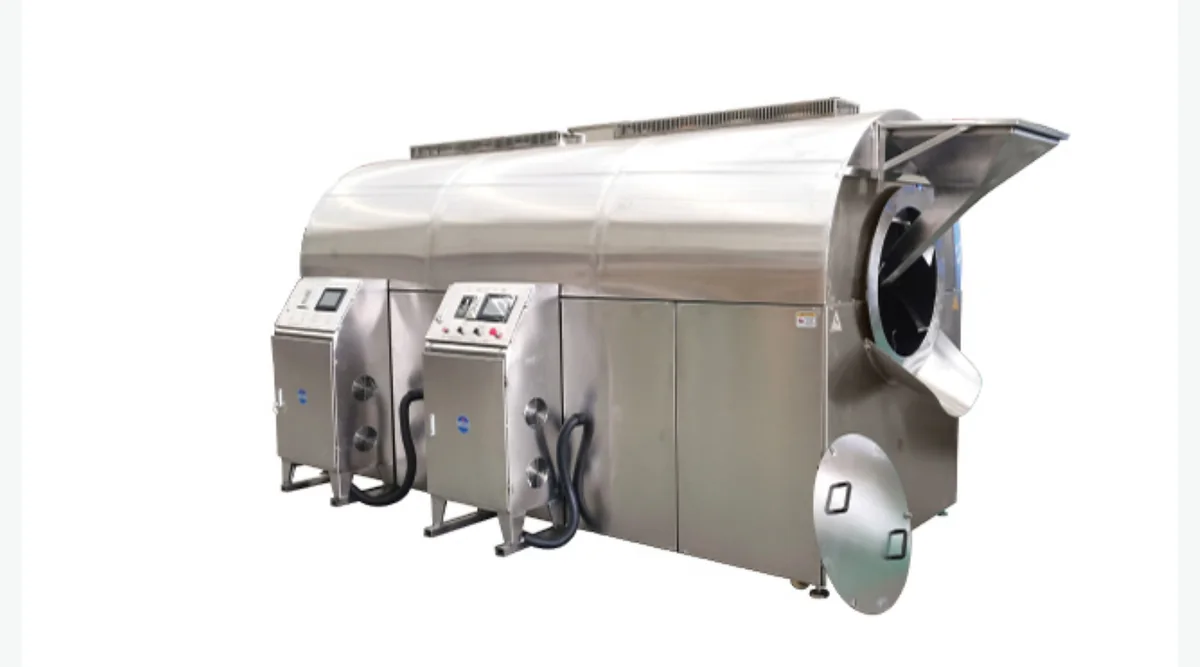
Washing, peeling and blanching stages are often treated as simple because they involve no frying. In practice a fresh produce washing line carries pumps, drives and in many projects a water-heating requirement of its own, and those loads run at the same time as the rest of the line. Reviewing the whole route stage by stage prevents one forgotten stage from becoming the reason a supply application has to be repeated.
5. What to prepare before requesting a quotation
The items below are the electrical part of a project brief. They are the same items that belong in an RFQ generally, which is why they also appear in our equipment RFQ checklist.
| Item | What to provide | Why it matters |
|---|---|---|
| Supply basis | Utility connection, generator or both, and who owns the transformer | Decides whether the supply must carry the whole line at once |
| Nominal voltage | The figure stated by your utility, meter or transformer | Motor windings and heaters cannot be re-specified after they are built |
| Phase configuration | How the workshop is actually connected | Affects drives, heaters and panel design together |
| Frequency | The declared frequency at your site | Separate from voltage, and not to be assumed from the region |
| Available capacity | The capacity allocated to your workshop, not the total on site | The line shares the connection with existing loads |
| Distance from the distribution board | Approximate cable route and length | Long runs change cable size and voltage drop |
| Earthing arrangement | What your local rules require for the installation | The finished installation has to satisfy the inspecting authority |
| Heating source | Electricity, gas or another source available on site | It is the largest single electrical block on a frying line |
| Control scope | Who supplies the panel and what the operators must read | Defines where the supplier's scope stops |
If several of these are still undecided, that is normal and workable. The rule is to mark them as open items rather than to fill them with a common value, because a filled-in guess travels through the whole project unnoticed.
6. Where the responsibility boundary sits
Electrical work on a food processing project splits between two parties, and the split should be visible in the quotation rather than discovered on site. The quotation should identify the control scope and the buyer-supplied connection point, so that both sides know which cables, which panel and which protection devices are in whose scope.
Final electrical work should be checked by the responsible local electrician or project engineer. That is not a formality: the supply measured at your site after installation is the only measurement that counts, and it is taken by the party responsible for the installation. A figure published on a website, including on ours, is planning information for the discussion - never a substitute for that measurement.
7. Frequently asked questions
Can a machine built for one supply voltage be used on a different supply?
Not as a simple panel adjustment. Voltage, phase configuration and frequency together define the electrical package behind the machine - motors, heaters, control transformer and protection. If the destination supply has not been confirmed before the equipment is built, the change becomes a project modification rather than an adjustment, which is why the supply should be recorded before the configuration is finalised.
Do I still need to state the frequency if I have already stated the voltage?
Yes. Voltage and frequency are separate facts that have to be confirmed with the utility or the responsible electrical engineer for the site. A supply described by voltage alone is incomplete, and the frequency of a site cannot be assumed from its region.
How do I know whether my generator can run the line?
That question is answered by the generator supplier and the local electrical engineer, using the connected load of the line, the starting current of the largest motor and the order in which machines start. The machine supplier provides the electrical data of the equipment in scope; generator sizing and the site installation belong to the site side of the project.
Does a gas-heated fryer remove all electrical requirements?
No. A gas heat source reduces the largest electrical block in the line, but drives, pumps, conveyors, controls, lighting and safety systems still need power. Gas also brings its own requirements - supply capacity, burner arrangement, exhaust and ventilation, and the local safety rules that apply to the installation - so it changes the project rather than simplifying it.
What if the supply cannot be confirmed yet?
Then it should be written down as an open item, not filled in with a common value. The configuration discussion can continue, but the electrical package and the equipment data sheet should be frozen only after the supply basis is confirmed, so that nothing has to be reworked later.